[00:00:00] Speaker A: Foreign.
Welcome to the collective table where we celebrate the intersections of Jesus, justice and joy.
This podcast is brought to you by Oceanside Sanctuary Church. Each week we bring our listeners a recording of our weekly Sunday teaching at Oceanside Sanctuary, which ties scripture into the larger conversations happening in our community, congregation and even the podcast. So we're glad your here and thanks for listening.
[00:00:38] Speaker B: Welcome. Good morning. My name is Jason. I'm one of the co lead ministers here and we have just embarked on a new teaching series last week called Practices of Belonging.
So I get to continue that series today where we're going to talk about Surprise, Surprise. Communion. It's World Communion Day. We just celebrated communion with, with fry bread and tortillas.
I don't know how it is that I get to be the pastor of a congregation that has a member of the Navajo Nation pray over us in her language. But thank you again. That was amazing and kind of wrecked me actually for the rest of the service. So this often happens, like whatever happens up here before I get up is impossible to follow.
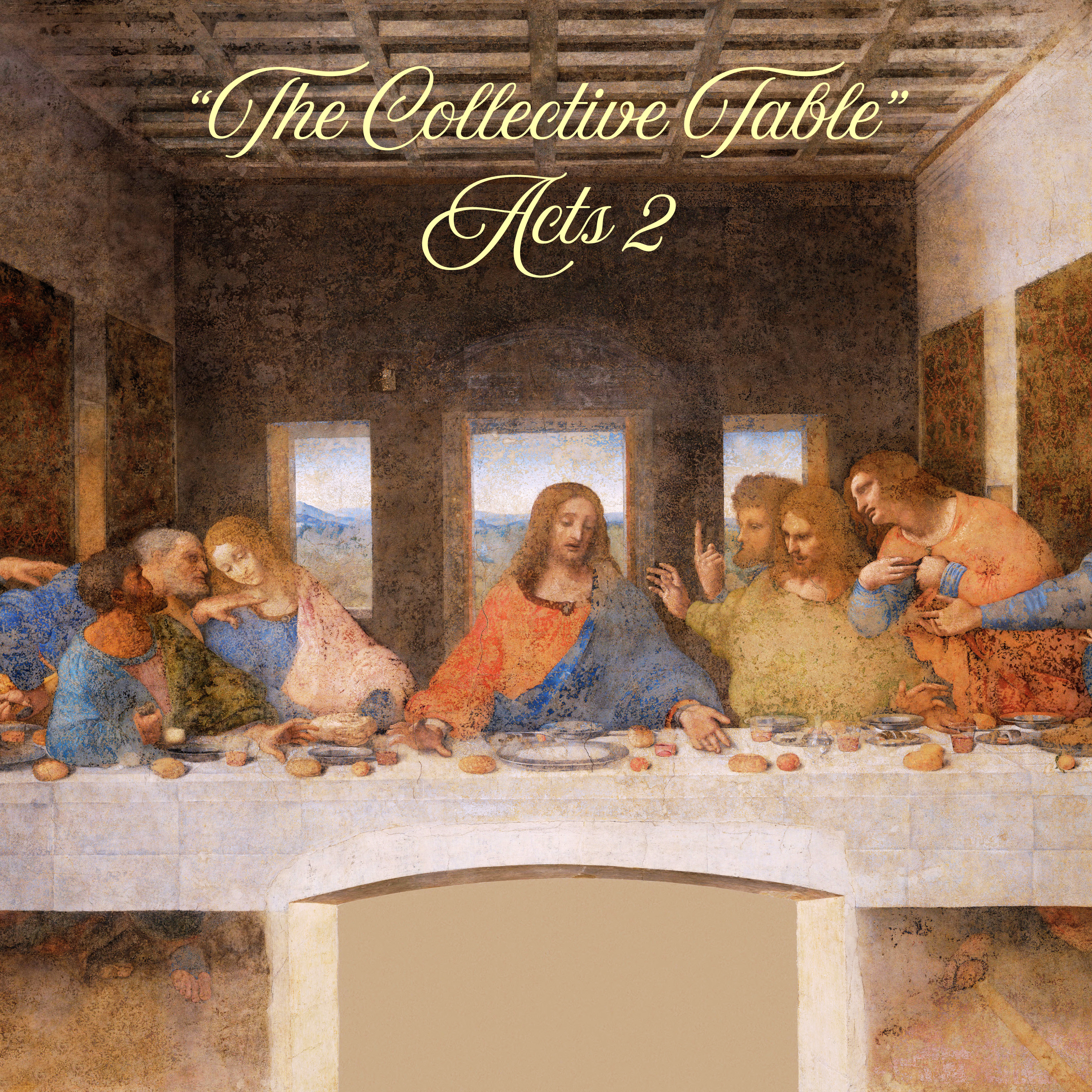
So like just please lower your expectations. Like that was the highlight of our gathering, without a doubt. Today I want to talk to you a little bit about communion. And instead of maybe a traditional communion passage, maybe you might be expecting me to read from the upper room where Jesus gathers his disciples the night that he's betrayed. That's literally the story that is invoked by Paul later in his letter to the early church when he talks about communion. Instead of visiting either of those passages. I want to share this one with you. It's Acts chapter two, right at the end of Acts chapter two, verses 43 to 47. And I want to sort of suggest to you that this is the first communion gathering of the early church and that what we are doing is to the best of our ability to just trying to recapitulate what we see happening in this first communion gathering. It's Acts chapter 2, verses 43 to 47. It says this awe came upon everyone because many wonders and signs were being done by the apostles. So of course we're beginning midstream in the middle of a story. So just, I'll just pause here and remind you that what happened right before this is that the Spirit of God, sometimes what we refer to as the Holy Spirit, is poured out upon a crowd of people at the beginning of Acts chapter two. This is what we tend to traditionally refer to as Pentecost, because Pentecost was an ancient Hebrew celebration. It was essentially a harvest festival and people had come from all over the known World. Jewish people had come from all over the known world to celebrate Pentecost, to make a pilgrimage to Jerusalem. And there, in that pilgrimage, the Spirit of God shows up, transforms that group of people in some surprising ways. Peter gets up, he delivers his version of the gospel, what. What he thinks it means that Jesus came and was crucified and resurrected. And as a result of that, a bunch of people say, we want to be a part of this. We want to be a part of this community.
And so we're picking it up at the tail end of that story. In verse 43, when it says awe came upon everyone because many wonders and signs were being done by the apostles, it's referring to this core group of leaders in this early expression of Christianity, verse 44.
And all who believed were together and had all things in common as they would sell their possessions and goods and distribute the proceeds to all as any had need. And day by day, as they spent much time together in the temple, they broke bread at home and. And ate their food with glad and generous hearts, praising God and having the goodwill of all the people. And day by day, the Lord added to their number those who were being saved. Now, I want to share with you a couple of miracles that I think are happening in this passage. And they might be surprising miracles because we tend to focus on something else that's happening in Acts chapter two. But I think there are three miracles happening in this passage that we often miss. So I want to share those with you today in light of World Communion Day. But first, would you just pray with me? God, we thank you for today.
Thank you for the opportunity to gather together even in the midst of a rainstorm.
We ask that you would draw our hearts together, that we would become people who are able to overcome and look past our differences, to regard each other not as enemies because of those differences, but as friends. And that this table, this table of communion, this table where we break bread, would facilitate that transformation.
We pray that you would do all this in Jesus name. Amen.
Now, this weekend, Janelle and I had some family visiting from out of town. And sort of a long story here that I won't get into, but the short version is, is that these are family members that we'd never met before. Right? We're in our mid-50s. And these are family members that traveled all the way from Texas in order to meet us and connect with us and, you know, explore, like, the common connections that we have in family that we never really, you know, connected with before. And that's a little bit Weird. If you've ever had anything like that happen before, that's an unusual experience. Like, it's weird enough to meet, like, strangers, to connect with strangers in the first place, but also to know that, like, these are people who are part of your family that you've never met before. And so we did what I think is pretty common for people to do. We said, hey, you know, don't come to the house. You know, we're not quite ready for that yet.
[00:06:34] Speaker A: Right.
[00:06:34] Speaker B: Like, we're just getting to know each other.
Pick a restaurant nearby. We would love to meet up with you guys. And so they picked Lth, which is just right down the street here. You guys probably know Lth. They said, hey, can we go to this place called lth? And I was like, please don't throw me in that briar patch.
And glad few people got that joke. And so we met up at Lth, and we had just really a lovely dinner and got to connect with each other and hear each other's stories and share some frustrations that we have in our sort of common family connection. And all of that happened and was able to happen in part because it's just easier to make connections with people and overcome your differences and have a little bit more grace in your conversation over a bowl of, like, lth's short rib fries.
Everything is just a little easier over short rib fries. Everything is just a little bit better when the perfectly fried slices of potatoes are covered with incredibly tender short ribs smothered in gravy with a cracked egg on top. Like, all of life's difficulties seem so insignificant when you're staring into that bowl.
It's just me.
I think that this is something that we take for granted.
I think when we practice communion, this is essentially what we're doing.
We're coming together at a table across our differences, able to overlook and overcome and cross those boundaries.
Because the bread in the middle of us, whatever form that bread takes, facilitates connection in a way that only bread can.
And that, I think, is partly what's happening here in Acts Chapter two. If you look at Acts Chapter two again, I think the first miracle that we notice in this passage is, is that they shared their food.
And oftentimes, if you're familiar with Acts Chapter two, the miracle that we tend to focus on are the things like, you know, healing people who are sick or speaking in tongues, whatever that means. And if you're not a part of a Pentecostal or charismatic tradition, that might seem odd and puzzling to you. But I think Those things tend to distract from the real miracles that we find in this passage. And the first miracle is they broke bread together. They shared their food. If we go Back to verse 41, it tells us that about 3,000 people gathered together after hearing Peter's message. And verse 42 says they then devoted themselves to the apostles teaching and to fellowship and to the breaking of bread and to prayers. And later in verse 46, it repeats that they broke bread together.
Bread in this case, of course, symbolizes food in general. And the amazing thing about food is that it is first and foremost something that if given the right or wrong circumstances, we will fight over because food is necessary for our survival.
I mentioned this a couple weeks ago, but if anybody's ever watched that show alone, where it's like a reality show, they throw people into the wilderness and they see how long they can last. Like, everything becomes about food.
If you don't have food, there is literally anything that you will do in order to get it.
And you don't have to watch a reality show to see this. Our communities are a testimony to the fact that if we don't have food, if we don't have access to our basic needs, there is nothing that humans will not do to other humans in order to guarantee their survival.
We know, for example, from studies done by the United nations, that those countries that are the poorest, that as they have the least access to resources, the least structures and systems in place to feed their people, to provide for their population, these are the countries in the world with the highest rates of violence.
And we don't have to look overseas to recognize this.
Here in the United States, those communities that are poorest, those communities that have the least access to food security, the least access to resources in their community, the least access to health care and education, those communities have four times the rate of violence than communities that do have that access.
And it's not just a social reality, it's an individual one, too.
In 2016, there was a study done that showed that people who had grown up in food insecure households as children, that is, as children, they didn't have ready, regular, predictable access to food in their lives, are twice as likely to commit violence as adults.
Food is representative of what we are willing to fight for. It's what we're willing to do violence for. It's the occasion that causes us to kill each other as human beings.
And yet we come together on a regular basis and we share this thing, this thing that is needed for our survival.
We share this every time we Have a meal with anybody. We take the thing that if we don't have enough of it, we will die. And we give it to other people.
We give it to our friends. We give it to our families. We give it to our neighbors. We give it to each other. In spaces like this, we have community feasts together. And in that way, bread isn't just a symbol of the thing that we're willing to fight and kill and die over. It's also a symbol of how we have, in spite of all that, the capacity to share, to take the one thing that we desperately need more than anything else. To live and share it with each other. In this way.
Bread is a symbol of the most basic expression of love.
When I take something that I need and I give it to you, that's an act of love.
When we, as a church contribute here to our food pantry. So that we can serve anybody's needs in this community who doesn't have food, no questions asked.
That's a very basic act of love.
And when we read in Acts chapter two. That all of these people, 3,000 people who came from different cultures and different circumstances and different socioeconomic statuses and different ethnic backgrounds, they all came together and they broke bread together.
It is a representation of the first miracle in this passage. And that miracle is that they just shared bread with each other, with people that would have very naturally been their enemies.
And so bread, then I think in this passage and in every way that we use it, is a symbol of basic human love.
But there is, I think, more to it than that. Bread is also a symbol of peace in addition to breaking bread together. If we continue and read on, we. We read in verse 44. And all who believed and were together, again, remember, a community of a couple thousand people, all who believed and were together, didn't just share their bread. They had all things in common.
They would sell their possessions and goods and distribute the proceeds to all. As any had need. This community that demonstrated a basic expression of love, A basic willingness to sit at the same table with potential enemies and share their bread together, together, also cooperated together to do more, to share more, to scale up that individual act of love. So that every single person in the community had what they needed. To the point where there were no expressions of individual ownership or property. They were a community that cooperated for the good of everyone.
And bread, I think, is also a symbol of this.
Because any given loaf of bread represents an impossible amount of technology and labor in order to produce it and deliver it to your table.
In Order for that loaf of bread to exist, Somebody had to plant grain. Somebody had to harvest that grain. Somebody had to care and tend to that grain. And then once it was harvested, they had to separate it, they had to mill it, they had to store it. They had to do all the things that are necessary in order for that to become flour. And that, of course, isn't all. Somebody had to take that flour and mix it with the right ingredients and the right combination and put it in the right kind of oven to convert it into what we call bread. This takes an enormous amount of technology and cooperation to accomplish.
Every loaf of bread that you eat, every sandwich, every biscuit, every cookie, represents an impossible history of technology and cooperation that humanity has perfected and scaled up to the point where now we are able to feed every single person on the planet at a relatively low cost.
Nobody is hungry because we don't have the means. Nobody is hungry because we don't have the technology or the resources. People are hungry because of our unwillingness to distribute it to them.
In this way, bread represents more than just my willingness to share this resource with you. It also represents humanity's capacity to accomplish incredible things if we organize ourselves and do it together.
Every loaf of bread represents that incredible ability, that miracle of human love at scale. And in that way, I think every loaf of bread represents peace.
Because we have the capacity for every single one of those impoverished neighborhoods in the United States that has high rates of violence to have whatever they need.
We have the capacity to make sure that every international country that is struggling because we have been raping and pillaging their society for hundreds of years, we have the ability to make that right.
We have the technology, we have the resources. We have the means. We just don't have the motive.
We just don't want to, but we could.
And every time you eat a loaf of bread, that bread symbolizes our ability to do it.
You only have it because of that incredible capacity for organization and cooperation to scale love to the point where peace is accomplished by the distribution of that love at scale.
We do it all the time.
We just don't do it everywhere.
So bread, then, I think in this passage, and every time we share it, every time we eat it, every time we take it, represents not just love, but I think it represents peace. I think it represents our human capacity for peace.
But are survival and peace enough?
I know that sounds like a lot. I know that you probably feel like we live in a world right now that is terribly short on both love and peace. But it is My belief today, standing here before you, that even if we had love at an individual scale and peace at a grand macro scale, that it still wouldn't be enough.
Because I want more than just love and peace. And I think we see that in this passage too.
After that passage where they organize themselves as an early community to make sure that everybody has needs or has their needs met, says verse 46. Day by day, as they spent much time together in the temple, they broke bread at home. There it is again, breaking bread together. And they ate their food with glad and generous hearts, praising God and having the goodwill of all the people.
And day by day, the Lord added to their number those who were being saved. We see repeated in this passage words like glad and generous and praising and goodwill. And I don't know, I think maybe the greatest miracle of all in Acts chapter two is that the surrounding community actually liked Christians.
There was something more going on here than just individual expressions of love and the ability to meet each other's basic needs. There was something more going on here that is captured by words like glad and generous and praising and goodwill. And I think that thank you thing that we're trying to identify that bread symbolizes in addition to love, in addition to peace, is joy.
I think bread represents joy as well.
And I think that love, as good as it is and as. As good as peace, is that alone they are not enough. Because I want a little joy in my life too, and I think bread represents this as well. We do not bake bread just to survive.
We don't bake the same little loaves in the same ovens and produce the same product and make sure that our basic human needs are met. Think of the extraordinary diversity of bread around the world.
French baguettes, an Indian naan, Middle Eastern pita, Italian focaccia, Navajo fry bread, Mexican tortillas, German rye, Chinese bao buns, San Francisco sourdough, especially in pizza, biscuits, cornbread, muffins, croissants.
Croissants.
Croissants don't exist so that you can survive.
Croissants exist so that you can live.
Nobody needs a croissant. It just feels that way.
Living life alone, surviving, even cooperating so that we can survive at scale, is not joy.
Joy is when you take bread and you make it a million different ways. You make it so that it's savory, you make it so that it's sweet.
Bake it into, you know, round loaves and long slender loaves. Some people take bread and they roll it really thin and they tie it up in knots and they spread salt and butter on it.
Last night, my middle daughter at movie night for our family, she's a 27 year old lawyer, she's a public defender and she came up for movie night with our kids and grandkids and she said, can I make.
Not croissants, can I make some cinnamon rolls? And she took bread, she took bread and she mixed it and she proofed it and she rolled it out and then she sliced it in a long slender strips and then she took butter and cinnamon and sugar and sprinkled it and then she rolled it up and then she arranged them on their ends and on their sides and put them in the oven. And then after they came out, she wasn't done. She took this sticky, sugary substance and spread it across the top. It was like no kind of loaf of bread you've ever seen. And can you imagine saying to her, that is heresy.
That's not how you bake bread.
Bread shouldn't come in that shape. Bread shouldn't come in that size. Bread shouldn't have sugar spread on top. Can you imagine how terrible life would be if there was only one way to eat bread?
Yes. This is a metaphor for queer people.
Yes. Do I have to make that obvious?
The world is better because we're different. The world is better because we have different kinds of bread. The world is better because we have sweet bread and savory bread and small breads and large breads and every kind of bread.
Life is better when it's full of the kind of diversity that brings us those incredible moments of like, surprise and novelty and joy. Because when we taste it, it's good.
I told you. We have a couple books that are sort of accompanying this series and one of those is this Here Flesh by Cole Arthur Riley. I highly recommend this. It's kind of memoir ish.
But here's what she writes about communion.
This is my body broken. This is my blood drained.
Eat, drink, do this in remembrance of me.
It is queer and beautiful that some of us belong to a God who tells us to consume and his body and blood in remembrance.
What do the body and blood have to do with memory?
How do they connect us to the story of liberation?
It means something that the Eucharist, this lasting ritual of the presence and memory of God, is a physical nourishment as much as it is spiritual.
I once went to a church that gave everyone a whole slice of bread and they actually buttered.
Felt wrong, but they had something so right.
I love that we don't just bow to the bread, we eat it.
The body of God entering our bodies.
And I think God's supposed to taste good.
I think if we were the kind of community that just made it obvious that God tastes good, nobody would be mad at us, Nobody would be traumatized by us.
Nobody would pass laws against the practice of a religion.
That was genuinely good news because it brought not just love and peace, but also the experience of joy, because we embraced that incredible, beautiful diversity.
And because we said this, all of this is an expression of the gospel.
Like, so far, I've talked about how bread, like a loaf of bread, is a symbol of individual acts, of love because we share something that we need to survive.
And I've said that it is a symbol also of peace because it represents the incredibly complicated organization and cooperation that are needed to take that love and scale it so that everybody has what they need.
And I've said that bread is also. That loaf is also a symbol of joy because it represents just an infinite number of ways to take delight in what we need to survive.
And you might be wondering, like, what about this is spiritual? Exactly.
And my answer is, all of it.
All of this is spiritual.
Every time you share your literal and metaphorical bread with another person, that is an act of spirits.
Every time we take that love and we systematize it and we organize and cooperate so that everybody has access to it, that is spiritual work.
And every time we make it taste good, that's maybe the most spiritual work of all.
To take the thing that we could be fighting and killing each other over, and to turn it into something that is delightful at scale, that celebrates life.
I just don't know a better version of the gospel than that.
And I think that's what we do every time we share our bits of fry bread, our tortillas, our little chunks of sourdough, even the, like, stale little, you know, crackers that we sometimes use. That's okay, too.
Contained in all of that is this amazing story that life is good news and that it should taste good.
Amen.
Would you pray with me?
God, we thank you again for this passage and for these stories and for how these narratives challenge and stretch us to read them and receive them in fresh ways that inspire and motivate us to love.
Inspire and motivate us to work together and inspire and motivate us to take delight in all that you have given us.
It's my prayer today, God, that you would expand our hearts and our imaginations for how we could put this simple ritual of communion to work in our everyday lives.
Pray all this in Jesus name.
[00:30:53] Speaker A: Thank you for joining us for this Sunday teaching, no matter when or where you're tuning in.
To learn more about our community or to support the work we do, Visit
[email protected] We hope to see you again soon.
[00:31:07] Speaker B: Sam.