[00:00:00] Speaker A: Foreign.
Welcome to the Collective Table where we celebrate the intersections of Jesus, justice and joy.
This podcast is brought to you by Oceanside Sanctuary Church. Each week we bring our listeners a recording of our weekly Sunday teaching at Oceanside Sanctuary, which ties Scripture into the larger conversations happening in our community, congregation and even the podcast. So we're glad your here and thanks for listening.
[00:00:40] Speaker B: For those of you who don't know, my name is Jason, I'm one of the co lead m pastors here and we are going to continue our teaching series on the Spirit of Action.
So if you would open your Bibles or if you don't have them, you can check out the text on the screen. We're going to look at Acts Ch.
16 today, verses 6 through 16. What we've been doing is visiting what we see the Spirit of God doing throughout the Book of Acts in order to ask ourselves what we can learn about how it is that we discern what God is doing in the world around us and how we follow what the Spirit of God is doing in the world around us. We've visited several of these stories and there's a kind of theme emerging that the Spirit of God does what the Spirit of God wants to do. Whether I like it or not, whether you like it or not, the question really is are we willing to join with what the Spirit of God is doing? So on that note, let's take a look at Acts chapter 16, verse 6, and we'll start there.
Says they went through the region of Phrygia and Galatia, having been forbidden by the Holy Spirit to speak the Word in Asia. All right, so I want to pause there very quickly because that's a little bit odd. We're dropping into a kind of account of what we tend to call like the missionary journey of Paul. Paul is moving throughout what we think of today as like the regions of Turkey, that whole area of kind of northern Asia, Asia Minor or East Asia. That sort of region is where he's moving through. He's bringing the Gospel to these regions. And it says this odd little phrase here that might jump out at you right away. It says, having been forbidden by the Holy Spirit to speak the Word in Asia, we don't really have any idea what that means.
What we do know is that Paul is traveling through Asia Minor and he's preaching the Gospel, he's bringing the good news of Jesus. But occasionally we see these sorts of phrases and they're concentrated especially in this passage. The Spirit forbids them to speak the Word in Asia when they had come Opposite Messiah, they attempted to go into Bithynia, and the Spirit of Jesus did not allow them there. It is again, for some reason, the Spirit is communicating to Paul and to Paul's companions that this area where they want to go is actually off limits to them.
So, passing by Messiah, they went down to Troas, and during the night, Paul had a vision.
And there stood a man of Macedonia pleading with him and saying, come over to Macedonia and help us.
And when he had seen the vision, we immediately tried to cross over to Macedonia, being convinced that God had called us to proclaim the good news. Okay, so a little bit of a backstory here. Paul has a plan.
He has an idea in mind what he's going to do. His strategy essentially, is that he wants to bring the Gospel into all of Asia Minor and then eventually to Bithynia. But the Spirit of God is blocking his way and getting in the way.
I think this communicates something important to us that I want to share with you today. I want to share what this, I think, is at least teaching me and invite you to reflect on what it might be teaching you. But maybe pray with me first.
God, we thank you again for today. We ask that you would continue to lead us by your spirit, whatever that means.
That like Paul, we would be sensitive.
That just like the Saren prayer, we prayed today that we would be full of you, that our eyes, our ears, our mouths, our hands, our minds would be so full of you, that we would have a strong sense of where you're leading us, that we would know where to go with our own plans, that we would be willing to ditch our strategies. If that doesn't seem to be where you're going, we ask that you give us the courage to do that.
We pray all this in Jesus name. Amen.
Okay, so some of you know my love language is food. And one of the things that I really like is tomatoes, especially tomatoes that grow in our backyard.
Why is it that a tomato that grows in your backyard is the most amazing thing you've ever eaten in your life? Like, grocery store tomatoes pale in comparison. You can hardly go back to grocery store tomatoes once you've had a tomato that is bursting with what I only can assume is sugar. Like, I don't know why it is that backyard tomatoes are so good, but I don't know about you. Like, Janelle and I have played around with gardening in the past to grow tomatoes and peppers and cucumbers and all that good stuff in our backyard. And when we do, we create these, like, bounded spaces Right. Like, you know, elevated garden boxes. Janelle's building us some new garden boxes in our backyard right now. And the idea, of course, is that all the good stuff will grow in those boxes.
But it is a recurring theme for some reason in my life, that tomatoes will just spontaneously grow where they're not supposed to be.
A couple years ago, I pulled up here at the church, and the church was going through a particularly difficult transition. And I'm not like an especially, I don't know, like, you know, superstitious person, but I pulled up and over here in the little dirt between our property and our neighbor's property next door had sprouted a tomato plant. And it was, like, bursting with tomatoes, a wild tomato plant over here in the dirt on the side of the building. And I called Janelle and I was like, everything's going to be okay because there are wild tomatoes that have sprouted.
New life is bursting forth. Well, the same thing happened a couple months ago at our house. We walked out on the side of our house and we didn't at the time, have any garden beds. We had, like, you know, not done gardening for a little while. But over here on the side of the house, a tomato plant had burst on the scene, completely defying all the rules of backyard gardening. It wasn't in a raised bed.
It was over by where, like, the Jacuzzi should go.
And Janelle was like, jason, there's a wild tomato plant on the side of our house. And I was like, shut up. And I went out there and I looked, and sure enough, there it was. And then it started growing tomatoes. And the tomatoes are amazing.
And of course, we did what any self respecting, you know, home gardeners we do. We dug that tomato plant up and we put it in a proper barrel, right, to, like, so that we could, like, nurture it. And it's, you know, been amazing.
My question for you on this Independence Day weekend is, are you courageous enough to let tomatoes be free?
Do you believe in tomato liberty? Do you believe that the garden in your backyard is actually free to grow wherever it wants to grow? Or are you obsessed with containing the tomatoes in their raised garden beds?
Is there liberty for tomatoes? This is my serious question.
Are you courageous enough to let life grow where it will and to enjoy the fruit of it?
This is my question for you today.
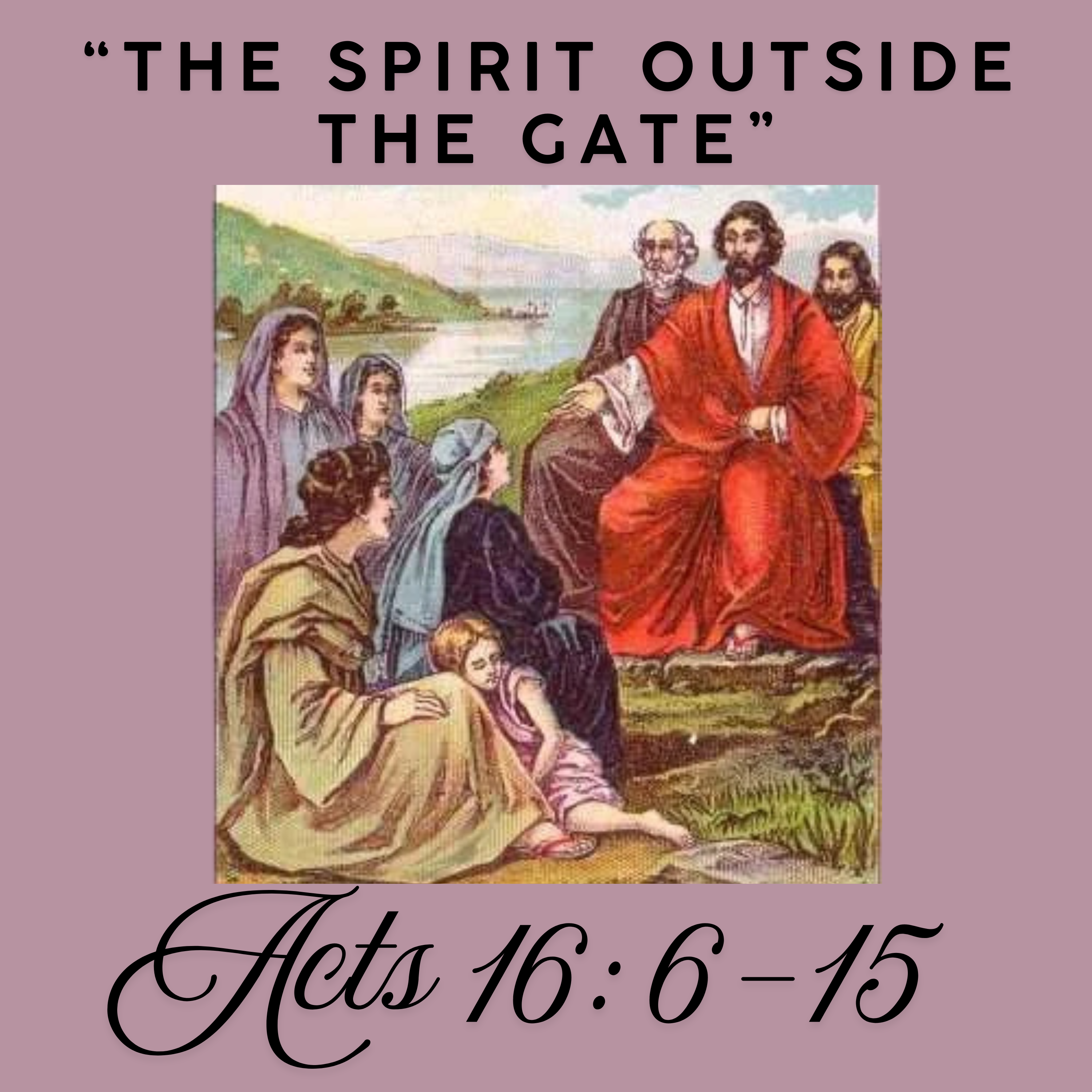
And it is, I think, exactly what is happening with Paul. Paul has made his plans. He has a strategy to reach Asia Minor. He wants to bring the gospel first to Asia Minor and then to Bithynia. And he decides exactly where he's going to go. But everywhere he tries to go, the spirit of God, by some mechanism that. That we don't understand, says, no, I don't want you to go there. Instead, Paul has a vision very much like Peter's vision. If you remember back in earlier in acts, acts, chapter 10 is where we kind of flesh that out. But the vision happened in the chapter prior to that. Paul has a vision similar to Peter's vision, only this time there is a man that Paul understands is from Macedonia, and he is pleading with him to bring the Gospel to Macedonia, which is absolutely not in Paul's plan. It's not part of his strategy, but he believes that it's God, the spirit of God leading him. So verse 11. We set sail from Charoas and took a straight course to Samothrace and following day to Neapolis and from there to Philippi, which is a leading city of the district of Macedonia and a Roman colony. So Paul obeys the vision. They sail off. They land in Philippi, which is a part of the greater region of Macedonia. And then it says on The Sabbath, verse 13, on the Sabbath day, we went outside the gate by the river where we supposed there was a place of prayer, and we sat down and spoke to the women who had gathered there. Now, here's what is helpful to know. This is a Greek city. It's Philippi. It's part of a Hellenized culture. There been synagogues in all of these cities. Typically, especially if the city was large enough, if there were enough Jewish men to have a synagogue, then they would create a synagogue in that city. And Paul's part of his strategy was he would go to Jewish synagogues and share with them about Jesus. Because, of course, Jesus was a Jewish rabbi. But if there weren't enough Jewish men to establish a synagogue in a given town, then there may not be a synagogue. And it was part of their tradition to meet by a river somewhere outside the city to sort of, you know, ferment a kind of Jewish presence there.
So Paul, knowing that there's no synagogue in Philippi, heads outside the gates to the river and presumes that there may be what he calls a place of prayer there. And in fact, there was, but there were no Jewish men, which is what would have been required to create a church there, a synagogue there. Instead, Paul discovers a group of women gathered, praying and worshiping.
And a certain woman named Lydia, a worshiper of God, was listening to us, listening to Paul expound upon the story of Jesus. She was from the City of Thyatira and a dealer in purple clothes.
So she's a businesswoman. And as a dealer in purple cloth, probably a fairly successful businesswoman as well.
And the Lord opened her heart to listen eagerly to what was said by Paul.
And when she and her household were baptized, Right. So that sort of sped along very quickly. Right. They listened to Paul's message and they believed. And they were baptized. And once they were baptized, she and her household were baptized. She urged us, saying, if you have judged me to be faithful to the Lord, come and stay at my home.
And she prevailed upon us. This is the story of wild tomatoes growing outside of the garden bed.
What we have here, of course, is a surprising twist in Paul's story.
He gets diverted by the Spirit of God away from Asia Minor, away from Bithynia, and towards Macedonia, towards Philippi. And once he's there, he discovers there is no synagogue. There aren't enough men there to establish a synagogue. So he goes outside the gates. He finds a group of women praying and worshiping. He shares the good news with them. Lydia, who seems to be one of the more prominent ones among them. She becomes a follower of Jesus. Her entire household is baptized and a church is established, not in a synagogue, but in her own home.
This illustrates something that's a little bit uncomfortable for the Christian tradition, which is, I don't know if you've noticed, strongly governed by a patriarchal spirit, that Christianity is, in fact, quite womanly.
The church in Europe, in fact, was founded by a woman in her home.
I love how the theologian Dana Roberts says, not only has Christianity in its entire existence been majority female, but Christianity could rightly be understood as a woman's movements.
Women have not only constantly founded churches and brought the Gospel to new places, but they generally make up the majority of churches and do the majority of the work.
Which should be no surprise, because generally, as the husband of a woman and father of three daughters, I've noticed that you all do most of the work in general, not just in church.
Somehow, people like me end up standing up here doing a lot of the talking.
What if it's possible that Christianity has always been a women's movement? My question for you today on this Independence Day weekend is, can women be free? Can women be liberated?
Are women allowed to grow wild outside the gates of what we consider to be normal and authorized?
Janelle had the privilege.
Is it okay if I share about the wedding? Okay.
I guess you can't say no. I just asked you in front of everybody.
Janelle had the privilege of officiating the wedding of Claire Marie, the daughter of Claire and Brett right here. So congratulations to them, by the way.
By the way, Brett never gets to have the microphone here because it turns out he's a far better speaker than I am.
The speech you gave was amazing, really.
But my favorite part about the wedding, other than the beauty of, you know, the young couple getting married, is that I got to see Janelle work as a pastor.
She is so much better than I am.
She speaks with such clarity and grounding and thoughtfulness.
She expresses such care and concern for people. And I'm always interested in settings like that because I'm always curious to see, like, what awkwardness or tension or, like, weirdness there might be because there is a woman as a pastor standing up there leading the marriage ceremony. And I was so surprised that, like, there didn't really seem to be any shade. Nobody was like, there's a woman up there. That's weird. And then later, we were, like, in line for the food, and Claire, the mother of the bride, was there, and she said, hey, you guys enjoying your table? And we said, yeah, it's a great table. We're really enjoying this conversation. And she said, yeah, we have a name for your table. We call it the liberal table.
And I was like, well, that explains it.
We're having such a great conversation. Nobody seems to think it's weird at all that a woman is a pastor and is leading with such authority and care and concern.
My question for you on this Independence Day weekend is, can women be free, or is liberty really just for the approved men in the room?
This, of course, teaches us. I think this entire passage very, not so subtly communicates that what the spirit of God is doing is outside the gates of what is considered acceptable and normal and approved and right. The Spirit of God is at work outside the gates of what we authorize to be good and right and true. The Spirit of God does not seem to care about what we think are the rules. The Spirit of God is at work outside the gates, raising something new, whether we like it or not. And my question for you on this Independence Day weekend is, are we willing to let the Spirit be free?
Can the Spirit of God do what the Spirit of God wants to do? Or are you trying to constrain God's activity by keeping it within the gates of what makes you feel comfortable and safe?
Or are you willing to let the wildness of the Spirit lead you into new places? This is not something new. We see this over and over again in scripture. We've already talked about how in the Book of Acts, the Ethiopian eunuch represents the Spirit of God coming outside the gates to a high official in the Ethiopian court. We've already seen how the vision that involves Peter and Cornelius takes teaches us that the Spirit of God is including people that we otherwise might want to exclude. But also in the Hebrew Bible, we see this as a pattern over and over again. Jacob at Bethel in Genesis 28 says, the Lord is here, and I didn't even know it. And that, I think is a familiar refrain for anybody who has learned to follow the Spirit of God. That when we talk about bringing God or bringing the gospel to people, what we discover very uncomfortably is God was already there among them, working and blessing and producing good fruit in areas that we would have considered beyond the limits.
This I think we see happening all over the Bible. We see Moses speaking to a burning bush. Not in Egypt, not in the center of civilization, not even in Canaan, which was of course, the promised land. But rather the burning bush comes to Moses in Midian, in the wilderness among a pagan group of people. The Spirit of God is already there, at work and speaking for those like Moses, who are willing to listen to what God is doing.
And of course, we see this all over Jesus's ministry.
Jesus speaks to the Samaritan woman at the well, thereby breaking all kinds of conventions for a rabbi to speak to a woman, especially by herself, by himself, without the approved chaperones. Jesus encounters the Samaritan woman outside the gates of respectability. Jesus encounters the Spirit of God at work in the Gerasene Demoniac. He encounters the Spirit of God with the Canaanite woman while he's on vacation and just trying to get away. And she asks him for a blessing, and he says, I haven't come for you. I've come for the people of Israel. And she rebukes him and reminds him that the Spirit of God is at work in all people. And he learns the lesson from her that the Spirit of God is at work outside the gates of what we consider to be good and right and safe and respectable. Jesus, of course, famous for hanging out with tax collectors and outcasts and lepers, all the people that are considered outside the gates of God.
The scandal of Jesus, in fact, and I think this is important for a church like ours that considered ourselves to be welcoming and inclusive. The scandal of Jesus is not that he welcomes. It's not that he includes people who are excluded. That's bad enough. But the real scandal of Jesus is that he teaches us that God is already with those that we have excluded.
We don't bring God to anybody. We don't welcome people to God. God is already with the people that we would consider ourselves missionaries to.
Oscar Garcia Johnson is somebody that I know. He's theologian working in the field of intercultural theology, and his challenge to the church, especially in his book, from which I've borrowed the title of my sermon, the Spirit Outside the Gate. His challenge to us is, on this Independence Day weekend, are we willing to let the church be free?
Are we willing to have a church that does not have borders, that doesn't put up walls, that say, if you're on this side of the walls, then you are good, you are of God, you are with those who are approved by God, but if you're on the other side, then you're outcast. And listen, if you don't know that that is a problem in progressive churches just as much as it's a problem in fundamentalist ones, then you haven't been hanging out here long enough.
We all have walls. We all erect borders. We do this to preserve our safety. And boundaries are good. I often joke that, like, I think. I like to think of us as like, the church with good boundaries.
Like, we don't ask too much. We don't pressure you. You know, we ask you to volunteer. We'd really love for you to volunteer, but we try not to, like, force you or coerce you or make you feel guilty for volunteering. We don't even pass like an offering on Sunday mornings because we're trying to be like the church with good boundaries. There's a reason for that, because oftentimes religion and spirituality are really, really good at violating your boundaries. Because we've learned how to, like, control and manipulate you through your desire to be included.
And so don't hear in my little speech today that boundaries aren't good.
It's important to have boundaries.
But when we erect walls and we affirm our own humanity on the inside of those walls, and we deny the humanity of those on the outside of those walls, we have violated boundaries.
We violated the gospel.
We violated the image of God in other people.
And the spirit of God does not care about your gates. The spirit of God does not care about your walls. The spirit of God does not care about your raised garden beds. The spirit of God does not care about your boundaries around gender or sexuality or citizenship. The spirit of God does not care about those things and is and always will be continually violating those walls.
The question is, do you want to be with the spirit of God or not?
I can't answer that question for you.
I know that many of us are here in this place because we believe that the spirit of God might possibly occasionally work through women.
And so we want to be a part of a church that recognizes the gifts of women and gives women a place to exercise those gifts. Many of you are here because we think that it's possible that the spirit of God might occasionally be at work in the lives of people who are gay and lesbian and bisexual and transgender, that those things might not be sins at all. And the reason we're convinced they're not sins is because good fruit grows from those wild bushes.
But don't think that because we have, you know, women on the stage and women on the board and queer people leading in all kinds of ways here, that we don't have our own walls that we've erected, that the spirit of God is not challenging you around those boundaries.
I don't know what walls you have built or what gates you have built, but I've built strong emotional walls around my life to make sure that certain people can't penetrate and judge me and hurt me and speak in a way that I might be, you know, bothered by.
And when I read passages like this, I'm challenged to ask whether or not the spirit of God might possibly be at work with the people that I find annoying.
Or hurtful.
And this is where, like. And I know this is going to sound very, like, old fashioned Christian, but, like, this is where, like, I don't know, maybe learning forgiveness would be a good thing.
[00:26:33] Speaker A: Thing.
[00:26:37] Speaker B: You can, of course, forgive and maintain healthy boundaries. There are, like, you know, 1600 therapists in this room right now that you could talk to about that.
It's also possible that the spirit of God might be working on the other side of our political boundaries.
And of course, I'm referring to people who exist on the other side of socially constructed, you know, border checkpoints.
But I'm also talking about how, like, annoying it is that my Republican neighbor is just one of the most kind and generous people I know.
God, that's annoying.
And so I'm challenged by that.
I wonder if you might be, too.
My prayer today is that we would, on this Independence Day weekend, not just let the tomatoes be free, not just let the women be free, not just let the gays be free, not just let the church be free, but maybe possibly let God be free.
Let God do what God is doing.
Quit resisting it, even if it doesn't match up to our preferential choices for who we hang out with and who we do family with and who we do church with and who we vote with and who we exist alongside.
Can we, like our Sarum prayer said, can we develop a sense of God in our eyes, in our head, in our ears, in our hands, in our bodies enough to know when the walls that we have built need to be torn down?
Would you pray that with me today?
God, we thank you again for today, for how these passages and stories from ACTS challenge us in ways that can be not only inspiring and exciting, but also uncomfortable or even troubling.
It's my prayer today that you would not only teach us to see and hear and to discern how you're at work in the world, but maybe especially that you would give us the courage to join you when we think that we maybe see you at work with people we might prefer to avoid.
Give us the grace to know the difference between when we need to maintain our distance and when we need to be bold and step forward and join with the work that you're doing.
That's a hard thing.
We confess we aren't always very good at it.
So God, come and be with us, embolden us and help us to have courage and recognize what you're doing. In Jesus name, amen.
[00:30:08] Speaker A: Thank you for joining us for this Sunday teaching, no matter when or where you're tuning in.
To learn more about our community or to support the work we do, Visit
[email protected] We hope to see you again soon.