Episode Transcript
[00:00:00] Speaker A: Foreign.
Welcome to the collective table where we celebrate the intersections of Jesus, justice and joy.
This podcast is brought to you by Oceanside Sanctuary Church. Each week we bring our listeners a recording of our weekly Sunday teaching at Oceanside Sanctuary, which ties Scripture into the larger conversations happening in our community, congregation and even the podcast. So we're glad your here and thanks for listening.
[00:00:39] Speaker B: If you are visiting Oceanside Sanctuary or it's been a few weeks since you've attended we are in a series of the spiritual practices of belonging of the church.
So through the month of October we've spoken about communion and sharing bread as a means by which we strengthen our commitment to one another and to the neighborhood.
Janelle, a week later guided us through a reflection on fasting as fasting as a practice that opens up space within us to better hold the grief that we have for the state of our world.
And right before Halloween, Jason asked us to reconsider what baptism is and what it means to be baptized, which has led us to this morning some of us were baptized as infants and some of us as kids and a few of us as adults.
And this morning I can tell I still feel the feeling in the air of welcoming some of our new friends into the baptized life, which is a shared commitment.
A person can't get baptized by themselves and the story into which a person is baptized is not a lone wolf journey.
We are baptized into what Paul of Tarsus called a shared body in which we are all knit together.
And while I've been asked to preach a sermon on confession and speaking the truth within church community, I think it's best to think of and speak of confession as the sister of baptism.
As Christians of every age have come into these waters, making a confession about themselves, making the good confession of Christ, and entering a commitment to the community that continues to confess and to tell the truth to one another.
And so as we think about the spiritual practices series and today of confession, I want us to kind of get in the head space of thinking of confession, of speaking the truth of who we are as a training into the life of Jesus, who is our teacher and our liberator.
Our text this morning comes from James chapter five Are any among you sick?
They should call for the elders of the church and have them pray over them, anointing them with oil in the name of the Lord.
The prayer of faith will save the sick and the Lord will raise them up and anyone who has committed sins will be forgiven.
Therefore, confess your sins to one another and pray for one another so that you may be healed.
The prayer of the righteous is powerful and effective. Elijah was a human like us, and he prayed fervently that it might not rain.
And for three years and six months it did not rain on the earth.
Then he prayed again and the heaven gave rain and the earth yielded its harvest.
My brothers and sisters, if anyone among you wanders from the truth and is brought back by another, you should know that whoever brings back a sinner from wandering will save the sinner's soul from death and will cover a multitude of sins.
There is a lot here to confuse and to upset the modern listener.
James assumes that being sick and needing to confess our sins are part of one shared challenge. They're tied together.
And James does not see our moral lives and our medical health as these two separate compartments of living.
And I'm not going to pretend that I understand how James, audience or ancient people views the connections between a person's spirit, spiritual health and their medical well being.
But if I was going to go into the doctor's exam room and the doctor began asking me some questions about some decisions I've made, my Internet search history, whether or not I shout at loved ones or have stolen anything in the last year, I would wonder if that's the physician's business at all and, and why they're. Why they are curious about that.
I'd be confused.
And I am confused about some things in this text.
When most of us get sick or injured, we go to the doctor if we can afford to.
We don't go to a pastor or to a priest to confess our sins.
And I don't want to try and convince anyone today that I believe or that you should believe that sin is a cause of medical problems or that praying is an anecdote for any physical ailment.
I'm a modern person.
When I'm in the middle of allergy season, I go and I buy nasal spray. I do not call Jason or Janelle or anyone in this church to hear my confession.
So we might as well be honest enough to realize that how much modernity and our scientific worldview has shaped our view of what spirituality is and what spirituality is not, and how many older cultures and ancient peoples saw the life of the soul as totally integrated and upstream of all of the other layers of our health, including our body.
I doubt that anyone here suffers from a sinus infection and wonders if their inability to control their temper is the ultimate cause. But ancient peoples would not consider that to be a silly diagnosis at all because they didn't see the human soul as this glowing light in an insulated Tupperware container, separate from our organs, our skin, our body and bones.
For them, it was all one system, all of that. To say, what if you. What if we considered our spiritual life to be central to all of the other layers of our health?
Would it get more of our attention if we did?
James considers confession to be a thing that the members of the church regularly do, though he doesn't give directions as to how that should look.
In the tradition in which I was raised, a person would stand up in front of the entire congregation and confess. And I can recall five instances in my life in which someone stood in front of all of us and unpacked some rather seedy details of their worst behavior.
I loved this and this, And James isn't advocating for that.
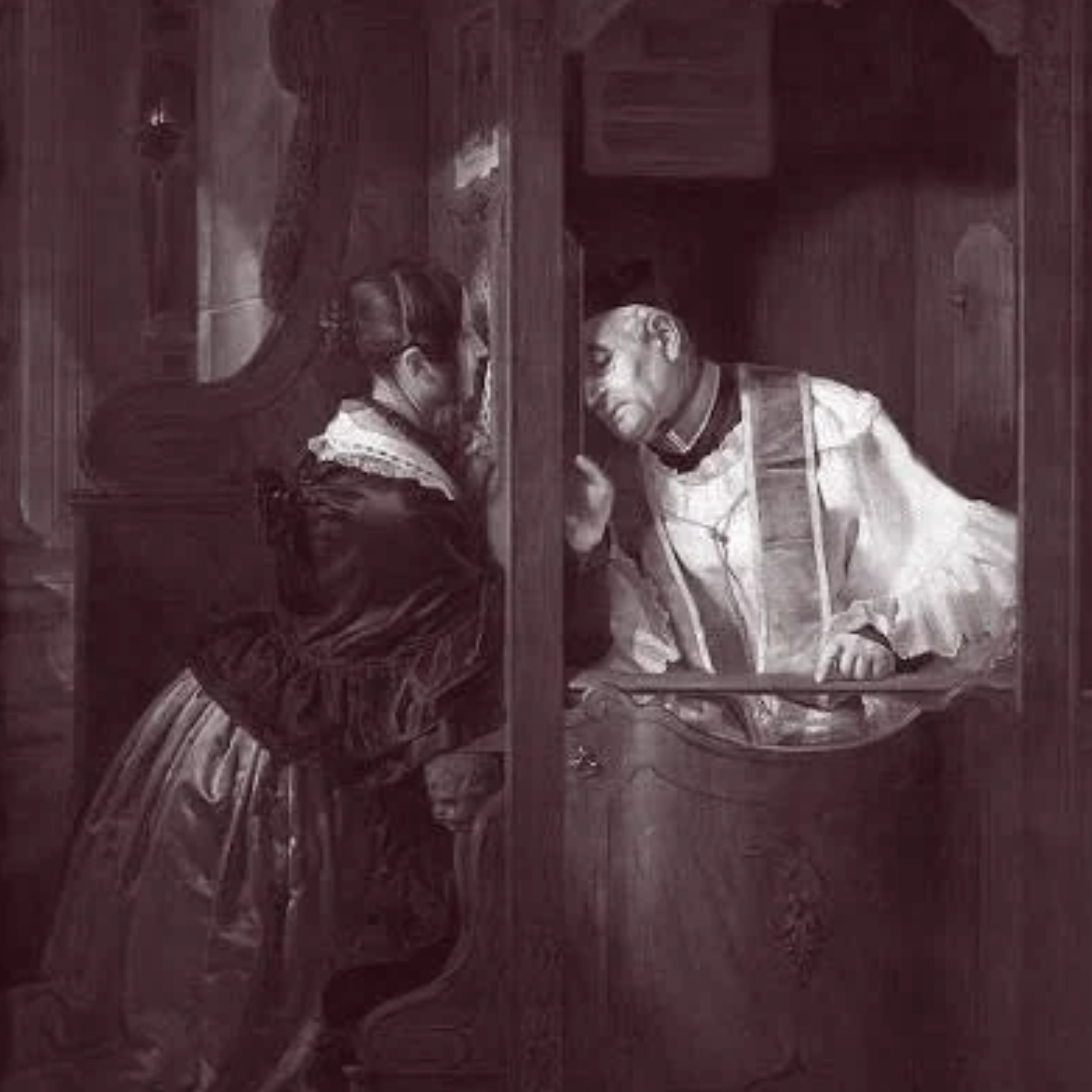
Neither does he describe the Catholic picture of one person sitting next to a priest having a hushed and private conversation.
James leaves it to the community to decide how confession will look.
But the thing about liberal churches and we're about to take a little trip to generalization Town, the thing about liberal churches is that something about confession doesn't smell right to us.
Progressive Christianity doesn't have much of an appetite for discussing our own private sins.
Sins in culture, sins in politic, the collective sins of the structures of the world.
We'll have a long sermon series on that, but our own private, personal matters.
Some of us have moral PTSD from traditional churches in which we were either morally policed or we were expected to morally police other people. And when we left, we committed to not wanting to do that ever again.
And some Christian traditions are openly cynical about human nature.
And they believe that anyone who doesn't believe that humans are top to bottom despicable, well, they don't even understand the gospel because as they tell it, the beginning of the gospel story is about how terrible we are and that that's the primary thing that Jesus came to address and to fix into that. Many of us said not interested progressive Christians. We tend to take our confessions to psychologists and therapists, maybe our pastors, if we have built a relationship with them, but almost certainly not to the entire congregation.
It's too prone to salacious gossip mills, to making a spectacle of other people's mistakes.
And that is always a possibility.
It's a possibility of what community confession can become if it is not practiced by trustworthy people who have a code of ethics and respect for the sensitivity of hearing other people's stories.
People's lives are not tales to be traded.
I didn't even know if I wanted to touch James claim that he makes here when he says if anyone among you wanders from the truth and is brought back by another, you should know that whoever brings back a sinner from wandering will save the sinner's soul from death and will cover a multitude of sins.
I don't want to get into it.
I'm as individualistic as every other Western person.
I don't want your business to become my business unless you invite me into that.
But I think it is safe to say that if Christians from the first century were to step into a time traveling machine and were to come and visit us here in the 21st century, that they would almost certainly be astonished at how anonymous you can be as an American churchgoer.
How many churches allow its faithful to attend week in week out with the members sitting right next to them in the pews, knowing next to nothing about their lives at all? You almost would think we prefer it that way.
Ancient Christians would wonder about why we are so insulated from each other and how we could ever expect a person to rescue a person from their spiritual wandering if we only see them one hour a week and we never hear about the struggles that burden them.
And as a modern person who is in the midst of what has been called the loneliness epidemic, I share that concern.
And I wonder about what progressive churches can do to nurture strong bonds between you and between me.
Bonds that are strong enough to carry the kind of intimacy and protection necessary for confession.
Confession done well.
So let me say that if there is nothing that you remember from the sermon this morning but two things, let it be the next two ideas. You can delete your disc space of the last seven minutes if you remember what disc space is.
Number one, the spiritual disciplines of the Church are designed for us to be free from our false selves.
And second, we become our true selves by training into those disciplines which expose what our false self is and frees us to become our true self, which is a mysterious and healed love.
I'll say it slightly differently.
The first truth is that the baptism and the communion and the prayer and the praise and the scriptures and the songs, they are training in us recognizing our false selves. And we are liberated by those practices when we recognize the original secret of our true self, which is always braided in to an unspeakable mystery, God's love.
And those two ideas are hard to understand, but they're also hard to accept.
And so we'll let somebody else do the work for us.
Thomas Merton was A brilliant monk and writer of the last century who really reached his peak during the Vietnam War era. And Merton tried to get his readers to understand that, that we all come into this world trying to build something, having to build something that isn't real.
We're toddlers, and then we're kids, and we want to be seen and embraced. And we are careful to find all of the ways in which adults will notice and value us.
And Merton doesn't think that we should rebuke ourselves for doing the types of things that kids need to do to feel safe and loved.
But he does say that we must be brutally honest about the ways in which we have crafted an identity to protect ourselves from the world, to earn other people's love, and to give ourselves power over other people so that they cannot hurt us.
That's the deepest inhale and exhale of our young lives.
Please love me, don't hurt me.
Please like me, don't hurt me.
It is why, before we even started putting on deodorant, that we want it to be popular or recognized as athletic or pretty or having seen as having money as a way to protect ourselves against ridicule.
And we created these false identities without really knowing what we were doing. It's not like any sixth grader wakes up in the morning and says, it's time to choose my mask for the day and hide my true self from others.
But the deepest things we do tend to be unconscious.
We don't know that we're doing them.
And so we still carry out this routine, Merton says, without seeing it for what it is.
It's costume wearing and hiding.
And I am a fan of Halloween dressing up from time to time. Wearing a Halloween costume is fun and innocent enough.
But the hard problem of the false self, the mask that Merton describes, is that we have to become a servant to working and working and working to uphold its social value and needing it to be real before others.
This is why public shame and embarrassment is so powerful. Powerful enough that accomplished people will sometimes kill themselves if they are exposed in some way.
It's the uprooting of our oldest project.
Being found out and seen as despicable is our undoing, because we so want to be seen as competent or smart or sexy or successful, as lovable in whatever shape that takes.
So how does Merton get from the false self to Jesus?
Merton describes Christ as the person, the only fit person, who invites us into the scariest thing that any person can do, and the scariest thing that any person can do. Christ's invitation is that we take off our false self, that we set down all of its weapons and defenses and old strategies, and that we walk in the world nakedly as defenseless love, no matter what the costs.
And that the image of Jesus on the cross is the most confrontational image that holds that whole truth together.
Because the reason that any of us ever wanted to be rich or attractive or desirable, or to be the funny kid in class or the smartest kid or respected for our competence once we get a job or recognized as good by our friends, is because it gives us a sense of control.
If people love us, they won't hurt us.
And following Jesus requires that we abandon all of the dishonest and failed attempts that we have to construct an identity that isn't really real.
And because it's not real, we end up hurting people, especially when we sense that they're about to expose us.
Because they're tugging at the mask.
They're poking at the costume.
It's why we want to shout at people who challenge our values, or we despise people who make us feel stupid, or we feel people who recognize some of our personality flaws because they're tugging at our oldest project, protect the masked costume of the false self.
It's why good people can get violent with the people they love the most or reckless with their sexual and romantic decisions.
Or it's why some of us got very materialistic as a way of drugging our secret loneliness.
It's why some of us are still chasing status as a way of feeling loved in the way that we did it when we were kids.
These are all branches on the same dying tree, the tree of sin.
Or, if you prefer, as I do, the tree that got separated from its root source.
So I want to ask you for a moment.
Do you know what your false self looks like and why you put it together in the way that you did?
Do you sense all the things that you do and that I do to maintain and protect the lie that this false self is real?
I think that is the best place, the ground floor of where we do confession with one another.
We talk about the things that we've been doing that aren't working.
And so Jesus invites us into the baptized life, into that family that shares in communion, the mystical body of servants who have grown tired of wearing the masks. Because we have come to see, as some have, that the only purpose of this human life is to become who we already are, children of that infinite love.
And once we are immersed into that, we do the only thing that humans are meant to do.
We give ourselves away.
We pour ourselves out.
We give our jacket.
We sit next to the lonely.
We cry tears with those who mourn.
It's what love does.
But there is this problem.
And the problem is, is that even after we have been baptized, we.
We relapse back into the old ways.
We keep doing those things that we learned to do because the false self keeps crawling back up the steps of the basement like an empty costume needing to be worn.
And protecting it means it's hard to tell the truth.
It's hard to tell the truth to each other about how disappointed we are or discouraged about the way things turned out, or angry about those people who mistreated us or resentful that we didn't get the thing that we needed.
It's hard to tell the truth that we're endlessly starving for experiences that we hope will fill us even after they haven't.
And so we hurt each other and we hurt ourselves even as baptized people.
Because living into our true selves, it requires immense courage and support from other people who have accepted the Jesus challenge.
We can't do it alone.
To become humble, to be kind, to be the hopeful and giving person.
That is the original secret of our hidden identity.
It is a painful and beautiful becoming that Jesus invites us into.
And if we don't throw ourselves utterly and completely into that invitation, we will never really be free because we will never really be who we are.
And so we confess and we tell each other the truth.
We tell each other the truth about how we continue to wound and embarrass and we share tears and we pray for one another and we remind each other again and again and again.
No, you are not that thing that you did.
No, you are not that thing that you said.
No, you are not this addiction that continues to bind you.
You are not the obsession that steals your sleepless nights.
No, you have stepped out of the darkness and walked into this glorious light.
You are God's beloved.
And so we come out of this water beginning again and then beginning again.
And I tell you the truth and you tell me the truth, and then we are better positioned to say each other to each other.
You are the light of the world, and a city on a hill cannot be hidden.
Amen.
[00:25:51] Speaker A: Thank you for joining us for this Sunday teaching. No matter when or where you're tuning in.
To learn more about our community or to support the work we do, visit us at Oceanside Sanctuary.
We hope to see you again soon.