[00:00:00] Speaker A: Foreign.
[00:00:08] Speaker B: Welcome to the collective table where we celebrate the intersections of Jesus, justice and joy.
This podcast is brought to you by Oceanside Sanctuary Church. Each week we bring our listeners a recording of our weekly Sunday teaching at Oceanside Sanctuary, which ties Scripture into the larger conversations happening in our community, congregation and even the podcast. So we're glad your here and thanks for listening.
[00:00:38] Speaker A: One of the reasons we really like to spotlight black Americans who are from Oceanside or part of this community is because you may or may not know, but San Diego county as a whole has a lower population of black Americans than in the United States at large.
And yet they have played pivotal roles in securing civil rights and policy change in San Diego county and California statewide. And so we feel part of our mission is to help spotlight people who might not otherwise be recognized. Like Ben, I really appreciated that Tara and the team this week decided to also spotlight Jesse Jackson, because what I love about that is that it really sort of establishes that whether you are doing your advocacy work, your care work in the community, on the one end by working for the school district and every single day showing up to make a difference in the lives of the students in your classroom or on the other end of the spectrum, you are making a lot of noise on behalf of people who need justice.
Both of those count.
Both of those are important ways that we can repair the world that we live in. And sometimes we think that, you know, if you're not getting a lot of attention from the news or you're not making a lot of noise, that you're not making a difference.
But what we do every single day makes a difference.
This is, not coincidentally what I'd like to talk to you about today. It's our last Sunday discussing our core values as a church. And so if you're just joining us, we have gone through a very short series, a five week series, to revisit the core values that you helped establish in 2025. When we made our most recent strategic planning process, our mission commitment through 2030 and our last core value, I think we're going to put it up here on the screen, is faith in action.
And the way we've articulated that together as a congregation. Is this because Jesus proclaimed and demonstrated solidarity with the poor, the stranger and the oppressed, we speak and act for justice as a living expression of the gospel.
So for us at this church, you all have said, this isn't something that I have thrust upon you or something that Janelle created that she is putting upon you. This is not something that flows from the Top as your pastors, this congregation came up with this expression of one of our core values, that for us to be followers of Jesus, that involves action on behalf of those who are in need today. I want to talk to you a little bit about that and about how Jesus at one point spoke specifically to that. Before we do, would you just say a prayer with me?
God, we thank you again for today, for this opportunity for us to gather here in this sacred place where so many have gathered for so many generations, to carve out time and space to attend to you and to your words, to be moved by our prayers and our songs, to have our hearts softened by the work of your spirit in our lives, to be challenged by the stories that we hear, and to challenge each other and encourage each other towards a faith that takes action for those who are in need.
We pray that you would stir us, that you would awaken us, that you would encourage us today and pray this in Jesus name. Amen.
Our passage today is Matthew, chapter 25, verses 1 through 31 through 40.
This is a familiar passage. You've heard it before. I may not say anything today that you haven't already heard or thought. If that's true, I apologize. I hope lunch is good.
Matthew 25, verse 31 says this. When the Son of man comes in his glory and all the angels with him, then he will sit on the throne of his glory, and all the nations will be gathered before him.
And he will separate people one from another, as a shepherd separates the sheep from the goats. And he will put the sheep at his right hand and the goats on his left. And then the king will say to those at his right hand, come, you who are blessed by my Father, inherit the kingdom prepared for you from the foundation of the world.
For I was hungry and you gave me food.
I was thirsty and you gave me something to drink. I was a stranger and you welcomed me. I was naked and you gave me clothing. I was sick and you took care of me. I was in prison and you visited me.
And then the righteous will answer him, lord, when was it that we saw you hungry and gave you food, or thirsty and gave you something to drink? And when was it that we saw you a stranger and welcomed you or naked and gave you clothing? And when was it that we saw you sick or in prison and visited you?
And the king will answer them truly, I tell you, just as you did it to one of the least of these who are members of my family, you did it to me.
I don't know what this passage makes you think of. But for me, this week, at least while I was reflecting on it, it made me think of home repair.
Maybe this is because I really dislike home repair. Like, I am not a DIY guy by nature, right? Like, when I am at home and I am not working, there are a few things that I like to do to sort of relax and unwind. And that is a very short looks. Something like this. I like to read.
I like to read for fun. I read nonfiction for fun. I read theology for fun. I read, you know, the sorts of things that would, you know, bore most people to death, I find interesting, and I like to reflect on that. And then when I'm not doing that, I like to binge watch Netflix, like, a lot.
I don't know if you're getting a picture of this, but all these activities involve a lot of bodily inactivity.
I'm very, like, you know, chill by nature, right? I don't want to be busy.
This is not how Janelle is.
Janelle will say, hey, would you like to watch a movie this afternoon? And I'm like, yeah, that is also my love language.
Thirty minutes into the movie, she starts, like, you know, getting a little antsy. She.
She's like, hey, I gotta get up. I'm like, the movie just started.
And she's like, yeah, but I gotta be busy. Can we push pause? And then she'll go, like, you know, replace the kitchen sink, and then come back and we'll finish the movie. And when the movie's over, I'm like, what movie do you wanna watch next? And she's like, no, no, no. I have to go install a new fence in the backyard. This is her idea of fun.
She loves home repair.
Me, not so much.
And yet, despite the fact that I do not like it. Since 2013, when we were fortunate enough to buy our house, in no particular order, this is what we have done. We've built a garage, workbench, and shelving. We've replaced the kitchen tile floor. We've replaced the kitchen cabinets. We've retiled the kitchen backsplash. We've added storage cabinets. We demolished and rebuilt a living room fireplace. We walled off the hallway entrance. We reopened the hallway entrance. We built a new stairway banister. We replaced the stair treads. We replaced all the hardwood floors throughout the house. We added a master bath and a closet. And we added a sump pump.
Stop.
We completely rebuilt the deck that, I swear to you, has more square footage than our actual house. We added an outdoor kitchen. We added a 10 by 10 shed in the backyard that may or may not connect to the electricity. We added a backyard garden bed. We added garden bed sprinklers. We tore out the backyard garden beds and tore out the sprinklers. We replaced all the windows in the house. We added a backyard pergola for Savannah's wedding. We replaced the rotting railroad ties that are literally holding up the hill. And we added a backyard fence for Judah's wedding. These are just a few of the things that we have done to our house since 2013. I could show you where literally everything in Home Depot is, and I swear to you, I do not care.
Like, tell us the truth, Jason.
There's a little paradox about this, I think, and that is that if we want our home to be preserved, if we want it to last, if we want it to stay the same, we have to constantly be changing it.
If we want our home to stay the same, we have to constantly be changing it.
Because if we don't, then the normal processes of wind and rain and weather and rot will change it for us in ways that aren't good.
There's a similar dynamic that Jesus, whether we realize it or not, is speaking to with this parable.
Jesus is entering the debate In Matthew, chapter 25 of A Jewish sort of discourse that's going on at that time, and he doesn't name it. And so you'd be forgiven for not recognizing that debate. But the debate is this. What's more righteous? Is it more righteous to study the Torah diligently, or is it more righteous to do good deeds?
Is it better to be religiously devoted, or is it better to commit acts of righteousness?
The thing about this debate is it's fantastic because it opens up all kinds of complications that are delicious to contemplate.
For example, how can you possibly do anything good in the world if you don't first understand what is good?
Therefore, studying the Torah must be the more holy endeavor.
You can't possibly know what's true unless you know what's true.
On the other hand, isn't it what we do in the world that matters? Isn't it how we treat people that matters? What good is it if we study and devote ourselves and worship and pray and read the right translations of the Bible and, you know, wear the right clever T shirts that say, you know, whatever political messaging it is that we've decided to make our pet expression of righteousness this week, isn't that more important?
Jesus weighs in on this debate. And if you haven't noticed, he weighs in on the side of deeds.
And it's always occurred to me, like, as a good Protestant, that we just, like, Ignore Matthew, chapter 25, because if you were raised in any kind of tradition like I was, that traces its lineage back to, like, the Reformed movement, right? Or, you know, the Reformation, where a huge chunk of the Catholic Church, through the work of the Reformers, sort of breaks away from Catholicism over a very similar, although not quite the same argument. If you're a part of that tradition, then you are taught very early on in your Christian education to lean heavily into the idea that it's not deeds that save us, that it's our faith, it's our beliefs, it's our fidelity to the right expressions of faith that saves us in God's eyes when he sees us, he sees our faith, not our deeds. And yet it occurs to me that this parable blows that out of the water.
Jesus seems to be saying very clearly that what matters is our deeds.
And there are a couple of surprises baked into this parable. I think the first surprise is he says our identity really doesn't matter.
And maybe you didn't hear Jesus say that our identity doesn't matter. So let me just share with you how I think he's saying that. Because, see, going back to the Jewish debate, one of the things that comes out of the conclusion that what really matters is our study, our religious devotion, is that if what really matters is our religious devotion, our study of the Torah, then what that does is it sort of begins to unpack all of these complications, like, well, how do I know that you're the kind of person who really studies and is devoted? And the answer to that question is, well, there are certain, like, outward signs that indicate that you're the right kind of person, the kind of person who studies and is religiously devoted. And those signs are some of the things I alluded to earlier. In the ancient near east, for Jews, those signs were a particular way of wearing their hair, foods that they did eat, foods that they didn't eat, you know, celebrations that they engaged in. There are all kinds of rules and laws that mark people as Jewish so that they could look at each other and say, oh, you're one of us.
Those are outward signals, signs, symbols of identity, so that when we look at each other, we know, are you part of my tribe or not? Are you safe or not?
And so the idea of religious devotion becomes very quickly attached to identity.
Am I the right kind of person?
And of course we can, as Christians in the 21st century, indict ancient Near Eastern Jews for placing too much emphasis on identity. But, man, we do it all the time.
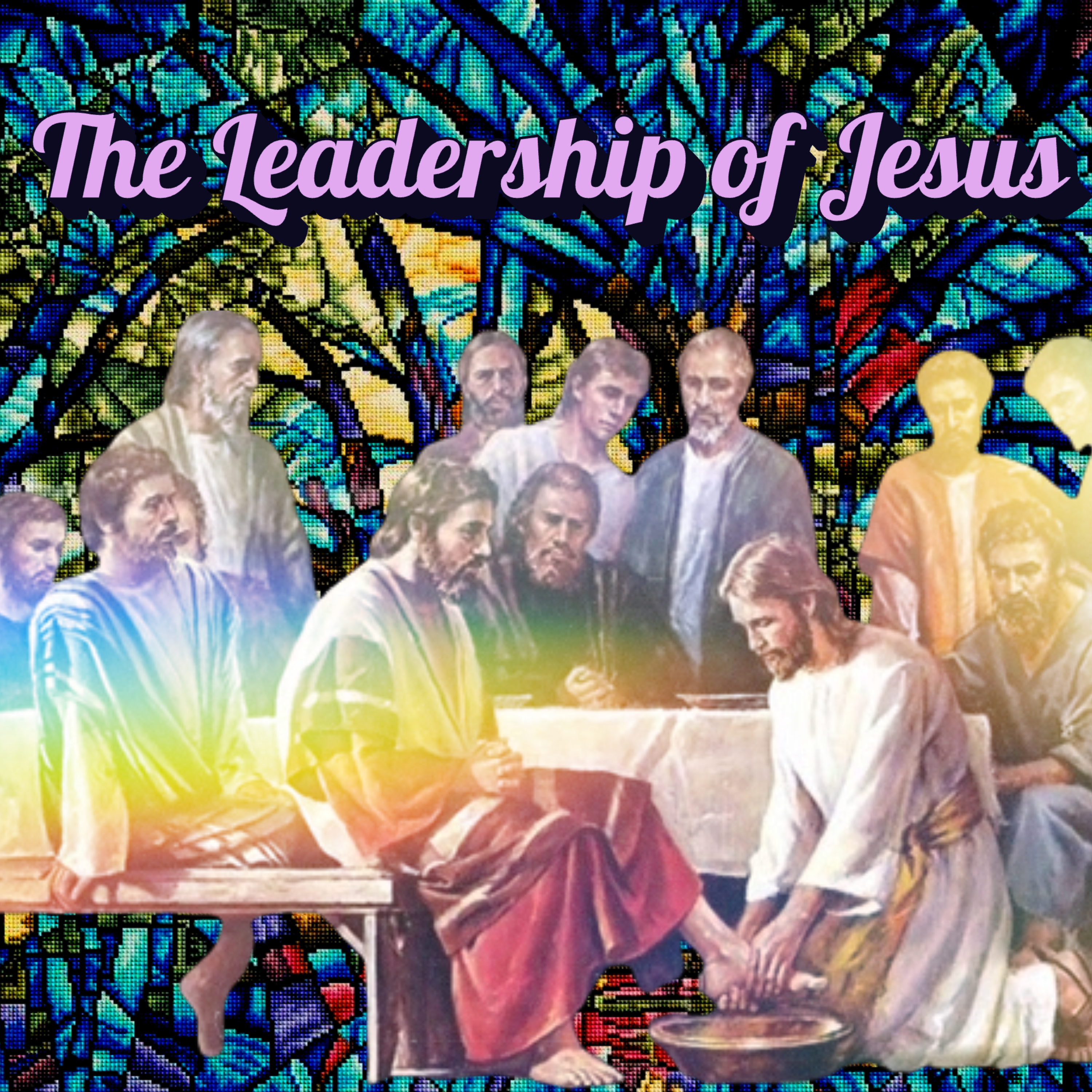
We do it by the clothes that we wear, by the translations of the Bible that we read, by the way that the stained glass in our windows is depicting a certain kind of Jesus by, you know, whether or not the preacher wears, you know, like stereotypically Gen X clothing, you know, on Sunday morning, or if he's wearing robes and a stole. Right. There are a million ways that we as Christians have learned to signal to each other that we're the right kind of Christians or the wrong kinds of Christians. This is how identity works.
Jesus critiques this in a really interesting way when he tells this part of the parable. Lord, when was it that we saw you hungry and gave you food? When was it that we saw you thirsty and gave something to drink? I don't think we've reflected enough on the fact that this parable indicates that righteous people have no idea that they're righteous.
And later, we're not going to read the rest of this, but the unrighteous people have no idea either.
It turns out in the parable, what matters is not how you identify yourself.
What matters is who God identifies with.
The issue here isn't that the people who were devoted identified as devoted people. The issue was how did they treat God's agent? How did they treat God's emissary? How did they treat the person who represents God, the person whom God identifies with?
And this is where it gets really uncomfortable, because who does God identify with?
The hungry, the stranger, the naked? Which is just a really vivid way of saying very, very poor people, the sick, the prisoners.
Jesus is saying, God doesn't care who you say you are.
God is coming to you in your life every day in the form of people who are suffering and sick and in need.
What matters is how you treat them.
That's how you know who's righteous.
Well, that's a surprise.
I think that this comports very well with what Jesus taught elsewhere. If we pay any attention to it at all. If we flip back to the Sermon on the Mount, Matthew chapter seven is sort of the third, you know, the third, third right of Jesus's teaching. And it's all about exactly this.
After telling us, you know, the golden rule, like, here's a really quick and easy way for you to know whether or not you're following Jesus's teachings. Do you treat people the way that you would want to be treated?
Okay, so that's a nice helpful way to remember everything that Jesus ever said. And then he says, oh, by the way, be careful that you're not deceived.
If you want to know whether a tree is a good tree or a bad tree, check its fruit.
Good trees naturally produce good fruit. Bad trees naturally produce bad fruit. Again, Jesus is pointing to the outcomes to the deeds, to the actions that define our lives.
He's saying, you may not be able to look inside of the tree and see for yourself whether it's good or bad. You may not be able to look inside the heart of somebody to see whether they are good or bad, but you sure as heck can see what they do.
Well, that's annoying.
And then he goes on to say, hey, by the way, not everybody who says to me, lord, Lord will enter the kingdom of heaven. Not everybody who calls me Lord will enter into God's righteousness, but rather those who do my will.
Jesus comes down pretty hard on the side of deeds in this debate, and I think it makes perfect sense.
This is what our devotion is for.
This is what our study is for.
This is what our worship is for. It's what our prayer is for.
This is why we do it.
Studying is good.
By the way, I can tell you from firsthand experience that if you are going to cut and jackhammer your basement so that you can install plumbing and a sump pump for your new bathroom, it's a really good idea to study up to make sure that you don't do lasting damage to your house.
I've done that.
It's been about 10 years.
The house is still standing.
We also talked to, like, you know, an engineer, so that was helpful.
Knowledge is good.
Studying is good.
Meditating is good.
Prayer, which changes our hearts. To be the kinds of people who recognize our shortcomings and look towards goodness and righteousness and peace is good.
But the point of all of that is to become the kinds of people who actually do good deeds.
One of the things I love about this tradition in ancient Judaism, this tradition of good deeds, which, if you're Jewish, is often referred to as a mitzvot. Like, every time you do a good deed, it's called a mitzvot.
When you come of age in the Jewish tradition, one of the things that you are required to do in order to, like, become an adult, right, is you go out into the world and they teach you to do mitzvot, you know, so that you can show that you understand that this is what it's for.
And over time, in the Jewish tradition, this has come to be understood as activity in the world, work in the World, things that we do in the world, that repair the world, that fix what's broken, that rights what's wrong.
This is often referred to as tikkun olam, which means repairing the world with our good deeds.
And I love that idea that no matter who I am, no matter where I am, no matter what my gifts are or my limitations, no matter what my expertise might be, no matter how much education I may or may not have, no matter how much money or resources I might have available to me, that wherever God has placed me in the world, I have an opportunity to repair it.
We bought our house in 2013, and before we even bought the house, my real estate agent called me up and he said, hey, listen, I want you to meet me over at the house on Saturday because the inspection is going to be done on Monday and I'm a little bit worried that it's not going to pass inspection. So you and I are going to repair some of the eaves that have dry rot in it, because you're going to get like dinged for that. So before I even owned the house, my realtor and I snuck over on a Saturday. It was vacant, snuck over on a Saturday and, you know, stopped at Home Depot and I kid you not, bought a can of Bondo, the stuff that you use to repair a vehicle.
And we bondoed the dry rot on the eaves of this house. We literally just covered up what was wrong and painted it, passed the inspection, bought the house.
But I love this idea that what Jesus is advocating for is that you can act in ways that repair our house.
This world is our house.
It's where we live in the very best of times.
It's going to be slowly worn and weathered, it's going to rot, it's going to break, it's going to fall apart little by little, because that is just how life works. And so even in the very best of times, we are going to have to to repair it.
We're going to have to do little good deeds everywhere we can, whenever we can, within whatever, with whatever power and resources we have in order to keep this place from falling apart.
These, my friends, are not the best of times.
Somebody has set fire to our house.
And we still have to do whatever we can, wherever we can, with whatever we have.
And what that really looks like, According to Matthew 25, is whatever act of loving kindness you can commit towards people who are in need.
And what I really love about that is it's just one little thing that you can do that I can do.
I can't replace the current administration in Washington D.C. that's not within my power.
I can't change laws that are on the books that I think are unjust. That is not within my power. I can advocate for it, I can make noise for it, but it's not directly within my power to make those changes today.
But if you are hungry, I can feed you. Today.
If you're sick, I can provide you with a bit of comfort and encouragement.
If you're naked, I've got some extra clothes.
If you're in prison, I can visit you. These are all within my power.
They're within your power too.
This is what our faith is for.
Amen.
Would you pray with me? God, we thank you again for today, for this opportunity for us to gather here as a church, as a people who are dedicated, devoted and ready to act in ways that might repair a little something that needs attention in our world.
It's my prayer here today that each of us would leave here resolved to do what we can, when we can, where we can, with whatever resources we have. Some of us have more resources and more opportunity, more relationships, more power. And some of us have less.
But every one of us can do a mitzvot.
Every one of us can act in accordance with what we have from a place of faith in loving kindness as the true expression of righteousness.
We pray that you would give us the courage to do that. In Jesus name, amen.
[00:28:03] Speaker B: Thank you for joining us for this Sunday teaching, no matter when or where you're tuning in.
To learn more about our community or to support the work we do, Visit
[email protected] We hope to see you again soon.