[00:00:00] Speaker A: Foreign.
Welcome to the collective table where we celebrate the intersections of Jesus, justice and joy.
This podcast is brought to you by Oceanside Sanctuary Church. Each week we bring our listeners a recording of our weekly Sunday teaching at Oceanside Sanctuary, which ties Scripture into the larger conversations happening in our community, congregation and even the podcast. So we're glad your here and thanks for listening.
[00:00:41] Speaker B: All right, so for those of you who don't know, my name is Jason. I'm one of the pastors here at osc, and we are going to jump back into our current teaching series, which we've been calling After God's Own Heart. This is a series built on the observation of the kind of difficult or problematic statement that we find in the Hebrew Bible and in the New Testament that David, King David from the Hebrew Bible was, quote, a man after God's own heart. And that is especially difficult for us looking back on some of these stories, because David does some things that are highly questionable, highly morally problematic. And I don't want to steal where Janelle's going with this, so I don't want to like, unpack all of that. But just suffice it to say that there are narratives about David that we look back on and recognize that some of David's actions are, from our perspective, deeply immoral. And also, God often is depicted through these stories as acting in ways that we find to be deeply morally objectionable. And so we've been exploring what does it mean to be after God's own heart? What is it that maybe the text is trying to think, teach us about how we are as people of faith, as followers of Christ, and what can we learn from some of these texts? Now, the approach that we've taken, if you haven't been a part of this, is we've been pairing a story of David with a psalm of David. David traditionally is the author of many of the Psalms. And so we've been kind of pairing together a story about him from usually 1st or 2nd Samuel, 1 or 2 kings, and then using a psalm that's attributed to David to sort of peek into what's going on in David's heart and to ask ourselves what we can learn from that today. I want to share with you The Story of 2 Samuel, chapter 6. The text is not going to be up on the screen for this one. I'm going to share the text of Psalm 63 with you in just a moment. But before we put that psalm up, I want to read to you from this story in 2nd Samuel, chapter 6, just a few verses from verse 12 through verse 16.
For many of you, this will be a familiar story. We're going to jump into the middle of it. In verse 12, it says this.
It was told king David, the Lord has blessed the household of Obed Edom and all that belongs to him because of the Ark of God.
Okay, so we've jumped into the middle of a story here. The bigger story is this.
David is the king in Israel. And prior to this, the Ark of the Covenant, which many of you remember from Raiders of the Lost Ark. Right? The Ark of the Covenant is like the physical manifestation of God's presence in the Hebrew Bible in the story of the Israelites. At some point, the Ark of the Covenant disappears. It's abducted by the Philistines, and then it's re obtained by the Hebrews through a kind of military victory. And then as they're bringing the Ark of the Covenant into Jerusalem, into the core of Jerusalem, which is called the City of David because it's where David lives as the king, a tragedy happens. One of the people who's accompanying the Ark of the Covenant, it, the text says, reaches out to try to stabilize the Ark while it's, you know, on a rocky trail and Uzzah is the name of the person reaches out to try to stabilize it and is struck dead. Because in the Hebrew Bible, God's presence is dangerous.
If you come into contact with God in a way that isn't safe because it's not circumscribed by certain sort of rituals or performances, then you could, like Uzzabi struck dead. Now we're not going to talk about that. This is just another example of how some of these texts can be weird for us. Right? So let's just acknowledge that and then stick to the point, shall we?
The point is that this tragedy happens. Somebody close to David dies trying to bring the Ark into Jerusalem. So David kind of freaks out. He says, I don't know what to do. We've screwed up this whole endeavor. And he sends the Ark to the household of Obed Edom because for whatever reason, we don't know why the text doesn't say it, he thinks this might be a good place for the Ark to reside for a time. While David tries to figure out what to do next.
Well, something interesting happens. What happens is, is that the household of Obed Edom suddenly begins to flourish. It's blessed. We don't know exactly what that means, but we can imagine that things go well for Obed Edom's household. So verse 12, it was told King David, the Lord has blessed the household of Obed Edom and all that belongs to him because of the Ark of God.
So the physical representation of the presence of God is in this household, and that household is blessed. David's like, well, then I need that thing, right?
This is exactly what happened. So David went and he brought the ark of God from the house of Obed Edom to the city of David with rejoicing.
And when those who bore the Ark of the Lord had gone six paces. Now here's where the text is going to describe, like, some. Some rituals that don't make a lot of sense to us. That's okay. Just go with it.
So when the ark of the Lord had gone six paces, he sacrificed an ox and a fatling. Now this is just David taking, like, extra precautions, right? Like, this is part of their religious ceremony. Part of their religious ritual is sacrificing animals to God. So David is being extra careful. He doesn't want somebody to die. He certainly doesn't want himself to die. So he's being extra sort of devout, you might say.
And then it gets interesting. Verse 14 says this.
In addition to sacrificing the ox and the fatling, verse 14 says, David danced before the Lord with all his might.
David was girded with a linen ephod.
Think fancy underwear.
So David danced before God in fancy underwear.
So I know I said underwear.
Stick around long enough and it'll get worse, I promise.
David was girded with a linen ephod. So David and all the house of Israel brought up the ark of the Lord with shouts, shouting, and with the sound of a trumpet. So here's what happens. David, being very careful, he doesn't want another tragedy to happen, decides to bring the ark from the household of Obed Edom. They're coming up the trail. He performs a sacrificial ritual, you know, a sacrifice, after the ark has traveled just a few steps. And then he himself leads the procession. He leads the procession from the house of Obedidom to the palace.
And in that procession, David strips off his royal clothes, his ceremonial, like symbolic representations of his authority, his anointing, his royalty.
He strips himself down to almost nothing, just that linen wrap around his middle.
And he himself leads the procession with dancing and shouting and singing and celebration.
In other words, he gives of himself completely in order to lead this sacred representation of God's presence to its eventual home.
Now, if this sounds a little bit weird to you, please know that it sounds very weird to me.
And it also was very Weird. To David's wife, or I should say one of his wives, whose name was Michael.
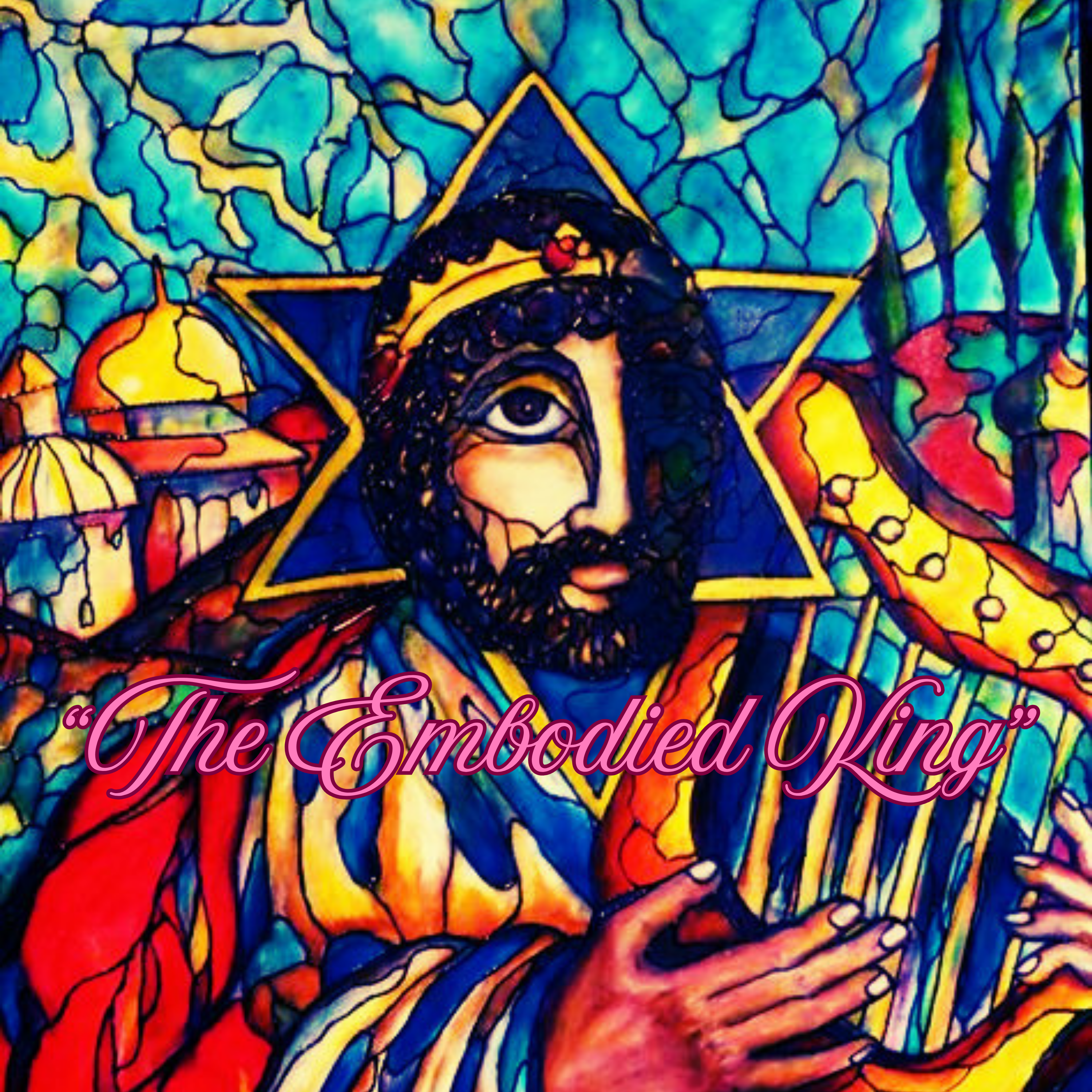
Verse 16 says, as the ark of the Lord came into the city of David, Michal, the daughter of Saul, looked out of the window and saw King David leaping and dancing before the Lord, and she despised him in her heart.
Boy, I can understand that, because how embarrassing for David, the king of Israel, to be, like, dancing down the road in his linen underwear with wild abandon before all the people who are watching, singing and flinging his body parts in every direction like those of you who dance often do.
I don't dance.
And you should all thank God for that, because dancing is maybe the single most exemplary expression of total self abandonment.
And I'm just way too in my head for that kind of undignified behavior.
Janelle will tell you that she cannot get me to dance, no matter what. There may have been a time when after an adult beverage or two, I could be coaxed into dancing, but once it became clear to me how ridiculous I looked, that was the end of that.
And the rest of you don't know how ridiculous you look when you're dancing or you don't care.
And that difference, I think, kind of matters.
So I want to talk a little bit about that. I want to talk a little bit about the difference between not knowing and not caring.
But before I do, would you pray with me?
God, we thank you for today and for this opportunity for us to gather, to pray our prayers, to sing these songs, to lift our voices and our hearts to you, to come into contact with you, to become more aware of your presence in our lives, and to slowly lose a sense of ourselves, our own authority, our own importance, our own dignity, so that we might become who we were created to be.
We pray all this in Jesus name. Amen.
Some of you know, because you've been around long enough to know that about a year ago, our middle daughter Judah got married and she married a wonderful gentleman. His name's Cem and he's a Turkish national.
And if you ever want to see a lot of dancing, attend a Turkish wedding.
We hosted the wedding in our backyard, and half the people who were there were either members of Jim's family or his friends here in San Diego county who are also Turkish. Because, you know, like, when you're part of a.
Like a community that originates somewhere else, like, all of you find each other, right? So, like, all the Turkish people in San Diego county know each other. I'm pretty sure we had half the Turkish population of San Diego county in our backyard about a year ago, and there was so much dancing. And I sat in a very dignified place off to the side while everybody danced. Don't worry, I didn't, you know, inflict my dancing on anybody else but my grandson. Otis has never met a song that he wouldn't dance to.
And that was basically like the highlight of Otis's life up to this point. We have videos of him dancing in the center of this, like, maelstrom of Turkish people being lifted up on people's shoulders, pulling out every dance move in the book. There was definitely pointing going on. There was kicking happening, there was swaying. Otis was in his element. And not for one moment, not for one instant was Otis afflicted with what we might call self awareness.
He couldn't care less what he looks like when he's dancing. He is just utterly and completely immersed in joy. He has no embarrassment whatsoever.
And because of that, he's having more fun than anybody else at the party.
Have you noticed that?
That it's the people who have learned to let go of themselves who enjoy themselves the most?
I think that's a little bit of what's happening in this passage, and I think we get to see an unpacking of what's going on here in Psalm chapter 63. So I want to share with you what's going on inside of David by reading through Psalm 63 with you.
Then I'll share a couple of things I'm noticing about it, and I hope that you will have some takeaway as well. Psalm 63 says this.
Again, this is a psalm attributed to David. It is essentially a poem and a song written for the assembly to sing together. And it says this. O God, you are my God, I seek you. My soul thirsts for you.
My flesh faints for you.
As in a dry and weary land where there is no water. So I have looked upon you in the sanctuary, beholding your power and glory, because your steadfast love is better than life. My lips will praise you, so I will bless you as long as I live. I will lift up my hands and call on your name.
My soul is satisfied as with a rich feast. My mouth praises you with joyful lips. And when I think of you on my bed, When I think of you on my bed, Are you embarrassed yet for him?
When I think of you on my bed and meditate on you in the watches of the night, for you have been my help, and in the shadow of your wings I. I sing for joy. My soul clings to you.
Your right hand upholds Me.
But those who seek to destroy my life shall go down into the depths of the earth. This song has taken a turn.
They shall be given over to the power of the sword. They shall be prey for jackals. But the king shall rejoice in God. All who swear by him shall exalt. For the mouths of liars will be stopped. And I want you to notice two things. The first is that this song, this poem, has sort of two movements in it. The first is encounters with God from verses one through verse eight.
And that leads to the second movement, which is as a result of those encounters with God, David gains a sense of security, a sense of safety, a sense of groundedness, a sense of well being. Because he encounters this ineffable, invisible, uncontainable, uncontrollable God. He is somehow captured by a sense that all is okay with him and with the world, in spite of all the evidence around him. That's the first thing I want you to notice that there are these two movements. It's a kind of if then situation. If David encounters God, then he. He will have a sense of security, a sense of safety, a sense of peace. And the second thing I want you to notice is how he got there.
What David is doing in this psalm is he is very intentionally, very purposely imagining himself immersed in the presence of God.
And he imagines himself encountering God in a very distinctively bodily way. Notice the words. He seeks God. It's a visual metaphor. He thirsts for God. He has a physiological need for God's presence. His flesh faints for God.
He has looked upon God in the sanctuary as behold God's power. His lips will praise God. He will lift up his hands and call on. On God's name. He will do all of these things that essentially embody his encounter with God. It's like a rich feast to him.
And as a result, his mouth praises God with his lips. He thinks about God and meditates on God. Even when he is in bed, inactive and resting, he is still engaged with God in a very bodily way. And because of this, because David engages God in an embodied way, he experiences a sense of well being.
That seems good.
How do you feel?
I mean, you know, about the world.
Would you like to have a bit more grounding and a sense of well being?
Would you like to have a sort of sense of rootedness in the idea that however things might be disintegrating or falling apart, or suddenly more challenging than they used to be, or more challenging than you thought they would be, or suddenly Maybe deeply unfair.
Would you like in the midst of that, without denying that, without pretending that that's not real, without sticking your head in the sand, would you like to be able to sit with the discomfort of the slow disintegration of. Of civilization as we know it and yet somehow rest in a sense that it is going to be okay, even if you don't know how?
I would like that.
I would like that.
David seems to have that.
David doesn't get everything that he wants in life simply because he is able to engage with God in an imaginative and embodied way. But David does seem, in spite of all those circumstances, to be able to inhabit a sense of groundedness and peace and well being in spite of those things.
Remember, I've brought this up a couple times over the last several weeks, but I brought it up last week and a couple weeks before that. But if you were here, do you remember me talking a little bit about the social science technique of bracketing?
I have taken way too many anthropology classes, but one of the things that anthropologists and sociologists often do when they're engaged in empirical research in the world is they employ a technique called bracketing. And there are different ways of doing this, but essentially what it means is being aware of your biases and beliefs and the way that you have been formed to exist in the world, being aware of those things, your own commitments, who you are, what you think, what you feel, how you were raised, your social location, your socioeconomic status, your racial position in the United States of America, the ways in which you might intersectionally occupy more or less privilege, whatever it might be, that you are aware of those things, but you're able to take those things and set them aside momentarily so that you can, as a social scientist, inhabit another person's world.
And the idea here is that if you engage in social science, your tools of data collection are not microscopes or thermometers or accelerometers, right? These are the ways that physical scientists who believe in a silly little thing called rationality, this is the way that they.
That was a joke.
It's good to laugh.
These are the ways that positivist or rationalist oriented scientists measure the world. The way that empiricists measure the world, among other things, is with their body.
Your body becomes an instrument of data collection, an instrument of measurement, because you use your body to inhabit, at least to whatever extent you're able to inhabit and experience another person's subjectivity, their own subjective experience of the world.
And in doing this, you collect information that becomes useful.
And a few weeks ago I said Romans chapter 12, among other things was Paul's way of teaching us to bracket ourselves off so that we could experience another person's world, so that we could appreciate their gifts and realize that the world wasn't all about us.
And then last week I said in Psalm 131 that David was exhibiting the same skill that David was bracketing himself off in Psalm 31, but not to experience another person's world, but to experience his own inner world in a more layered, complex way.
I think David's doing a similar thing here. In Psalm 63, David is bracketing himself off only in this case it's not to experience the world of another person, it's not to experience his own world more in a more complicated or rich or nuanced way. Instead, in Psalm 63, David has bracketed himself off in order to experience God's world.
David has set aside his own fears, his own securities, his own subjective hyper self focused awareness to put his body in a position to be an instrument that collects data about God.
This is I think, essentially what's happening in 2nd Samuel 6. David has stripped himself completely, both figuratively and literally of all of the external accoutrements of royalty and authority and power. He stripped himself naked and set aside his self judgment, set aside his dignity, set aside his sense of importance in order to experience God in a raw and embodied way.
Micah in that story, Michael, his wife, kind of represents our tendency to step outside of ourselves and judge ourselves when we do that sort of thing.
And David says to her, didn't read the rest of that story, but David essentially says to her, this is what I have to do to worship. And I'll become even more undignified than this if it means being closer to God.
And I don't know about you, but that's like deeply challenging to me.
Janelle reminded me of this the other day, but I'm pretty sure it's been a while now, but I'm pretty sure. 2nd Samuel 6 and that story was the first real sermon I ever preached.
It was at a little church in Park City, Utah, a little Pentecostal church. Dylan and I were like Pentecostals for a number of years.
And I think the reason we were Pentecostals is because we were like learning, having been raised in Southern Baptist churches or very like straight laced button down churches, we were suddenly learning what it meant to give ourselves over to worship of God without subjective self judgment.
And so this passage fascinated me and I think it was the first sermon I preached and when I preached it, I used the example that like, you know, what if our associate pastor, who was a big like dude's dude, man's man, tough guy type, his name was Dwayne. And I said in front of our church at that time, just imagine if Dwayne stood here in his underwear and danced in front of you.
And Dwayne, horrified, stood at the back like doing this, you know.
But that image still captures me because I'm still challenged by the question, can I encounter God in a way that is free of self judgment, that's free of dignity, that's free of all the trappings of rationality?
We all know how to do this, by the way.
We all know how to do this.
Do you play an instrument?
If you do, if you play a musical instrument, you know what it's like to get out of your head and step into that place where you just flow?
Do you know what that's like?
Do you run?
Do you swim?
Do you do anything that requires like some level of skill and practice, that you have done it over and over and over again to the point where you are finally able to step outside of your questioning self and just do it without thinking. And in that doing without thinking, that state of flow, you experience a kind of joy like you've never experienced before. And you're like, I'm so good at this. You're so impressed with yourself.
Do you drive a car?
Have you ever driven from point A to point B and gone through five or six traffic lights that involve stopping and going and slowing down and turning and realized when you got to your destination that you were thinking about the something else the entire time and you barely remember all of the little like mechanical executions of what you did. You were in the state of flow.
Do you knit?
Do you know what it's like to sit there and experience the joy of the repetitive skillful motion that you really don't have to think about, you just do. And while you're doing, you're like working out all kinds of stuff inside of you. And the end of it, you feel like you've been to a therapy session because your body has worked out all of the like self critical crap.
I mean, knitting is just one example, right?
We all know how to do this.
We just increasingly don't let ourselves do this in church.
Because this is just one of the last places where we have told ourselves that our rational minds, our rational beliefs, our rational ways of being and existing in the world prohibit us from letting go of that subjective sense of hyper self criticism and just be, just be in a state of flow where we're able to worship.
Do you pray?
Do you meditate?
Do you speak in tongues?
Did you know that all three of those activities have been thoroughly studied and discovered to be activities that switch your brain into a place of mental flow that frees you from yourself and allows you to experience more well being and happiness?
Listen, I know it's weird. I couldn't tell you what's happening when people pray in tongues.
And I know that that sort of activity happens in the kinds of churches that churches like ours tend to judge.
But people who do that are happier than people who don't.
And I'm not saying you should do it.
I'm just saying that there are mountains of evidence now that people who participate in religious services where they sing and pray and meditate and light candles and receive communion report higher levels of well being and happiness and peace than people who do not.
At some point, if this is going to be helpful to you in some way, you've got to get out of your own head.
You've got to learn to like experience worship as a state of flow, not just a place. And there's a place for this, and this is important, don't get me wrong, but not just as a place where you're trying to figure out if you still believe in God or not.
It's okay for you to wrestle with that. It's even important for you to wrestle with that.
At some point you might get to the place where you realize nobody knows.
And it's okay to worship anyway.
So how do we inhabit God's reality? How do we inhabit God's world? How do we bracket ourselves off and immerse ourselves in the presence of God? Well, here's how I think. Number one, realize that you are too dignified for your own good.
Really, for God's sake, stop taking yourself so seriously.
Step two, once you've realized that congratulations, don't pretend that that's not true.
Don't hide from it, don't repress it, don't feel shame about it.
Just set it aside.
Set that little part of you aside.
That part of you, you know, that's like the crying baby that we talked about last week. That part of you that's like the king dressed in his royal garb. Take that silly little part of you and set them aside.
And then number three, imagine for a moment, allow yourself the luxury or the fantasy or the fiction or the myth or the belief or the conviction or the Faith. Insert whatever word is most helpful to you. Allow yourself to imagine for a moment that God is good.
That God is good.
Not an angry, capricious man in the sky who wants to punish you because you had a bad thought or a cigarette.
Or that you may have engaged in sexual behavior before somebody told you it was okay. Or that maybe your sexuality is in question. Or maybe your gender is somehow subhuman. Or maybe your race somehow makes you less than you think you really are. Or that there's not enough money in your bank account, or that you have the wrong color eyes or you have too many pets or not enough pets, or too many kids or not enough kids, or worship in the wrong place or don't worship at all. For God's sake, let that go.
Oh, my neighbor has the greatest bumper sticker. It's a little bumper sticker of the Buddha.
And on the top it says, let that.
And on the bottom it says a word I won't say, but it starts with an S.
It has an hit in there.
Let that blank go.
Let it go.
Imagine for a moment that God is good, not an angry, capricious old man in the sky who is punishing you for whatever.
Number four.
Now that you have that God in mind, the God that seems good to you, now that that God is there, whatever their shape, their form, their gender, whatever.
Now that you have that God in mind, sing to them.
Pray to them.
Tell them what's on your heart.
Tell them what you want. Tell them what you don't want.
Bring your cares before them. Bring the people you love before them. Bring the people you hate before them. Bring yourself before them. Sing to them the words that attribute to them all the attributes that you would want for yourself.
Worship them.
And I know this is where I lose a lot of you, because that sounds embarrassing.
This is like stripping yourself naked, exposing yourself before the God that you would at least like to believe exists.
Okay, last step.
It's almost lunchtime.
Once you've done all that, there's one last thing that I think we need to do, and that is pay attention to what happens in you after you've done all that embarrassing stuff.
What's happening?
What happens to you when you let yourself go and you dare to believe that a truly good God loves and cares about you and wants to know you?
What is the instrument that is your body telling you about that God?
Is your body telling you that that God is mean, cruel, capricious, judgmental, hateful, somehow reflective of your gender and your race and your nationality, or maybe Is your body telling you something else?
And yeah, I know you can never know if what your body as an instrument is telling you is objectively true. This is empiricism, not rationality.
It's faith.
But again, the people who do this, who learn to do this happier, healthier, live longer.
So what do you have to lose?
Why not at least give it a try?
Okay, so I'm done.
That's the good news.
The bad news is the band's coming back up.
And I just gave a whole sermon about how you all should consider for a moment letting go of your self dignity and singing to God.
Please keep your clothes on.
So before they come up and before they start singing and playing and before you're like, oh my God, I have to sing or now I'm going to be judged, that would kind of miss the whole point of the sermon, right?
So I'll just also say this. Everybody does this differently.
Some people are able. As soon as the music starts, man, they just start dancing. Have you noticed that?
And other people like, it takes a few drinks.
So give yourself a break.
If this is something that you want to try, if you want to learn how to get out of your head and be more embodied, give yourself permission to take baby steps.
But I promise you, in this place, nobody's gonna judge you, least of all God. Amen. Would you pray with me? God, we thank you again for today, for this opportunity for us to gather, to be together, to encourage each other, to stretch each other, to be embarrassing together.
It's my prayer, God, that you would draw us closer to a sense of your real presence.
We know that you are always with us and always around us, always in us. But sometimes we're too in our own heads to recognize it.
So we pray, God today that you would liberate us from ourselves, that we would experience a bit of your joy.
In Jesus name, Amen.
[00:41:06] Speaker A: Thank you for joining us for this Sunday teaching, no matter when or where you're tuning in.
To learn more about our community or to support the work we do, Visit
[email protected] org we hope to see you again soon.