[00:00:00] Foreign.
[00:00:08] Welcome to the Collective Table where we celebrate the intersections of Jesus, justice and joy.
[00:00:15] This podcast is brought to you by Oceanside Sanctuary Church. Each week we bring our listeners a recording of our weekly Sunday teaching at Oceanside Sanctuary, which ties Scripture into the larger conversations happening in our community, congregation and even the podcast. So we're glad your here and thanks for listening.
[00:00:41] Good morning. For those of you who don't know, my name is Jason. I'm one of the co lead pastors here and this is our adult teaching time. Otherwise every time I get up here. Otherwise known as story time about the grandkids.
[00:00:54] So two two grandkids stories for the price of one. Today I just want to give you a heads up that you're going to hear one, but the fun's over. Later you're going to hear another grandkids story. So just preparing you for that.
[00:01:09] But before we do that, why don't we jump into our text. We are teaching through a series called After God's Own Heart where we're asking the question from the Hebrew Bible and from the Psalms, what did it mean for David? King David, in the story of the Hebrew tradition to be a man quote after God's own heart. That's a phrase that's used both in the Hebrew Bible and in the Christian New Testament.
[00:01:35] And Janelle and I have noticed, Janelle brought this up to me several weeks ago, that that phrase often gets employed to gloss over a whole host of character problems in the lives of Christian leaders. And I don't know if you've noticed, but Christian leaders, especially of the male variety, have a tendency to act in ways that are extraordinarily harmful and destructive. And when they do, it feels like in church spaces we often just sweep that under the rug. And sometimes we say, oh well, you they were a man after God's own heart. Meaning that whatever quality in their heart resonates with God's character excuses all kinds of terrible behavior. So we've been sort of exploring the life of David and asking ourselves, what does this mean that David was a man after God's own heart? Last week, Janelle shared with you the story of David and Goliath tackled that story and today we to share with you a story that jumps into the immediate aftermath of the David and Goliath story.
[00:02:40] But we're really going to center our text today in the Psalms. So one of the things we've been doing, if you haven't been here, is pairing a story from David's life and narrative with a psalm to see if there's something about that psalm that reveals something about David's inner life that's helpful to us.
[00:02:57] So today we're going to take a look at Psalm 131. We're going to put it up on the screen. You don't have a Bible with you.
[00:03:04] And that text is very short. It's very short psalm, and it says this.
[00:03:10] Oh, Lord, my heart is not lifted up.
[00:03:14] My eyes are not raised too high.
[00:03:18] I do not occupy myself with things too great and too marvelous for me.
[00:03:24] But I have calmed and quieted my soul like a weaned child with its mother. My soul is like the weaned child that is with me.
[00:03:36] Though Israel hope in the Lord from this time on and forevermore. I want to share with you what I'm taking from this text and how I think it helps illuminate some of David's story. But first, I'm going to ask you to pray with me.
[00:03:50] God, we thank you again for today, for this opportunity for us to gather as a community, to circle around these ancient texts and to open our hearts and minds to the ways that these old stories can stretch us and grow us beyond ourselves, to be both directed and liberated at the same time.
[00:04:18] We ask that you would perform that grace for us today, that we would be stretched and grown and at the same time somehow more able to get a hold of who and what we are and how we are in the world.
[00:04:34] We pray that you would do all this in Jesus name. Amen.
[00:04:39] Okay, grandparents, story number one. Recently, Otis and I were playing in. There's like. He has like a room in our house that's like the grandkids room. It's full of toys and, you know, all that kind of thing. And there's a big TV in there. But we try to make as little use of the television as possible because Otis turns into a very different person when he's had too much screen time. So collectively, we try to really manage the amount of screen time that our grandkids get in, you know, obviously under the direction of his parents.
[00:05:09] And at one point, Otis, mom and dad were doing something, and before they left, Otis's mom, our oldest daughter, said it's okay if he watches a little bit of this show that he likes to watch. I think it was Frog and Toad. Anybody a Frog and Toad fan?
[00:05:23] Oh, my gosh, you should totally be watching Frog and Toad if you're not.
[00:05:27] So anyway, Janelle didn't know that Otis's mom had been given special dispensation for him to watch TV that day. So later, when Janelle and Savannah, our oldest daughter, returned, they walked in. Janelle walked in and found me, you know, watching Frog and Toad Enraptured. I was enraptured by Frog and Toad and Otis with me. And Janelle said, oh, you guys are watching tv. I did.
[00:05:49] I don't know that that's okay, you know, because we're always very careful to, like, follow his parents instructions. And Janelle said something to the effect of, you know, only kids, like small kids are able to play, you know, with this or to watch this particular show. And Otis said, well, I'm a small kid. And I said, just sort of offhandedly, I said, you know, there's a little boy who lives inside my head.
[00:06:19] And his eyes got really big.
[00:06:22] I could imagine him thinking that there was like a little tiny human being lodged in my brain, which is the impression I was trying to give, because that's just cool and weird.
[00:06:32] And his eyes got really big. And I leaned in and I said, his name is Jason.
[00:06:39] And he said, your name is Jason.
[00:06:43] And I was like, right, because the little boy inside my head is me.
[00:06:49] He didn't get that part.
[00:06:53] Do you get that part?
[00:06:56] There's a little boy living inside my head, and he likes to scream and cry and get his way from time to time.
[00:07:06] And this causes me all kinds of trouble.
[00:07:10] There's this great story that immediately follows the story of David and Goliath.
[00:07:15] After David kills Goliath, he becomes a hero in the surrounding community. And what's interesting about David becoming a hero is that David, after he is anointed surreptitiously to be the new king of Israel while there's still a king of Israel, inconveniently Saul, while he is, you know, anointed, this becomes a threat to the current king Saul. And so, especially after David kills Goliath and rescues the Israelites from the invading Philistine army, David becomes this enormous heroic figure in Israel's story. And he starts hanging out in Saul's court and receiving a lot of attention. A lot of people start to talk about how David would be such a great king. And wouldn't it be amazing if David were the king? And Saul, of course, predictably, as the king, becomes very jealous and enraged. And pretty soon, in the story of First Samuel, you know, chapters 20, 21, 22, Saul starts to try to kill David, at first secretly and then more and more openly. He's coming after David to kill him because he needs to kill the person who is competing for his throne. David, of course, is loyal to Saul. He considers Saul sort of his frenemy, right? He doesn't want to hurt him. He doesn't want to compete with him. David has no desire to be the king who overthrows this other king, his friend, that he's loyal.
[00:08:42] And so instead, he flees the royal court, and 600 soldiers go with him. They side with David. They go roaming around the countryside.
[00:08:52] But instead of opposing Saul, they do something really curious. This roaming army of 600 men, they go around the countryside defending Israel from Israel's enemies.
[00:09:04] So they are essentially doing what Saul should have been doing, protecting his people, protecting his tribe.
[00:09:13] David is now doing that. Ironically, while David is protecting Israel from its enemies, Saul is running around trying to kill David, trying to track him down.
[00:09:24] And so that's sort of the tension in this story, this competition between Saul, who has desire for power and fame and strength, and David, who has been given the anointing to be the king, but somehow doesn't particularly want it.
[00:09:41] And so he's chasing David around, and we stumble into 1st Samuel, chapter 24. And that's where this famous story occurs, where David is hiding in a cave. Saul has brought this massive army to try to find him. They can't find David anywhere. And Saul needs to take a break, which is sort of a euphemism for he needs to use the toilet. He goes, he finds a cave to use the toilet, and lo and behold, it's the very cave that David is in and all his men.
[00:10:10] So while Saul is in a very compromising, vulnerable position, relieving himself, David's men say to David, now is your chance.
[00:10:21] You've been anointed by the prophet to be the next king.
[00:10:26] Your enemy is right here, seated before you. You've been delivered into your destiny. Your enemy has been delivered into your hands. Take your knife and kill him so that you can be king and all of this can be done with.
[00:10:41] David is conflicted. He.
[00:10:43] He sees this man who is his enemy, but also his friend and maybe more importantly to him, his king.
[00:10:50] And so he crawls up next to Saul. Don't think too hard about what's happening here, because it's almost lunchtime, right? Crawls up next to Saul. And while Saul is in this vulnerable position, he reaches out and he cuts a small piece of Saul's robe.
[00:11:08] Saul finishes.
[00:11:09] He goes out to his army, and David follows out after him. Saul turns around and David says, look, I could have killed you, but I didn't. He shows him the bit of the robe. And there's this kind of touching moment where Saul breaks down and cries and says, I came here to kill you, and yet you have shown me mercy.
[00:11:29] And in this moment, then we get to see a piece of David, a piece of David's character, a piece of his heart that I think we might all like to believe is what it means for David to be a man after God's own heart.
[00:11:45] We see his ability to show mercy.
[00:11:49] We see his ability to show grace.
[00:11:52] And I think for me, the question becomes how?
[00:11:57] How in the world did David become a person who's able to do that?
[00:12:05] How in the world did he become a person who, in spite of all of this pressure, this army chasing after him, the expectations of royalty that have been placed on him by the nation's prophet, by all of these people who have sided with him, who are saying, go ahead, kill him. You'd be justified. Take your place, your rightful place of honor as the king. In the face of all of that pressure and against his own sense of loyalty and goodness, how was he able to resist taking the knife and plunging it into Saul rather than cutting his robe?
[00:12:43] How did that happen?
[00:12:47] I think we see a clue for this in Psalm 131. And so I'd like to go back and revisit that psalm with you a little bit.
[00:12:57] Psalms are amazing in many ways, mostly in my opinion, because they are essentially poetry.
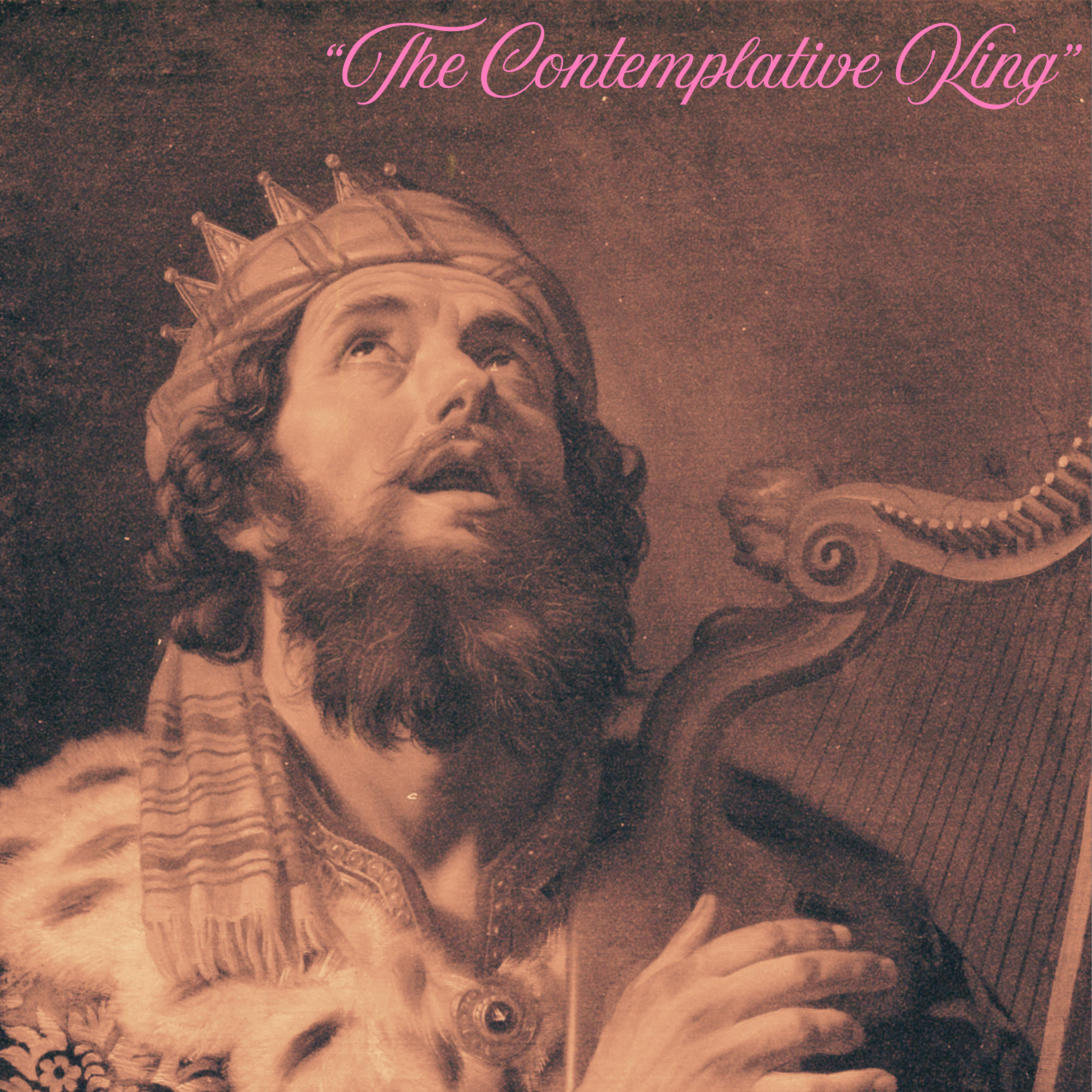
[00:13:04] Psalms are sung poems for the gathered assembly of Israel. And so David, as the traditional author of this Psalm, isn't just writing a helpful worship song for his community. He is pouring out his own heart, like any good poet will do.
[00:13:23] And in doing that, he reveals something about his inner life that I think is very helpful. In the first stanza of Psalm 131, verse 1, it says this. O Lord, my heart is not lifted up. Can we go ahead and get that text up here? Oh, Lord, my heart is not lifted up. And at first, when you read that, you might think he's about to say that he's downcast or depressed, right? Like his heart is down. But that's not what he's saying. Oh, Lord, my heart is not lifted up. My eyes are not raised too high.
[00:13:54] He's saying that there is a sense in which his eyes or his heart could be raised too high in a way that wouldn't be good. And then he goes on to explain himself in the next passage. I do not occupy myself with things too great and too marvelous.
[00:14:09] This is the wonderful thing about Hebrew poetry. In the Psalms or in the Proverbs, or In some of the prophetic passages that typically there are two lines and one will explain the other, right? The first line is, my heart is not lifted up. My eyes are not raised too high. David, what in the world does that mean? Well, let me tell you. It means I do not occupy myself with things that are too great and marvelous for me.
[00:14:33] David, in this first verse is telling us explicitly what his internal struggle is.
[00:14:42] His internal struggle is he wants what is too great and too marvelous for him.
[00:14:51] His eyes are drawn to great and wonderful and amazing things, but he recognizes that there's a danger there.
[00:15:02] And so he is telling us that he has learned to not look too high, to not try to apprehend or aspire to things that are beyond his understanding.
[00:15:16] David's struggle. And this should not surprise any of us, especially for somebody who was anointed to be king. David's internal struggle is desire and ambition.
[00:15:29] He wants what he wants when he wants it.
[00:15:34] And so he's learned how somehow to calm that desire. And he's going to tell us how in the next verse. Verse 2.
[00:15:43] But I have calmed and quieted my soul like a weaned child with its mother.
[00:15:51] My soul is like the weaned child that is with me now. Just think about this image for a moment.
[00:16:00] If you have ever been with a mother and a child who has been accustomed to breastfeeding or been accustomed to receiving the bottle, and you're beginning to wean that child so that it can be off of the breast or off of the bottle and begin to take solid food, you know that you're dealing with a child who is frustrated by unmet desire.
[00:16:25] Give me what I want.
[00:16:29] But as a mother, you know that this child needs to be denied in this moment what it wants in order to get what's better for it in the long run.
[00:16:42] And somehow, and this is the magic part, somehow that baby doesn't just cry endlessly forever until you shove the spoonful of semi solid food into its mouth. For our granddaughter Eve, she will double fist scrambled eggs all day long.
[00:17:02] But somehow, magically, a weaned child can be comforted before that moment.
[00:17:08] There's something about a relationship between a mother and a weaning child that allows for comfort without giving it what it wants.
[00:17:20] And that is the image that David is drawing upon here.
[00:17:24] What's amazing about this is that David shows us that he is able to do something remarkable. And you are all able to do this, but it is still utterly amazing.
[00:17:39] And that is this, as the poet as David pens these Words. As David struggles with his desires, struggles with his wants, David is able to characterize his desires and his ability to manage his desires in multiple Personas.
[00:17:58] David describes himself in this poem in at least three ways.
[00:18:03] David describes himself as a crying, frustrated, weaning baby.
[00:18:12] And he identifies with that child.
[00:18:15] He knows what it's like to want and to be frustrated by that want.
[00:18:21] And yet he also describes himself, remarkably, as the mother.
[00:18:27] David isn't just the child. David is also the mother who knows that the child is frustrated, who knows what the child wants, and yet at the same time knows that it's best to deny the child what it wants.
[00:18:44] And so David is both the child and the mother in this poem.
[00:18:50] And in doing that, David takes on a third Persona, and that is the Persona of the poet.
[00:18:56] David is able to be the poet watching the mother and the child, who are both himself.
[00:19:05] And he's able to describe to himself and to me and to you and to all of the millions of people who have read this psalm since then. He's able to describe for all of us who, the little battle going on inside of himself between the mother and the child.
[00:19:23] This is, I think, a clue to how David is able to deny what he wants when he wants it.
[00:19:34] Paul Ricoer, who I shared with you guys a little bit a couple weeks ago, was a French philosopher who, I told you, talked about a particular concept called the second naivete. And I think it might have been the same week that I told you that in social science research, in phenomenological research or anthropological or sociological research, that researchers are able to do something called bracketing, where they're able to sort of bracket off their own thoughts, their own biases, their own feelings, not to be separate from them, because that's not possible, but to recognize that they have their own feelings and biases and desires and ambitions. They're able to set those aside long enough, I said, to inhabit another person's world.
[00:20:23] And by being able to inhabit another person's world, which is really just a kind of social scientific way of describing empathy, that they're able to better understand and describe another person's world.
[00:20:37] What I want to suggest to you is that what David's doing here is like bracketing.
[00:20:42] Only instead of learning to inhabit another person's world, he's learning how to inhabit his own world better.
[00:20:52] He's able to see the things about himself that he's normally blind to.
[00:21:01] Because we all grow up too close to our own desires.
[00:21:06] We all grow up learning to double fist the scrambled Eggs whenever we're hungry, whenever we want them.
[00:21:15] But as we grow, as we mature, as we engage in these kinds of practices, we're able to learn to distance ourselves from those desires.
[00:21:27] Paul Ricoeur called this distantiation. Distantiation is when you engage with a text, and you're able to read the text, like Psalm 131. And the text itself creates distance between you and the thing that it's describing.
[00:21:42] And that's a good thing, because that distance allows you to observe it, just like the poet is observing the mother and the child.
[00:21:53] And that distance that allows you to observe it is what gives you the ability to manage it and to control it.
[00:22:04] I promised you two grandkids stories. Here's the second one.
[00:22:08] I don't often tell Eve stories. Eve is our second grandchild.
[00:22:13] She's nine months old now. She's coming up rapidly on a year.
[00:22:18] Janelle and I have been over at Savannah and Griffin's house a lot lately, because Janelle's managing a little, like, remodel that they're doing in their house. And then, you know, I get, you know, dragged along to, like, you know, put cabinets together or whatever.
[00:22:32] And recently, we were over there, and I was working in their room to, like, take apart a cabinet or something like that. And I heard the worst. The worst sound in the world.
[00:22:42] And that was the sound of Eve crying.
[00:22:45] And I looked around, and nobody was doing anything about Eve crying. And so I walked into her room, and there she was in her crib by herself. And I was like, good Lord, this child is suffering.
[00:22:56] And I picked her up out of the crib, and I held her and began to comfort her. And I walked out as if to say to everybody, what is wrong with you people? There's a crying baby in the room.
[00:23:07] And Jenelle gave me a look like, I can't believe you just picked that baby up.
[00:23:13] And I understood immediately that I had broken some sort of protocol, and I didn't feel bad about it at all.
[00:23:26] So the next day, we were outside doing some more work to pull together this little project, and Savannah came out with Eve tucked in her arm. And she came out to the rest of the group, and she said, so I'm gonna go take care of this errand. And it's about time for Eve to take a nap, so I'm gonna put her in her crib, and she's going to cry.
[00:23:51] And then she looked right at me and said, she's gonna be okay.
[00:24:00] And I was like, message received.
[00:24:05] Don't come and rescue her from her crib don't pick up the baby, it's okay for Eve to experience a little bit of discomfort. In fact, it's good for Eve to experience a little bit of discomfort and to learn that she's going to be okay.
[00:24:22] Okay, so this is back to the magic that happens.
[00:24:26] The magic is this.
[00:24:28] The immediate desire is for the breast. The immediate desire is for the bottle. The immediate desire is to be picked up and held.
[00:24:39] But what every mother knows is that this baby is going to be okay.
[00:24:46] There's more food coming, there's more holding coming, there's more playtime coming.
[00:24:53] She needs to learn that she's going to be okay.
[00:24:57] And that sense of secure attachment, the thing that we all learn if we have healthy attachments to our parents, is that whatever little bit of short term discomfort we're experiencing, it is all going to be okay. Because we experience people, family members, community, the world in a way that ultimately teaches me that I am going to be okay.
[00:25:34] And so the reason why the weaning child can be comforted even though it doesn't receive the breast is because it is with its mother and it has learned that even if it doesn't get what it wants right now, it's going to be okay.
[00:25:55] Okay, now if I were like, you know, a good pastor, this is where I might like deviate into some wildly heretical theological exploration. Like, I don't know, for example, is this what God is like when we read Psalm 131 and we see that David is able to soothe himself by creating some imaginative, creative distance between himself and himself so that he can understand his own desires and manage and direct his own desires, not deny his desires, not shame his desires, not repress his desires, just see them, acknowledge them, manage them.
[00:26:50] Does God do that too?
[00:26:53] Is there some sense in which the way that we talk about God as trinitarian, as three persons, somehow correspond to the mother and the child, the poet?
[00:27:08] Does talking about God in that tri part way help us to appropriate a better sense of not only who God is, but who we are and how God works and therefore how we work?
[00:27:23] I don't know. That's not what this sermon is about. But I think that kind of stuff is fun.
[00:27:29] The more important practical question for us today, I think, is what are the contemplative practices that you engage in to create some distance?
[00:27:47] How do you engage in acts like David, who engaged in poetry and music, who imagined his own self in all of these varieties of ways so that he could see himself from a distance and Manage himself better? How do you do that?
[00:28:07] Do you, like David, write poetry?
[00:28:10] Do you write songs? Do you play songs? Do you, as you play those songs, imagine yourself as somebody who is desperate for the love of God and thereby are able to see from a distance, how you, in fact, are desperate for a kind of grace and security in a way that makes imaginative space so that you can learn to escape, escape your own desires and connect better with those desires.
[00:28:43] If you're not a poet or a musician, what is it that you do? What creative acts help you to create imaginative distance so that you can do this? Do you, I don't know, tell stories when friends come over? Do you tell stories, birth stories, that center your own pain and discomforts in your wife's labor?
[00:29:10] Is that a creative way for you to reconnect with who you are, to patch the gaps, to make sense of your life, to make meaning of it?
[00:29:22] Is that your creative, contemplative engagement? Or do you, I don't know, build things in the backyard?
[00:29:31] Do you grow things in your backyard?
[00:29:37] What creative ways do you imagine yourself in relationship to yourself and to God, in ways that heal you?
[00:29:49] There's no ends to how many ways you can do this.
[00:29:54] I'd like to suggest to you that those ways, all those ways, whether it's poetry or storytelling or, you know, painting or creating masks that represent your woundedness and your healing or gardening or building or whatever it is, that all of those imaginative ways that you create space where you can engage God, all of those are prayer.
[00:30:31] All of those expressions are a form of prayer.
[00:30:37] But prayer doesn't necessarily mean you on your knees asking God for the goodies that you think you want.
[00:30:45] But prayer is all the ways that you carve out space to better understand who you are and who God is so that you can become the kind of person who can be in good control of yourself.
[00:31:04] And whatever power you're given in this world, whether that's power over your kids or power over your family, or power over your community, your business, your schoolwork?
[00:31:20] It all starts with having power over yourself in a way that's good. Amen.
[00:31:27] Would you pray with me? God, we thank you again for today for this opportunity for us to read these old stories, To hear these old songs and psalms, to find some way to inhabit these worlds that, despite how old they are, somehow still resonate with us.
[00:32:02] Ask God that you would do this work in us of creating a sense of distance from our own desires, while at the same time reconnecting us to them, helping us to recognize how your spirit as a mother is teaching us to be in control of ourselves so that we might be a little less harmful in the world and a little more helpful.
[00:32:38] We pray all this in Jesus name. Amen.
[00:32:44] Thank you for joining us for this Sunday teaching, no matter when or where you're tuning in.
[00:32:49] To learn more about our community or to support the work we do, Visit
[email protected] We hope to see you again soon.
[00:32:58] Sam.