[00:00:00] Speaker A: Foreign.
[00:00:08] Speaker B: Welcome to the Collective table where we celebrate the intersections of Jesus, justice and joy.
This podcast is brought to you by Oceanside Sanctuary Church. Each week we bring our listeners a recording of our weekly Sunday teaching at Oceanside Sanctuary, which ties scripture into the larger conversations happening in our community, congregation and even the podcast. So we're glad your here and thanks for listening.
[00:00:39] Speaker A: For those of you who don't know, my name is Jason Coker. I'm one of the co lead pastors here. Welcome. We have been working through a teaching series on the post resurrection appearances of Jesus and asking the question, what can we learn from these encounters that people had with Jesus after his crucifixion and resurrection? Today we're going to take a look at Acts chapter 6, or excuse me, Acts chapter 1, verses 6 through 11. If you have a Bible, you can turn there, of course, otherwise we will put it up on the screen.
And our text says this.
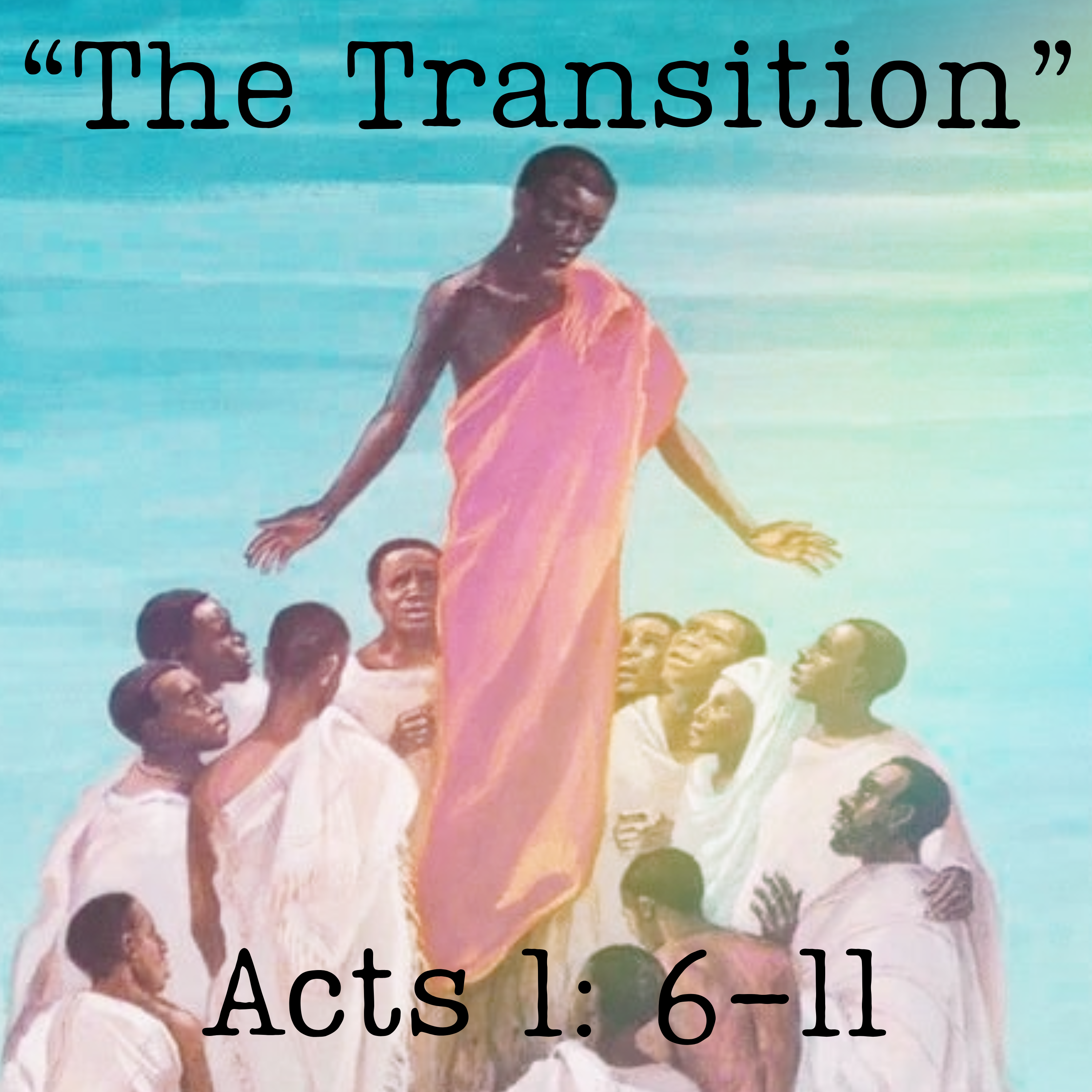
So when they had come together, they asked him, lord, is this the time when you will restore the kingdom of Israel? Let me just pause there for a second and orient you. This is the book of Acts, right? Which is written by Luke. It's widely considered to be really the same document as Luke, right? So sometimes theologians just refer to it as Luke Acts, right? Because he essentially wrote both of those documents, or at least the author of those documents wrote both of them. And so his narrative really goes, flows very directly from Luke into Acts. And so what's happening here is a continuation of the story of Jesus here in Acts, chapter one. And one of the things that happens right before verse 6 is that Jesus has been appearing to different disciples and he has given them some instructions, instructions at this point to remain in Jerusalem and to wait there for the Spirit. And so he's talking to them, and this is where we pick it up here. And so when they had come together, they asked him, lord, is this the time when you will restore the kingdom to Israel? And he replied, it's not for you to know the times or periods that the Father has set by his own authority, but you will receive power when the Holy Spirit has come upon you, and you'll be my witnesses in Jerusalem and all Judea and Samaria and to the ends of the earth.
And when he had said this, as they were watching, he was lifted up and a cloud took him out of their sight.
While he was going, they were gazing up toward heaven. Suddenly two men in white robes stood by them, and they said, men of Galilee, why do you stand looking up toward heaven?
This Jesus who has been taken from you into heaven, will come in the same way as you saw him go into heaven.
So one of the weirder, right, encounters with Jesus, right, they ask him a question, is this when it's finally going to happen? The thing that we've been waiting for for so long? He says, none of your business. What you should do is just hang out here.
And then he ascends into the clouds. This is truly a bizarre passage. Would you just pray with me as we jump into this? And I share a little bit about how this is impressing on me today.
God, we thank you for today again for this opportunity for us to gather, to connect with each other, to connect with you, to encourage each other, to be encouraged by you and by your spirit. Through these words, through the prayers that we pray, the.
The songs that we sing, the stories that we share with each other, we ask God that you would build this community up to be a community of the spirit who connects with a sense of your power by the spirit, for a purpose, to be your witnesses. We pray all this in Jesus name. Amen.
Okay, so my covert mission in this series, some of you have picked up on this is to help you understand just how bad Janelle had it when she married me when she was 19 years old, right? So we got married at 20 and 19. I was the elder, you know, one in the relationship. And not long after we got married, around the time Janelle was pregnant with our first child, Savannah, who's 33 now and a social worker, works at Scripps or, excuse me, Sharp, Mary Birch Hospital.
Very proud of her. That's incredible work, right? Working with newborns down there. But when she. Before she was a newborn, before she was born and Janelle was pregnant with her, I worked every day at the fancy word for it is ticket agency. I was a ticket scalper, right? And that's what I did for a little while in LA at the time. And I had a little bit of a ritual every day after work, when I was done working my full day, you know, selling people tickets in the front row of a Def Leppard concert or something like that. That should tell you what era this was.
Every day after work, I would walk down to the local 711 and I'd get myself a cup of coffee and pour a bunch of, like that sticky flavored creamer into it. And then I would stop and I would play a video game that they had there, the 711 called Street Fighter 2. Now, some of you remember Street Fighter 2, don't pretend like you don't Now, I don't think that I'm being braggy when I tell you that I was quite good at Street Fighter 2.
I could play on one quarter for hours and hours. And a little community of Street Fighter 2 players would gather there at the 711 and I would beat the pants off of them for two or three hours after work every single day. This is what I would do to the point where one day I was there playing the game and beating the other people that were gathered around the thing and I was sending my punches and my kicks.
This was pre mma, right?
My little virtual punches and kicks and all of that. And dimly in the back of my mind, I noticed that the phone was ringing behind the front counter at the 7 11.
The trenches know exactly where this story's going.
And I heard the proprietor of the 711 pick up the phone and say, hello, this is 7.
He said, yeah, he's here.
Uh huh. Okay. He hung up the phone and said, jason, your mom called and said to come home for dinner.
It wasn't my mom.
Janelle was waiting for me after dinner or for dinner, like she had made something for us to eat. And she was waiting and waiting and knew that I was probably there playing. So she looked up the phone book, some of you will remember the phone book. She looked up the 711 in the phone book, called them and sure enough, and she said, is there like a, you know, short curly haired guy there playing video games? And he was like, oh yeah, he's here. She said, please tell him to come home for dinner. And he just assumed it was my mother because I didn't have any facial hair, so I looked very young.
But also that was sort of the energy, right?
That was being embodied.
Looking back, it's hard for me not to think that as a 20 year old married young man with a child on the way who was in a sort of dead end job selling tickets to concerts and sporting events in Riverside, California, that part of me wasn't trying to escape from a sense that I was in way over my head.
And I don't know about you, like everybody's different, but it's easy for me to do that. Like when I have a task before me that's overwhelming, seems difficult, seems beyond me. Like it just seems like a giant mess, you know, like I don't quite know what to do with this. It's easy for me to focus on something else and be really obsessive about it, right? Like if I have a list of things to do and there's Something that's due on Friday. I will be incredibly productive on everything else until Friday.
Right. It's like my way of dealing with the anxiety of, like, not really feeling adequate to the task.
I did not feel adequate to the task of being a husband and certainly not to the task of being a father.
And so this was my way of escaping into something that I was good at, something I knew I could do well, wasn't particularly healthy.
Jesus, I think, in this scene sets up something that is a little similar. And I want to share with you my perspective on that and invite you to consider what you might think about this as well. In Acts, chapter one, Jesus gathers his disciples after his crucifixion, after his resurrection, after he has appeared again and again and again to different people, after it's become obvious that he is although the same Jesus at the same time, not the same Jesus, after he has demonstrated that he is different in some important ways, he's not able to be grabbed a hold of, he's not able to be contained. He says, you know, I'm soon I'm going to be leaving you, and another one will come. There is a shift in Jesus's ministry that the disciples don't quite understand. And we know they don't understand because in verse six, they say to him, is now the time? Is this it? Has the time finally come for you to restore Israel? And I've mentioned this to you before, Janelle's mentioned this to you before. The disciples were caught up in a desire that they and their people and their nation would finally be liberated from the oppressive rule of the Roman Empire.
Jesus appeared to be the Messiah, the Messiah that the Jewish people were waiting for.
And so throughout his ministry, they kept asking him, is now the time? Is this it? Is this when you'll finally overthrow the Roman Empire and liberate our people? And Jesus? Consistent answer was, you don't quite get it.
What's keeping you from understanding this?
And here after the crucifixion and the resurrection of Jesus, they ask again, okay, is now the time finally, now that we've got, like, you know, the death and resurrection bit behind us, are we finally going to overthrow this oppressive kingdom? Jesus says, no, we're not quite there yet.
They still don't really understand or grasp what's going on. They're still looking for power.
And I think it's impossible to underestimate that point.
They are under the oppressive power of an occupying nation. And so what they're looking for is power to fight against it.
And that's normal logic.
We think that when we are being hurt or abused or oppressed or somebody is perpetuating violence on us, that the only solution is for us to gain more power than they have so that we can overcome them.
There is a cycle of revenge and retribution that we get pulled into, not just as individuals, but as families, as communities, as whole nations. We're in the midst of, of that kind of cycle of retribution and vengeance right now as a nation.
This is the power that they are looking for.
Jesus's response is really interesting because he doesn't say, no, no, the answer isn't power.
He says the answer is a different kind of power.
Verse 8, he says, Stay here, right? It's not for you to know the timing of what God's plans are, but you will receive power when the Holy Spirit has come upon you.
And so Jesus is indicating to them that there is a kind of power coming that will liberate them from their circumstances, but it's not quite what they have in mind.
Instead, he says, you'll be my witnesses in Jerusalem and Judea and Samaria and to the ends of the earth. And in the meantime, wait, wait here for that Spirit to come.
And then he ascends into heaven. And while he's going, they're gazing at the heavens as Jesus disappears behind the clouds. And this is where the passage gets a little bit weird again.
When he said this, as they were watching, he was lifted up and a cloud took them out of their sight. And while he was going, verse 10, as they were gazing toward heaven, suddenly two men in white robes stood by them and they said, men of Galilee, why are you looking up toward heaven?
And this is the bit that gets me.
Why are you looking toward heaven?
I don't know if you have noticed this, but I've noticed that Christianity has a tendency to obsess about heaven.
I was reading an article recently, was about a woman who had been invited to, like, a community meeting. It was like an effort to help bridge the gap between blue Americans and red Americans, like Democrats and Republicans, to help heal the rift that exists in our country right now. And the idea was to bring people together in a friendly setting in a home and to facilitate some conversation to help people try to understand their differences in a meaningful way. And this person said that they were talking to another person who represented, like, you know, the other side of the aisle in the conversation. And she said, you know, to this other person, well, what about, you know, the growing wealth inequality in the United States? What about, you know, the Poverty. What about, like, in San Diego county alone, there are 250,000 food insecure children. What about systemic racism? What about the way that indigenous people have been oppressed? How do we make those wrongs right? And he said, hey, I'm a Christian.
I just try to stay focused on heaven.
There's nothing I can do about any of that.
This isn't where I belong.
That really strikes me as exactly the same move as me leaving work, plucking my quarter into a machine and just playing video games.
And if you don't think like the church's idea of heaven and the way that we have obsessed about it is like a kind of video game fantasy, then God bless you. Maybe you just haven't noticed or maybe you just aren't paying attention, but we have developed elaborate fantasies about what happens after we die.
There are very serious theologies that try to construct the ins and the outs of the afterlife in a way that helps ensure and guarantee that we're going to go there.
Many of, you know, whole genres of literature have been written about these kinds of things.
Again, I don't know that in an historical scale this isn't just like the church playing video games instead of dealing with what needs to be done.
But that's me.
I'm a little cynical sometimes, I admit.
Jesus says something very different. He does not say that our job as followers of Christ is to focus on the afterlife, to say to ourselves, well, this isn't my home. I'll be in heaven and I'll focus my attention on that. Instead, Jesus says very clearly in verse 8, you will be my witnesses.
You'll be my witnesses.
Like, this isn't the kind of church where we're like, you know, trying to convert everybody to Christianity. You've probably noticed that because, you know, I don't know, we just aren't.
But I think we should take seriously the call to be witnesses of Jesus and his teachings and what he did. And what is it that he did?
Luke, chapter four. He defines his gospel as the spirit of the Lord. There's that again. We'll get to that. More next week. But the spirit of the Lord is on me. To do what? To ensure that you go to heaven when you die? No, to bring good news to the poor, recovery of sight to the blind, liberation for the captives, for those who are oppressed. This is Jesus's gospel. It has everything to do with suffering that's happening here and now. Jesus's gospel is a gospel not of going to heaven when you die. It is a gospel of love and liberation. And listen, I have more to say about this. Don't get me wrong. I'm not saying that, you know, there's no afterlife. I don't know.
I don't. I hope there is.
You know, like nobody knows where consciousness comes from. Nobody knows where consciousness is going.
The best of science can't locate you anywhere in your body or your brain.
But there's like this emerging theory that, you know, consciousness is not this mysterious thing that comes from our individual brains, but rather our brains are like tuning forks.
That consciousness is a cosmic reality.
That each of us is the universe becoming aware of itself as a human.
I don't know if that's true, but if it is, it's kind of a lovely idea that if when we expire, our physical body dies when that tuning fork stops vibrating, that we will awaken to a reality that was always there. A reality from which we came and a reality to which we return.
There's a lot of comfort in the notion that a good and gracious God will make sure that everybody ends up in a good and gracious place. I like that.
So don't mistake me when I say that the gospel really isn't about that. That I think that isn't a good thing.
But the gospel really isn't about that.
We also know this because In Matthew chapter 6, Jesus taught us not only a gospel of love and liberation, but a spirituality of love and liberation. You know, the Lord's Prayer is that.
Lord's Prayer is a prayer that teaches us the spirituality of love and liberation. Our Father who art in heaven, hallowed be thy name. Thy kingdom come, Thy will be done on earth as it is in heaven. Right. When God's power comes on earth the way it exists in heaven, what happens? Give us this day our daily bread. Our basic needs are provided for.
Again, the good news is good news for the poor, the hungry, the sick, the oppressed.
But he doesn't stop there. The next stanza of the Lord's Prayer is, and forgive us our debts as we forgive our debtors. And then the next stanza is and lead us not into temptation, but deliver us from evil. Could it be that Jesus gospel is not just good news for the poor, but a spirituality of forgiveness and self control that keeps us from living lives of harm?
Yes, I think so.
This gospel of love and liberation has a spirituality of love and liberation attached to it. And in Matthew 28, Jesus sends us on a mission of love and liberation, not just to Jerusalem or Judea, but also to Samaria and the ends of the earth. This love and liberation ought to be delivered to everybody, regardless of their tribe, their ethnicity, their gender, their sexuality.
Love and liberation belongs to all people according to Jesus's gospel. This is what we are called to be witnesses to, in my humble opinion.
And this is our heritage as Christians.
I know that it's easy to think like, because dominant expressions of Christianity today seem to be aligned with an obsession for heaven and power, that this is what Christianity is all about. But I don't know if you know this, but the history of Christianity alongside the bad, the history of Christianity is the history of opening hospitals and orphanages and widows homes all over the world for hundreds of years in order to bring healing and liberation to people who are desperately in need of it. This is what the Christian tradition has done. The universal education movement, what we call public schools today, was birthed out of churches who said, everybody deserves an education. We ought to provide that for them. The existence of food banks like the pantry here at the sanctuary and other nonprofit organizations that exist entirely to meet people's needs grows in the 18th century out of churches and ministries. Who said we should take being a witness seriously?
I mentioned earlier that our oldest daughter is a social worker.
The social work profession was pioneered by the settlement house movement of the 18th and the 19th centuries.
One of my favorite characters from the settlement house movement is a woman named Jane Adams.
She started a settlement house in Chicago. And if you don't know the settlement house movement was this. A bunch of people who took Jesus word seriously, said, hey, maybe giving food to people who are poor isn't enough.
So all these people, women said, how about if we move into poor neighborhoods, we settle there so that there is a house, a community center where we can work and live every day to help those neighborhoods become self sufficient and cared for.
And out of that movement, social work as a profession grew because a bunch of women took seriously the idea of being witnesses of Jesus gospel of love and liberation. So listen, that is mothering, that is motherhood.
When you are willing by the Spirit to birth the goodness of God, whether you are sexed as a woman or not is an act of motherhood.
And every time you do that as a man or a woman or a married person or a single person, or as a person who has children or not, you are tapping into the spirit of mothering Jesus in a very real sense. In Acts chapter one is telling his disciples, go and be like Mary. Wait for the Spirit to come and impregnate you with the gospel so that you can birth something Good.
Instead, they're like a bunch of dudes, but where's the power?
One of my favorite little tidbits about Jane Addams, who founded the Hull House settlement in the Chicago area, is that she was never a mother.
She never gave birth to a child.
In fact, looking back on her life, it's curious to note that she was never in a relationship with a man, but she did live with a woman named Mary her entire life.
It doesn't matter what your gender or sexuality is.
Jane Addams was a mother.
And she birthed the gospel right there in the greater Chicago area.
This is our heritage.
The civil rights movement was pioneered in the 20th century by Black Protestant churches. The historically black colleges and universities were pioneered by black churches who said former slaves ought to have the opportunity for higher education even though they are shut out of white institutions.
The anti war movement of the 20th century was rooted in the Christian pacifism of Quakers and Mennonites and the Catholic Worker movement. This is our heritage.
And when we obsess about heaven, we forsake our heritage.
We are called to birth the gospel of love and liberation in ourselves, in our families, in our neighborhoods, in our churches. Please God, in our cities.
And I know this sounds like a lot.
I am not saying that you have to go out and be Jane Addams and start an entire movement that turns into something with a legacy like the social work profession. But I am saying that you and me, as followers of Jesus, are called to wait for the Spirit to impregnate us with the gospel.
And that will look different for every one of us.
For some of us, it means choosing a profession where we bring love and liberation. For others of us, it means learning to be liberated from harmful practices.
For others of us, it means joining with protests against fascist governments in downtown Oceanside and downtown Carlsbad. For some of us, it means bringing food to the sanctuary pantry and delivering food to those who are food insecure. For some of us, it might mean something else. It means something for you.
I don't know what, but we are all called to be witnesses.
And I think that's kind of exciting.
Number one and incredibly needed.
We have to stop in churches like this, churches that believe in a gospel of love and liberation. We have to stop relinquishing the witnessing to churches of fear and control, to Christianities of fear and control, to religious or government expressions of fear and control.
We have to stop just being content to have that here.
You have to be willing to be witnesses.
Amen.
Would you pray with me?
God, we thank you again for today and for these words and these stories that stretch us and challenge us, that call us to follow after you in ways that are uncomfortable.
But we're also grateful, God, for the way these words stir our hearts and our minds and galvanize us towards movements of goodness and wholeness.
It's our prayer this morning that you would come to us, that your spirit would fill us, that your spirit would inspire us, that your spirit would impregnate us with a gospel that is genuinely good, that calls people to wholeness and love and liberation.
Pray all this in Jesus name.
[00:30:40] Speaker B: Thank you for joining us for this Sunday teaching, no matter when or where you're tuning in.
To learn more about our community or to support the work we do, Visit
[email protected] We hope to see you again soon.