[00:00:00] Speaker A: Foreign.
[00:00:08] Speaker B: Welcome to the collective table where we celebrate the intersections of Jesus, justice and joy.
This podcast is brought to you by Oceanside Sanctuary Church. Each week we bring our listeners a recording of our weekly Sunday teaching at Oceanside Sanctuary, which ties scripture into the larger conversations happening in our community, congregation and even the podcast. So we're glad your here and thanks for listening.
[00:00:40] Speaker A: So I'm Jason. I'm one of the co lead pastors here along with Janelle and this is like our adult Sunday school class. If you haven't been hanging around here for a while. This is our teaching time and we have been going through a kind of, you know, informal series called Spotlights on Jesus or Snapshots of Jesus, depending on which one of us is up here. We usually, you know, mix up that title, or maybe it's just me, but we have been taking this Lenten period to sort of dip into certain stories of the life of Jesus and the things that he engaged in as practices.
And today I want to share with you a really familiar story. It's from John, chapter 13, verses 1 through 20. I'm going to go ahead and read it to you to get us through started. The text will be up on the screen and I want to share with you what this is speaking to me this week and invite you to reflect on how it might be striking you.
John, chapter 13, verse 1 says this now, before the festival of the Passover, Jesus knew that his hour had come to depart from this world and to go to the Father. And having loved his own who were in the world, he loved them to the end. This is the Gospel of John, by the way, which, not necessarily intentionally, we don't tend to spend a lot of time in the Book of John. Mostly because I'm just sort of emotionally uncomfortable with this sort of flowery language, you know, loving his own, loving them to the end. Like I sort of prefer the facts of Mark and Matthew and Luke. This is a joke and nobody's laughing. Joey, help me out here.
Nobody gets it. I know.
Anyway, John's a very flowery writer. So he says things like having loved his own who were in the world, he loved them to the end.
This says a lot about sort of John's particular focus on Jesus and what Jesus purpose was.
Verse 2 says this. The devil had already put into the heart of Judas, son of Simon Iscariot, to betray him. And that is just pausing there. Kind of the underlying tension of this particular part of the Gospel of John is that Jesus, despite everything that he had done up to this Point is about to ironically be betrayed by one of his closest followers. So that sort of underlies this very powerful story that John is about to tell us.
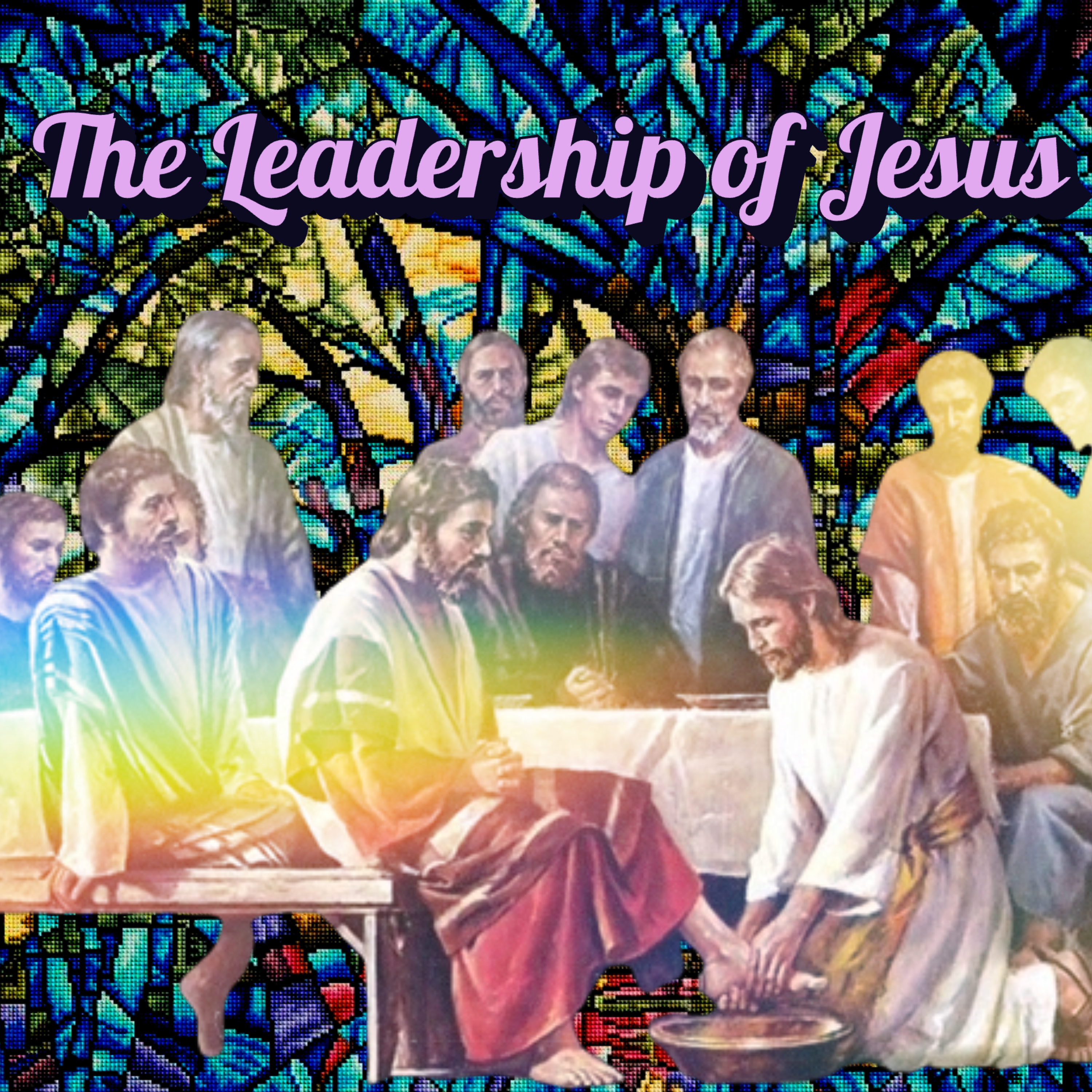
Verse 3. Jesus, knowing that the Father had given all things into his hands and that he had come from God and was going to God, God got up from the table and took off his outer robe and tied a towel around himself.
And then he poured water into a basin and began to wash the disciples feet and to wipe them with the towel that was tied around him.
He came to Simon Peter, who said to him, lord, are you going to wash my feet? And Jesus answered, you do not know what I'm doing. But later you will understand.
Peter said to him, you will never wash my feet.
Jesus answered, unless I wash you, you have no share with me.
Simon Peter said to him, lord, not just my feet only, but also my hands and my head.
See, that was funny.
It's good.
Simon Peter said to him, lord, not just my feet only, but also my hands and my head. And Jesus said to him, one who has bathed does not need to wash except for the feet, but is entirely clean. And you are clean, though not all of you. For he knew who was going to betray him. And for this reason he said, not all of you are clean. There's that sort of, you know, underlying tension again. Verse 12. And this is where it gets good, I think. After he'd washed their feet, he put on his robe and he returned to the table and he said to them, do you know what I have done to you? You call me Teacher and Lord and. And you're right, for that's what I am. So if I, your Teacher and Lord, have washed your feet, you also ought to wash one another's feet.
For I have set you an example that you also should do as I have done to you.
Very truly, I tell you, servants are not greater than their master, nor are messengers greater than the one who sent them. If you know these things, you are blessed if you do them.
Would you say a prayer with me?
God, we thank you again for today for this opportunity for us to gather, to read these words, to hear this story, to be challenged and stretched as always by the words and the actions of Jesus, by the vision that we find throughout Scripture for the kind of world to which I think we all would prefer to belong.
And so I ask that in the midst of that tension between the world we actually live in and the world that we hope for, that you would expand our hearts, that we would gain an imagination and a courage for leaning into it.
For leaning into your.
Your love and your power, we pray all this in Jesus name. Amen.
Okay, so here's the thing. You don't hear a lot of sports metaphors in this church, and there's a reason for that.
We were not really a sporty family. The Cokers. You know, we have three girls, and at some point, we encourage them all to do something sporty, something competitive, because, like, that's what good parents do, right? But we were not, like, really not at all interested in driving our kids around, like, to different practices, you know, multiple practices all the time. Like, we're just lazy. So we. And I know a lot of you are really good at that, but we were just like, ugh, really another sporty thing.
So we didn't do that a lot, but all of our girls did some kind of sport. So our oldest, Savannah, she ran track in high school. And our middle daughter, Judah, she swam and played water polo.
And our youngest daughter, Alana, also swam on the swim team. And Alana, in retrospect, as a dad, I think really won that game. You know, the game of, like, sporting. And the reason I say that she won, in retrospect is because at the time, it did not seem like she was winning, because, in fact, she wasn't. She did not win a single meet, to my recollection. In fact, I don't think it would have been possible for her to win because she actually literally refused to compete.
And this is Alana. Like, she enjoyed getting in the pool. She enjoyed swimming. She enjoyed learning the various strokes.
She would, like, practice them to perfection at her own pace.
And Janelle and I, of course, you know, being parents, would show up, and even though we say we're not sporty, we get into the competition of it, you know, and, like, we want our kids to win and feel good about themselves. And we'd be like, alana, you need to, like, move a little faster. You need to push a little harder. And she would say, no.
And we'd go to, like, practices, and she would be, you know, in her lane practicing, like, with this beautiful, amazing. Like, you know, what do they call this? Freestyle. Freestyle strokes. So beautiful. And her coach would come up to us and say, hey, Mr. And Mrs. Coke are like, alana, wow, her stroke is so beautiful. Her technique is amazing. I just need her to move a little faster.
And we'd say, well, you're her coach. Have you encouraged her to move a little faster? And she said, yeah. And when I do, she says, no, She enjoyed swimming.
She did not enjoy the competition.
She in fact had no interest whatsoever in the competition.
And looking back, I think that she maybe won because she didn't experience like the sort of stress and dehumanization that comes along with like pushing yourself too hard to live up to the expectations of somebody if you didn't really value them. Now, I don't want to say that that's everybody who sports. I know sports are a good thing. I sported.
I know that's hard to believe and I know that for many people it's a wonderful experience, but for Alana it wasn't.
And so it would have been hurtful for us to really push her to be something that she wasn't.
Okay, so that's the sermon. If you guys need to go, you guys can go anytime.
I think that what Jesus is doing in this passage, it should be pretty obvious. It's actually a pretty common pattern in scripture called the reversal motif. When Jesus washes his disciples feet, he's acting out something called the reversal motif. And the reversal motif goes something like this. You know, those who are at the top are actually at the bottom, and those who are at the bottom are actually at the top. And we see this happening throughout Hebrew scripture and throughout Christian scripture where Jesus is constantly leaning into this reversal. In Psalm chapter 113, verses 7 and 8, this is a very familiar formulation from Hebrew scripture. It says he raises the poor from the dust.
This idea that what God does, how God expresses God's power, is that the poor are lifted up is deeply embedded in Hebrew scriptures because they're deeply concerned with justice for those who have been harmed and marginalized. In Isaiah 40, chapter or chapter 40, verse 4, the prophet says, every valley shall be lifted up and every mountain shall be made low. I don't know if you know this, but Isaiah is not actually talking about valleys and mountains, he's talking about people. He's saying that when God gets God's way, when God's power comes to earth, those who are lowly will be raised and those who are high will be lowered. He's talking about the rich and the poor, the oppressed and the oppressors. He's talking about social justice. I know we're all sick of that term. In Matthew, chapter 20, verse 16, Jesus says in a very familiar like articulation of this, the last shall be first and the first shall be last.
In the context of this, of course, is.
Is everybody okay back there?
You're okay. Okay, great.
So the context of this, of course, is that Jesus encounters in his own community, his own Disciples, he encounters a kind of jockeying for power, because this is how power works in the world. And in Jesus own community of followers, he finds that they're lobbying and jockeying for power. And one of the. The mothers of two of his disciples comes and lobbies him and says, would you put my sons at your right and your left hand when you come into power as the new king, once the, you know, Roman Empire has been overthrown? And Jesus says, you don't know what you're asking. The last shall be first and the first shall be last. In God's kingdom. Jesus is engaging in the reversal motif. And this is helpful, by the way, because it engages in a kind of rhetorical literary strategy called a chiastic structure. And none of you, none of your lives will be better because I tell you this. But it's just fun.
One of the. Yeah, but one of it is fun. One of the features of ancient Hebrew literature, ancient Hebrew poetry, is that they will take these ideas and they will poetically formulate them, a reversal to surprise us.
So when Jesus says, the last shall be first and the first shall be last, he's engaging in a kind of poetic, chiastic reformulation of how we think the world works.
And what makes that powerful.
We find it all through the psalms, especially in the Hebrew prophets. What makes that powerful is that, number one, it's memorable.
Like, it's easy to be like, oh, right, those who are last shall actually be made first in God's kingdom.
But in addition to being memorable, it also resolves attention in us.
It also offers to say, I know you think this is how the world works, but actually it. It works this way.
And that is incredibly satisfying for us because we experience a terrible tension in the world.
The terrible tension in the world is that the first are first and the last are last.
And we're sick of that.
We're tired of seeing the hurt and the harm and the abuse and the oppression and the victimization. And we are often on the wrong side of that equation. And so we're sick of that. When we are people who are harmed and oppressed, or when we are complicit with that activity, with that behavior, we become morally injured by it because we're participating in it.
And this is a deep tension at the heart of what it means to be human.
And so when Jesus says that in that kind of poetic and memorable and powerful way, it offers a sense of, like, release.
Oh, that's how it works. That's how it works for God.
And it sort of promises to resolve It.
But does it really resolve it?
Like, I don't know about you, but reading Jesus in Matthew, chapter 20 saying, the last shall be first and the first shall be last. Or in John, chapter 13, Jesus washing the disciples feet. Feet. And thereby taking on the posture of the lowliest servant in the household, or a slave in the household who has to wash the disgusting feet of people who have been walking on dirt roads with sandals all day long. That's what Jesus is doing there. He's taking on the lowliest role. Like, I don't. Like I tried to think of what, like, a contemporary expression of this would be because we don't walk on dirt roads, we don't have body parts that get really, really dirty. And I don't really get into, like, Maundy Thursday, which is a liturgical expression of foot washing. Because I don't want to touch yalls feet, right? Not because they're dirty, but because that feels like an uncomfortably intimate thing to do in a religious setting. And I want no part of it. Sorry. I know Maundy Thursday is really important to some of you, but it just doesn't make cultural sense to us.
I think maybe the closest analogy today would be like, if I came and cleaned your toilet.
What do you know about my toilet?
I believe the best about your toilet, Tina.
But, like, your toilet is like, where probably the intersection of the most disgusting things about you and your life intersect.
And if I came and offered to clean your toilet, because who wants to clean their toilet?
If I came and did it, that would literally be the job of a servant.
If you were the kind of person who could afford a servant.
Right? Like, that's what you pay people to do.
And it's also gross and disgusting.
And so I think that's kind of the closest thing in our culture to foot washing that I could think of.
And that's what Jesus, the rabbi, the teacher, their lord and master is doing.
And this is why Peter is deeply uncomfortable with it.
But again, does this really resolve anything? Because I don't think this is how the world actually works.
Like, when you became a Christian, the world didn't suddenly reverse itself.
We still have to go out into the world and deal with people who don't live this way.
One way that that sort of tension attempts to be resolved is to take Jesus words and Jesus example and interpret it as a winning strategy. Like a really clever, surprising strategy for actually winning the game.
There's like a cottage industry around, like, selling books and seminars for servant leadership. And if you're super into servant Leadership. Please don't think that I'm saying that's a bad thing. It's not a bad thing, but the idea there is basically like, hey, I know this makes you look like a servant and a slave, but, ha, ha, surprise. If you just lead in business with a servant's attitude, it turns out you'll actually be the CEO of a Fortune 500 company.
Like, it's actually a strategy for winning. A surprising strategy, but a strategy for winning.
And I just don't buy that.
I've been an employee at other places for too long to think that the way that you actually win in competition is to, like, be kind and loving and service oriented.
Maybe I'm too jaded, or maybe I've just watched too many episodes of Survivor. But being kind and helpful is a great strategy for gaining allies.
But ultimately, you and your allies, if you want to win the game, will have to crush the competition.
You will have to be willing to do what's best for you and what's not best for them.
And that is, I think, the opposite of love.
And so I don't think that Jesus teaching here is a clever strategy for winning the game.
And I think an obvious place to see this today is politics.
I think Make America Great Again is really just a backlash against the way that we have pretended for the better part of a couple hundred years to be kind and loving in the world as a nation.
And a lot of people are sick of that.
And so Make America Great Again as a slogan appeals to people who are, like, sick and tired of the United States pretending to be nice guys on a global stage.
Stephen Miller in. If you don't know who Stephen Miller is, congratulations, your life is better.
But Stephen Miller, who's a member of the Trump administration, in a CNN interview in January, said this, quote, we live in a world in the real world, Jake. He was talking to Jake Tapper. We live in a world in the real world, Jake, that is governed by strength, that is governed by force, that is governed by power. These are the iron laws of the world.
What Stephen Miller is saying there is.
Listen, if we want to win, we have to be willing to crush the competition.
And I don't know if you've been paying attention, but we are actively doing our very best to crush the competition on a global stage by killing them.
And just so you don't think that this is a Republican problem, I'll point out that John F. Kennedy, the, you know, great Democratic president, if you're a Democrat, once said, only when our arms are sufficient. Beyond doubt can we be certain, beyond doubt that they will never be employed?
I love two things about that quote. The first is that it just, like, reveals that what's happening with the MAGA movement is nothing new.
Like, if you've been paying attention, American fascism has existed on a global stage since its very inception as a nation.
It's only now that we're beginning to experience fascism at home.
That's how politics works.
The second thing I like about this quote is that JFK employs a chiastic structure.
It's memorable.
I don't know who his speechwriter was. Probably Aaron Sorkin. But I love this.
See, some of you got that joke. That's good.
It's a West Wing joke, people.
Only when arms are sufficient, beyond doubt can we be certain, beyond doubt that they will never be employed. It's a surprising reversal.
Oh, yeah. In order for us to be kind and loving in the world, we have to be ready to kill people, and they have to know that we will do it.
I don't think that's what Jesus is teaching.
Hey, listen, I like Obama as much as the next guy, but Obama engaged in a covert drone war that killed 37 to 3,800 people, over 540 to 560 drone strikes, including 400 to 800 civilians.
This is nothing new.
Stephen Miller's just being honest about it.
This is how power in the world works.
If you want to win, you're going to have to crush your competition.
Maybe it's the Gen Xer in me, but I think most of life's problems can be solved by watching the 1983 movie War Games.
Oh, millennials.
In this amazing and prophetic film, Matthew Broderick's character is racing against the clock to stop an AI supercomputer called Whopper from launching nuclear weapons against Russia, because Whopper thinks that it's engaged in a game.
And so, in the climax of the film, Matthew Broderick's character and his partner, Professor Falcon, who invented this AI device called Whopper, they finally intervene. They get Whopper to play, like, at a rapid rate, millions of simulated versions of thermonuclear nuclear warfare the game.
And in every single one of these, the outcome is global annihilation.
And Whopper says in the best quote from the film, a strange game, the only winning move is not to play.
And that, I think, is what Jesus is teaching us.
The only winning move is not to play the game of escalating violence, domineering competition wherever you are in the world.
That is a game that will only result in mutual destruction.
And whether that mutual destruction is on a global stage or it is simply in the competition between you and your partner for your family's attention and affection, any game that involves you trying to win at the expense of others results in violence.
And the only solution to it is not to play.
To be willing to be each other's servant, each other's slave, to wash each other's feet, to clean each other's toilets. Not because it's a strategy for winning, because you can do that out of hate too, right? You know this, right? Like you can follow Jesus teachings out of spite and hatred.
You can go the extra mile, and at the end of the extra mile, take that load and throw it on the ground, thereby telegraphing your disdain and your contempt for your enemy. But Jesus said to love our enemy.
This is why I find him infuriating.
The problem I think with this is that this doesn't resolve very well.
I don't think that we can turn this into, like a strategy for winning the competition that we all have to go out into every single day. And we do have to go out into that competition every day.
I don't know about the world that you live in, but I have a mortgage to pay.
I have bills to pay.
I have a retirement to think about. I have children who, you know, went to college. I have, you know, the grocery store still charges for food despite my, like, you know, left libertarian, like, you know, ideals about mutual aid. They won't give me free food no matter how much I ask.
The world is a competition.
You do have to compete with others for a fine night source of all the goods and services that you need to survive.
And so if we're to be followers of Jesus who take Jesus word seriously, how do we do that?
How do we take seriously his injunction that the last are first and the first are last, that we're to love our enemy, we're to go the extra mile, we're to turn the other cheek. How do we live in this world and take. Take this apocalyptic first century rabbi seriously?
And I think the answer for me, at least to that question is because Jesus isn't offering me a way to win in the world.
He's offering me a way to live alternatively, a way that's better, a way that doesn't play by the rules of cutthroat competition, that allows me an opportunity to live in relationships with other people where I don't have to constantly be jockeying to win, where I don't have to constantly be figuring out how I can crush them with a smile on my face, but instead, a world where in my relationships, I can love them by serving their needs to the best of my ability, with whatever resources I have available, where I can minimize the harm in their lives and, if possible, maximize the good in their lives. And I think that's wrapped up in the gospel.
I think it's good news to say to you and to me and to each other, we don't have to live in a world of endless escalations of violence and competition. We can opt out of that game.
We don't have to play it.
And that's not easy because we all still have to go earn a living.
But I think the key to doing it is that Jesus, when he said this, said it at the Last Supper to his closest followers.
Do as I have done to you.
I think the answer is, well, it might be hard to go out into the world and to do this in everything, in every enterprise that we're a part of, in every relationship that we have, we can at least start here.
We can at least do it with each other.
That there's a community of people who believe this just enough to try it.
Like, just enough to say, okay, I like that. That sounds better.
Let me try.
That's what this is supposed to be.
We build a better future by living the better future now in this community or whatever community of love you happen to be a part of.
But that's what this is supposed to be, a community of love.
Amen.
Would you pray with me?
God, we thank you again for this opportunity for us to lift our voices in prayer and in songs, to wrestle with the.
The words that represent a hope for something better, but also challenge us, partly because they're difficult and partly because they swim against the current of so much of what we have lived and been taught.
And so we pray, God, that you would give us courage to at least try to live these words out in small ways, in safe ways with each other, in communities like this, or in our homes or in our businesses, in our staff meetings, that we would be willing to love each other, to serve each other.
Not because it helps us to get ahead, but because love is a better way to be.
We ask that you would teach us how to do that and enlarge our capacity for it.
We pray this in Jesus name. Amen.
[00:32:30] Speaker B: Thank you for joining us for this Sunday teaching. No matter when or where you're tuning in, to learn more about our community or to support the work we do, Visit
[email protected] We hope to see you again soon.