Episode Transcript
[00:00:00] Speaker A: Foreign.
Welcome to the collective table where we celebrate the intersections of Jesus, justice and joy.
This podcast is brought to you by Oceanside Sanctuary Church. Each week we bring our listeners a recording of our weekly Sunday teaching at Oceanside Sanctuary, which ties Scripture into the larger conversations happening in our community, congregation and even the podcast. So we're glad your here and thanks for listening.
[00:00:41] Speaker B: All right, so we're going to finish
[00:00:43] Speaker C: our series on the action, the spirit of action that we have been unpacking for the past several weeks.
[00:00:51] Speaker B: We spent most of this series working
[00:00:54] Speaker C: through the Book of Acts and taking a look at passages where the Spirit of God is depicted as at work in the early versions of the church.
[00:01:02] Speaker B: And then last week we deviated from
[00:01:06] Speaker C: Acts and jumped into Romans, chapter 12. We're going to close today by visiting a passage in Ephesians that shares a lot of similarities with Romans, but comes at it from a little bit different perspective. So I want to read this passage to you and let's pray and then I'll share with you what I'm noticing about this passage as we wrap up this series. It's Ephesians, chapter 2, verses 11 through 22.
[00:01:32] Speaker B: If you have your Bibles. If you don't, we'll put the words
[00:01:35] Speaker C: up on the screen. As always, it says this. So then remember that at one time you Gentiles by birth called the uncircumcision by those who are called the circumcision, a physical circumcision made in the flesh by human hands.
[00:01:52] Speaker B: Remember that you were at that time
[00:01:55] Speaker C: without Christ, being aliens from the commonwealth of Israel and strangers to the covenants of promise, having no hope and without God in the world.
[00:02:10] Speaker B: But now in Christ Jesus, you who once were far off have been brought
[00:02:15] Speaker C: near by the blood of Christ, for He is our peace in his flesh.
He has made both groups into one and has broken down the dividing wall that is the hostility between us.
He has abolished the law with its commandments and ordinances that he might create
[00:02:36] Speaker B: in Himself one new humanity in place
[00:02:40] Speaker C: of the two, thus making peace and
[00:02:44] Speaker B: might reconcile both groups to God in
[00:02:46] Speaker C: one body through the cross, thus putting to death that hostility through it.
[00:02:52] Speaker B: So he came and proclaimed peace to
[00:02:54] Speaker C: you who were far off, and peace to those who were near. For through him both of us have access in one spirit to the Father.
So then you are no longer strangers and aliens, but you're citizens with the saints and also members of the household of God, built upon the foundation of the apostles and prophets, with Christ Jesus Himself as the chief cornerstone in him the whole structure is joined together and grows into a holy temple in the Lord in whom you also are built together spiritually into a dwelling place for God.
[00:03:34] Speaker B: Man, there's a lot there.
[00:03:36] Speaker C: Right, so we don't have lunch for you today. I'm going to try to keep this, you know, to the usual 25 minutes
[00:03:42] Speaker B: or so, but there's a lot for
[00:03:44] Speaker C: us to unpack here and a few things that I think are especially interesting just given the perspective that we have uncovered on the spirit of action. So would you just pray with me and then we'll jump in?
God, we thank you again for today for this opportunity for us to gather, for us as a church, to come together and be challenged and stretched by these words, to lift our voices together in worship, to pray together, to encourage each other.
We ask that this time would be a sacred space, that you would use it to both comfort and discomfort us, to reconcile us and call us to change.
We ask that you'd give us the courage to do that work In Jesus name. Amen.
Okay, listen, I'm getting to the age now where, like, my generation defines all kinds of things about me. So, for example, I'm a Gen Xer. And there are some distinctive things about being a Gen Xer. One is that I grew up as a very young child in the 70s aware that there was something called the battle of the sexes.
[00:04:56] Speaker B: Now, I found this to be extraordinarily
[00:04:59] Speaker C: embarrassing because the word sex appeared in the word sexes.
[00:05:04] Speaker B: And I was raised in a fairly
[00:05:06] Speaker C: high control religious household where sex was a taboo subject.
[00:05:10] Speaker B: But it was the era of the Billie Jean King, you know, winning the tennis match over, you know, a male
[00:05:16] Speaker C: tennis pro whose name I don't even
[00:05:18] Speaker B: remember because she was like, you know, the person who advanced the cause of women's liberation. And of course, as a kid, I didn't really understand all of this. I just understood that men are in charge.
Listen, there's no better way to not
[00:05:36] Speaker C: get a reaction from a liberal progressive community than to say men are in charge.
[00:05:43] Speaker B: But I just sort of knew that implicitly. I don't know how it is that
[00:05:48] Speaker C: we learn this, but we do.
And so this is where I insert my obligatory grandson story. Otis, our 3 1/2 year old grandson,
[00:05:57] Speaker B: has displayed surprisingly, the ability to pick up on these social cues. And so around the time he turned three years old, he started speaking in gendered language. He started saying to his mother, my
[00:06:14] Speaker C: oldest daughter, who is a fairly fierce
[00:06:17] Speaker B: feminist herself, when he was asked to, like, pick up the toys in the living Room, he would say, that's a woman's job.
Preschool.
[00:06:31] Speaker C: Preschool.
[00:06:32] Speaker B: That's a woman's job. And then, of course, when she said,
[00:06:36] Speaker C: no, actually, that's everybody's job.
[00:06:38] Speaker B: Your dad, who works from home most of the time and is often your primary caregiver, have you noticed that he's often cleaning the house?
To which Otis responded with something like, there can only be two bosses, and
[00:06:55] Speaker C: that's me and dad, because we're the boys and boys are the bosses.
This has not gone over very well in a family that has three adults, daughters, and of course, a mother who is like, no, absolutely not. That's not how this works.
What's fascinating about this is how early and how quickly we pick up on kind of like the social programming of gendered hierarchies.
[00:07:26] Speaker B: And I think it's helpful for us
[00:07:28] Speaker C: to understand that these kinds of hierarchies, in fact, really everything that we experience and we see that hierarchy at work in this passage, although it is a
[00:07:42] Speaker B: bit hidden, this is very similar to Romans 12. If you remember last week, if you were here, Romans 12 was Paul's letter to the churches in Rome. And the occasion there was division between two opposing groups, the Jewish Christians and the Gentile Christians. And what I shared with you last week is that in Rome, the Emperor Claudius banished Jews from Rome. And then five years later, he died. And when the Jewish believers, the Jewish Christians, returned to their Roman churches after Claudius died, they found churches that were very Roman in culture. They were no longer Jewish in culture, having been founded by Jewish believers in Rome. They no longer practiced circumcision, they no
[00:08:27] Speaker C: longer ate kosher, they no longer celebrated the.
[00:08:30] Speaker B: The Jewish holidays. And so those Jews who returned were alarmed and struggling with the division that existed between them and the Gentile believers because they were insisting that the Roman
[00:08:43] Speaker C: Gentile believers become Jewish.
[00:08:46] Speaker B: So In Romans, chapter 12, Paul addresses that.
[00:08:49] Speaker C: Really, his whole letter addresses that social dilemma.
[00:08:54] Speaker B: And he does it by trying to
[00:08:55] Speaker C: convince the Jews that Jesus paves the way for a reconciliation between these two groups.
[00:09:01] Speaker B: Paul is doing the same thing here
[00:09:03] Speaker C: in the letter to Christians in Ephesus, only the dynamic has reversed.
[00:09:10] Speaker B: In Ephesus, we don't have churches that
[00:09:12] Speaker C: were founded by Jewish believers. We have churches that were founded by Gentile believers.
Ephesus is one of the seven churches that we see in the Book of Revelation.
[00:09:23] Speaker B: All of these churches existed in what is now Turkey.
And Ephesus was the primary power center
[00:09:31] Speaker C: of all the churches in Asia Minor.
[00:09:35] Speaker B: And it was the primary power center primarily because it was the home to
[00:09:40] Speaker C: the worship of Artemis, who was their God.
And Artemis was in fact a woman.
[00:09:49] Speaker B: Artemis was a fierce warrior goddess worshiped by the people in that region, who, interestingly enough, depicted all kinds of hybrid features. So if you look at old depictions
[00:10:04] Speaker C: of Artemis, sometimes you see a very sort of classically feminine woman holding a
[00:10:10] Speaker B: bow, because especially in Roman literature, she's
[00:10:13] Speaker C: depicted as sort of a very slight, slender, feminine warrior who shoots a bow at, you know, like rabbits.
[00:10:22] Speaker B: But. But in Asia Minor, depictions of Artemis
[00:10:25] Speaker C: were much more mixed of femininity and masculinity. Artemis is often depicted as having many
[00:10:34] Speaker B: breasts to symbolize that she is a nurturer. She provides everything that her people need
[00:10:41] Speaker C: in order to survive.
Not unlike the way that Yahweh in the Hebrew Bible is provided, portrayed as the many breasted one.
But also ancient depictions of Artemis often include many testicles on her body as well, or many what were then hittite bags which contain sort of a source of power for her. In other words, what Artemis is doing, what Artemis is becoming as the goddess of Asia Minor is a kind of hybrid of feminine and masculine traits. And these traits together convey to her worshipers, to her people, that she is powerful enough, strong enough to provide for them and to defend them.
[00:11:32] Speaker B: And in this way, Artemis becomes sort of the center of their entire civilization.
To be a part of Artemis worship isn't just to go to Artemis Church on Sundays. No, Artemis is.
And Artemis worship is bound up with your patriotic sense of identity.
[00:11:53] Speaker C: Sort of like a early version of Uncle Sam, a kind of caricature, a cartoon figure that symbolizes everything that we believe about ourselves or want to believe about ourselves to be true.
And as such, Artemis worship isn't just the center of their Sunday worship, so to speak.
She is the central organizing, political reality of everyday life. Banking was conducted at the Temple of Artemis. Commerce was conducted entirely around the worship of Artemis. And the Temple of Artemis was the biggest, most beautiful, most conspicuous building of worship in all of Asia Minors. One of the seven wonders of the world.
[00:12:41] Speaker B: It still stands today.
[00:12:42] Speaker C: You can go to Ephesus in Turkey today and visit it. The Temple of Artemis.
This is the culture in which these churches in Asia Minor were rooted and grounded.
And so it's a little anachronistic, but
[00:13:01] Speaker B: just a little bit of a stretch
[00:13:02] Speaker C: to say that the churches of Asia
[00:13:04] Speaker B: Minor were very likely the liberal, progressive
[00:13:08] Speaker C: versions of Christianity of their day.
They were very oriented around divine femininity,
[00:13:17] Speaker B: and they were very culturally hellenized, very much understood power as a kind of
[00:13:25] Speaker C: joining together of masculine and feminine.
[00:13:29] Speaker B: And for them, of course, for Jewish Christians who were showing up, Jewish believers who were showing up in one of
[00:13:37] Speaker C: these seven churches in Asia Minor, Jews
[00:13:40] Speaker B: would have seemed grotesquely male obsessed, male centric. They worshiped one God who was male, and that male God seemed to be obsessed with mutilating, like the male genitalia as a symbol of belonging to that worship.
They would have judged that practice fairly severely. They would have judged all of Jewish
[00:14:09] Speaker C: cultural practices, including their holidays, their celebrations, their kosher diet.
None of this would have made any sense to the Christians in Asia Minor.
[00:14:21] Speaker B: And so what Paul is doing is not writing a letter to try to convince the Jewish Christians to accept these weird, odd Gentile Christians. It's the opposite. Paul is now writing a letter to Hellenized Christians in Asia Minor to convince them to accept their Jewish siblings, to say, these folks have something to offer you.
[00:14:47] Speaker C: And that is exactly the argument that he's building here In Ephesians, chapter 2, verses 11 through 22.
[00:14:56] Speaker B: Here's how that argument sort of flows. First, verse 11. So then remember that one time you Gentiles by birth called the uncircumcision. So he is calling them gentiles by
[00:15:06] Speaker C: referring to them as the uncircumcision by
[00:15:09] Speaker B: those who are called the circumcision, that
[00:15:11] Speaker C: is the Jewish believers, that is, he
[00:15:15] Speaker B: says, a physical circumcision made in the
[00:15:17] Speaker C: flesh by human hands.
[00:15:19] Speaker B: Here, when he says that, when he says, listen, one of the features of
[00:15:23] Speaker C: these other Christians that I'm asking you to accept in your midst, one of the features of them is that they practice this thing, this circumcision, this odd mutilation of their genitals.
I want you to understand that this is a human practice.
He is relativizing circumcision when he says this.
He's trying to lay a foundation for them to understand that this is a practice done by human hands. It is, in other words, a soul construct.
[00:16:01] Speaker B: So remember that you were at a time without Christ, being aliens from the commonwealth of Israel and strangers to the covenants of promise, having no hope and without God in the world. So on the one hand, he is
[00:16:14] Speaker C: relativizing their cultural practices. On the other hand, he's saying they
[00:16:19] Speaker B: have something that clearly you wanted.
[00:16:22] Speaker C: They have this relationship, this covenant, this promise, this hope, and a God that you found compelling and attractive. So don't discount them because of their odd cultural practices.
[00:16:37] Speaker B: But now, in Christ Jesus, you who
[00:16:39] Speaker C: were once far off have been brought near by the blood of Christ, for he is our Peace.
In his flesh.
He's made both groups into one and has broken down the dividing wall that is the hostility between us.
Verse 15. He has abolished the law with its
[00:17:02] Speaker B: commandments and ordinances, that he might create in Himself one new humanity. In other words, he's saying, don't worry, you don't have to become Jewish in
[00:17:14] Speaker C: order to be followers of Christ.
Because Christ himself, by his death, by his sacrifice, abolishes those practices, those cultural features that you find to be odd and weird and reprehensible and gross and
[00:17:32] Speaker B: difficult and impossible to understand.
Christ has abolished the need to obey those commandments.
[00:17:41] Speaker C: And so in him, in his body, in his sacrifice, by his blood, are you uncomfortable yet?
By his body and by his blood, the two of you have been brought together.
And then he does something interesting.
He mixes three metaphors in order to show that this work of Christ, to bring these two opposing groups together, together, has a kind of purpose.
[00:18:15] Speaker B: First, he says, so he came and proclaimed peace to you who are far
[00:18:19] Speaker C: off and peace to those who were near.
Verse 18.
[00:18:22] Speaker B: For through him, both of us have access to one spirit in the Father.
So then you're no longer strangers and aliens, but you are citizens with the saints and also members of the household of God.
Two metaphors, he says, because of this work that Christ has done. First, you are no longer strangers and aliens, your fellow citizens.
[00:18:45] Speaker C: You're no longer strangers to each other.
[00:18:47] Speaker B: You no longer have to be suspicious of each other. You belong to the same community. You are citizens together.
But more than that, your family.
[00:19:00] Speaker C: This could be a good news, bad news thing.
These people that you struggle with, these people who seem so overly pious, these people that to seem, seem to be so attached to these foreign cultural practices, they're not just fellow citizens. They belong to your same family.
They're part of your household.
They are your brothers, your sisters, your
[00:19:27] Speaker B: siblings, your aunties, your uncles, your mothers, your fathers, your children. They are you.
[00:19:39] Speaker C: Can you accept that? Can you sit with that?
And then he takes it a step further and adds a third metaphor. You're not just citizens of the same country.
You're not just members of the same family. But together by the Spirit of God, you are being built together into a house, a temple in which God lives by God's spirits.
And so this joining together of two opposing sides, two sides that don't understand
[00:20:19] Speaker B: each other, that struggle with each other, that often fight against each other, come
[00:20:26] Speaker C: together not just for the sake of peace, but come together to accomplish a bigger purpose. And that bigger purpose is to become a dwelling in which God exists by God's spirit, you have a bigger purpose.
Now, I'm going to take great liberties with this passage and suggest to you that there is coded gender language running throughout this passage and throughout this letter.
Consider for a moment people who are part of a culture that deeply believes that femininity is good and powerful and
[00:21:08] Speaker B: strong and capable of actually accomplishing things in the world. And along comes a group of people who are very obsessed with maleness,
[00:21:22] Speaker C: and they're trying to exist together in the same community.
Paul does something, I think, really interesting here. He appeals throughout this letter to two words that have would have been heard by Hellenized Christians in Asia Minor as feminine.
And the first word is spirit.
[00:21:47] Speaker B: Because in the Hebrew text, spirit, or
[00:21:49] Speaker C: the Hebrew word ruach, is a feminine trait.
The spirit in Hebrew tradition is a feminine force, a feminine power. It's why God, the one God that we seem to be obsessed with calling father, is also called in Jeremiah, the many breasted one.
Paul knows this, but of course he's writing to believers in Greek cities. So he uses the Greek word pneuma, which is gender neutral.
[00:22:22] Speaker B: But I just think it is impossible culturally for them to have not heard
[00:22:27] Speaker C: the word spirit as feminine.
[00:22:30] Speaker B: The Jewish Christians would have heard pneuma
[00:22:33] Speaker C: as feminine because of their Jewish heritage.
[00:22:36] Speaker B: And the Hellenized Christians would have heard spirit as feminine because they worship Artemis. They were raised in the worship of divine femininity. So when Paul says this work, this reconciliation is being done by two characters. The first Christ who is male, and the second, the Spirit, who is female. Paul is bringing together an image of
[00:23:02] Speaker C: the divine that is hybrid, that embraces both masculine and feminine in the body of Christ. These two opposing forces are rejoined together.
Hey, listen, I'm sure that you guys know this, right? But in Genesis chapter one and two and three, where woman is being created, there are two stories that depict women being created out of the side of man. You know this story, right? Man is tinkering around in the garden, and God says, it's not good that you should be alone. So he causes man to fall asleep and he lays down. And in most of our Bibles it says that takes, you know, a rib from man's side and makes woman to
[00:23:46] Speaker B: be his help meet. Isn't that lovely? A help meet?
[00:23:50] Speaker C: Don't you just love having a help meet?
[00:23:54] Speaker B: That's women's work.
But of course, the Hebrew word that
[00:24:03] Speaker C: is, for some unknown reason translated as a ribbon, really just means literally opposing side.
And ezerknegdo, which is The Hebrew phrase that gets translated as help meet really just means opposite.
[00:24:28] Speaker B: The Hebrew image of the creation of
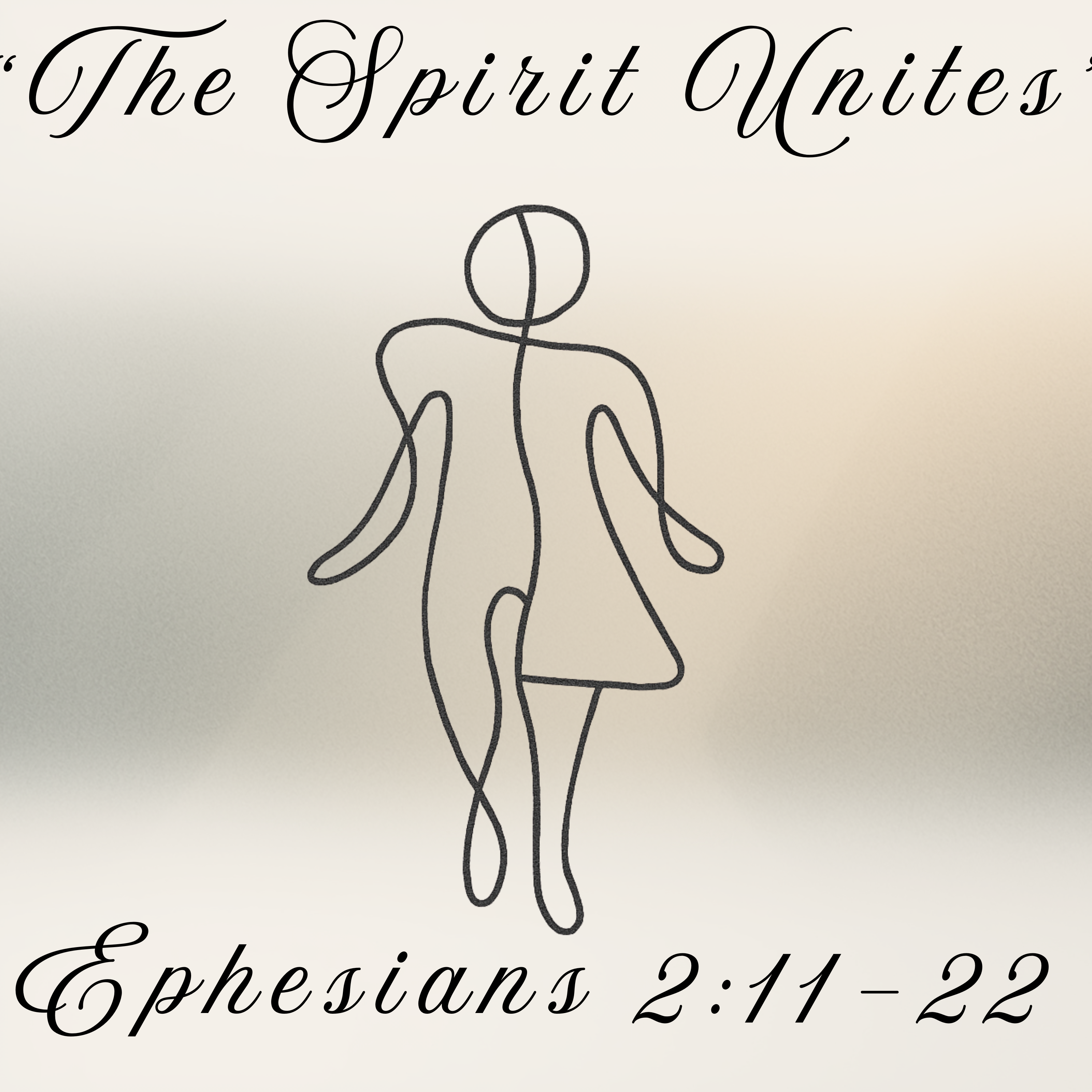
[00:24:31] Speaker C: woman is not the image of a man with a penis who fell asleep, had a rib surgically removed and that rib fashioned into the form of a woman. It is the story of a gender neutral being who was split in half so that those two opposing energies could be better together.
[00:24:58] Speaker B: I don't know about you, but my
[00:25:00] Speaker C: help meet is often.
[00:25:08] Speaker B: Not helping.
[00:25:17] Speaker C: But it turns out she is.
It turns out that together we are better.
Not because our unity is based on some anodyne agreement, but because it is hard fought in the crucible of contest and disagreements and respect.
And listen, this is not some coded sermon to advance some heteronormativity.
I'm not saying that women and men belong together exclusively in romantic relationships.
Oh, my God. I think the Bible is much deeper than that.
It's teaching us that this narrative of the battle of the sexes, of masculinity and femininity opposing each other and not knowing what to do to together and trying to figure out how to be united together, is a human story that speaks to a much bigger issue. And that is we would just really rather not fight.
We would really rather not sit in the same room or occupy the same household or exist in the same country or belong to the same church with people who. Who oppose us, who are different than we are, whose way of being in
[00:27:00] Speaker B: the world and whose way of knowing and perceiving the world and whose way of acting upon the world is different than ours. Because that is a pain in the ass.
[00:27:18] Speaker C: The story of bringing divine masculinity and divine femininity together is not a story of sexuality.
It is a story of humanity.
And what Paul says here is that by joining together the Jewish male Christ, this is where this gets really heretical.
The joining together of the Jewish male Christ with the divine femininity of Artemis creates a new harmonious church in Asia Minor.
[00:27:57] Speaker B: Because what Paul's doing here is very
[00:27:59] Speaker C: intentionally appealing to their cultural values.
[00:28:05] Speaker B: And according to Paul, that is what the Spirit is doing, whether you like it or not. Whether I like it or not, what the Spirit is doing is reconciling people across their differences.
And often, I don't know if you've noticed this, but often reconciling people across their differences looks like one person just telling the other person they have to get on board.
But what the Spirit's doing here is not telling the churches in Asia Minor that they have to get on board with being more Jewish.
Instead, it's telling the churches in Asia Minor that they all need to get
[00:28:43] Speaker C: on board with borrowing from each other.
[00:28:50] Speaker B: Something much more controversial is happening in
[00:28:54] Speaker C: Ephesians than we're often willing to admit.
The church which begins thoroughly Jewish becomes thoroughly Greek, thoroughly hellenized, thoroughly, in the words of the theologian Karl Barth, syncretistic hybrid, changed, transformed so that we can have a new humanity, a humanity that is not dug in to doubling down on our differences that lead to hostility and conflict and violence, but a new humanity that is willing to approach each other, learn from each other and be mutually transformed.
Listen,
[00:29:55] Speaker B: I don't know how to tell
[00:29:56] Speaker C: you any other way that what the spirit of God is doing is constantly changing us.
[00:30:05] Speaker B: And the problem with church, I mean,
[00:30:07] Speaker C: there are a lot of problems with church, right? But one of the problems with church is that we experience these transformations in
[00:30:14] Speaker B: a million different ways. Maybe like you have been transformed to
[00:30:17] Speaker C: like interrogate your own, like, you know,
[00:30:21] Speaker B: baggage and be liberated from your wounds and your trauma and find that God is affirming you as a person for who you are and how you were created to be. And that's amazing. That's the gospel. Or maybe the gospel has come to liberate you and your relationship with your family or your co workers or your relationship to your political party or your relationship to what it means to be an American or your relationship to what it means to be a man or a woman or a non binary person or a queer person, or all the things, right, like the gospel comes to transform us in a million different ways that lead us from bondage to liberation. But, but then what happens is we get together with a bunch of other people who have experienced similar liberations, similar bondages, and we do our very best to keep that from ever changing again.
[00:31:12] Speaker C: We make our own, like comfortable little utopias.
Paul is, I think, saying something much more radical.
If the spirit of God is in the business of changing and transforming and intermingling and hybridizing humanity, then what do
[00:31:30] Speaker B: you think he's going to do with all those people inside a dwelling in which he lives by his or her or their spirit, Everything that happens in that place is going to be about deeply uncomfortable change.
And so no matter how much we would like to fancy ourselves as incredibly
[00:31:51] Speaker C: enlightened, discover how enlightened you are when you find out that there's a Republican sitting next to you
[00:31:58] Speaker B: or a Democrat, I mean, don't even get me started on those guys.
[00:32:04] Speaker C: I wouldn't know what to do with power if it hit him over the head.
Okay, that's not in my notes. Don't quote me on that.
But in all seriousness, like, someday this crisis is going to be over and we will have eight new crises to replace it with.
And when it does, and we find ourselves having built a community that exists entirely for that crisis, how will we
[00:32:36] Speaker B: exist together
[00:32:41] Speaker C: when we discover that the ideologies and pet politics and beliefs and ways of being in the world of the person sitting next to us are, oh my God, different than ours?
Are we willing to be transformed again?
Are we willing to repent again and again and again?
Are we willing to end a sermon that is at least three minutes too long?
All right, fine. You get the point, right? Can I get an amen?
Would you pray with me?
[00:33:17] Speaker B: God, we thank you so much for today and this opportunity for us to
[00:33:23] Speaker C: sit with these stories and these passages that we find simultaneously comforting and discomforting.
I'm really grateful that at least one thing your spirit has done in this place at this time is create a community of people who are willing to sit or with those discomforts.
But we ask God that you would change us, that we would be willing to confront our biases, whatever they may be. That we would be willing to continually be transformed by your spirit, which is in the business of constantly changing,
[00:34:16] Speaker A: so
[00:34:16] Speaker C: that we might be a dwelling in which your spirit meets us in intimacy and liberation and healing and all the good things in Jesus name.
Amen.
[00:34:33] Speaker A: Amen.
Thank you for joining us for this Sunday teaching, no matter when or where you're tuning in.
To learn more about our community or to support the work we do, visit us at oceansidesanctuary. Org. We hope to see you again soon.