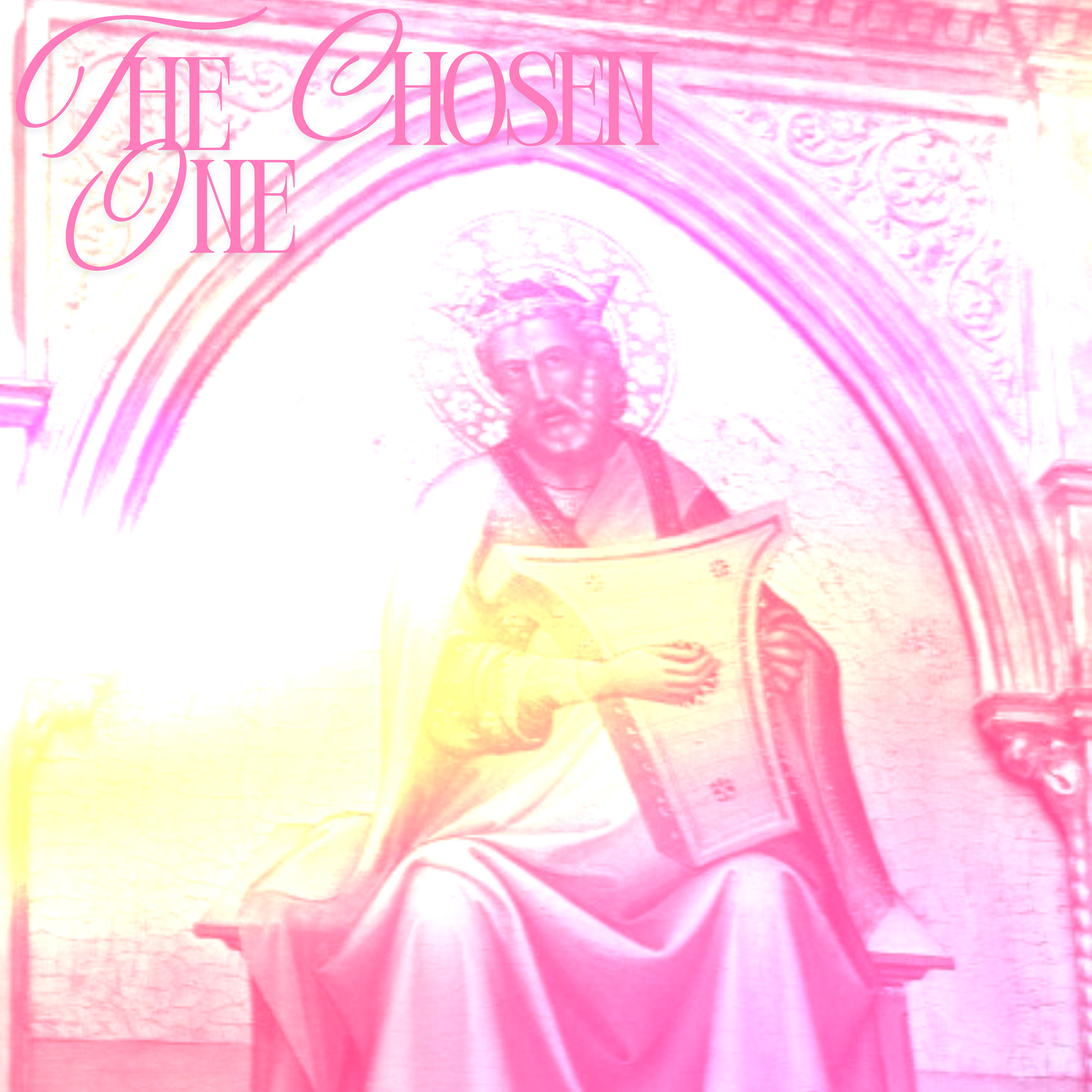
[00:00:00] Speaker A: Foreign.
Welcome to the collective table where we celebrate the intersections of Jesus, justice and joy.
This podcast is brought to you by Oceanside Sanctuary Church. Each week we bring our listeners a recording of our weekly Sunday teaching at Oceanside Sanctuary, which ties Scripture into the larger conversations happening in our community congregation and even the podcast. So we're glad your here and thanks for listening.
[00:00:40] Speaker B: For those of you who don't know, my name is Jason. I'm one of the co lead pastors here at the Oceanside Sanctuary and we started a new series last week with a bit of a community dialogue around this question. What does it mean for David from the Hebrew Bible to be a man after God's own heart? We sort of unpacked in a little bit of a dialogue with each other how that phrase is a bit problematic from First Samuel and also in the New Testament where it seems to be that that phrase that David, this epic hero from the Hebrew Bible, was a man after God's own heart seems to sort of condone or gloss over or excuse a lot of immoral or unethical behavior on his part. And how. I don't know if you've noticed, but that same sort of narrative tends to be parroted today in our political life in the United States, people, usually men who behave in fairly destructive and harmful ways are sometimes called like David. And what's sort of being invoked there is that all of their behavior is excusable because, you know, they're a man after God's own heart. And so we sort of are asking the question, what does that mean? What does ancient Hebrew scripture mean when it talks about that notion? And so today I want to share two brief passages with you. The first is from 1st Samuel 16, verse 18. I just want to read this.
Start. Excuse me, 1st Samuel 16 verses. We're going to start with 1 through 3. I want to read this with you today. And then I have a couple of other passages to share with you and also want to share just kind of my perspective as we begin to jump in to this series. It says, 1st Samuel, chapter 16, verse 1, says this. The Lord said to Samuel, how long will you grieve over Saul? I rejected him from being king over Israel. Fill your horn with oil and set out, and I will send you to Jesse the Bethlehemite, for I have provided for myself a king among his sons. Just pause there for a second.
What's going on here? Because we've jumped into the middle of First Samuel. Is that Samuel sort of the state prophet, right? Like he's the guy who is in charge of being sort of the mouthpiece for God in this ancient Israelite kingdom. And Saul is the current king. And Saul is a problem. He's acting in all kinds of immoral and harmful and destructive ways.
And so as a consequence of this, God has moved on from Saul as the ancient Hebrew king. And he's saying to Samuel, who's sort of his, you know, ambassador, I have a new king coming. So I want you to go out and anoint this new king.
[00:03:30] Speaker A: All right?
[00:03:30] Speaker B: So that's kind of what's going on here. Samuel says to God, how can I go? If Saul hears of it, he will kill me.
The lord said, take a heifer with you, that is a bull, and say, I have come to sacrifice to the Lord. Invite Jesse to the sacrifice, and I will show you what you shall do, and you shall anoint for me the one whom I name to you. And so if you're not picking up on this, the short version is God conspires with Samuel to deceive Saul about what's going on. Samuel says, hey, if I go out and I anoint a new king, the current king, you know, the one who's in charge of the army might not be happy about that. And he might, you know, kill me.
Because we've already seen that he's willing to do all kinds of terrible things with his power. And so God says, that's okay. I've got a little ruse for you. Just go out and tell everybody that you're planning to sacrifice this heifer, that you're planning to have this sort of, you know, little worship gathering, and make sure to invite Jesse and his household.
[00:04:34] Speaker A: And.
[00:04:35] Speaker B: And so when this little ruse is happening, I will reveal to you who the real king is.
And I think this sort of gets at the heart of our question, because what's happening here is that God's chosen king is being revealed to Samuel.
And that very chosenness is something I think we struggle with when this phrase that David was a man after God's own heart is invoked to excuse terrible behavior.
What we are essentially wrestling with is the idea that God has chosen this person for some reason unbeknownst to us. And even though that seems terrible, like a terrible choice, somehow it's authorized or warranted by God. So we can't question it, we can't interrogate it. We can't call this person out for acting the way that they act. And this brief little narrative seems to sort of reinforce that idea that God has a chosen.
I want to explore that a little bit today in tandem with Psalms as a way of us opening this series. Before I do, would you just say a prayer with me?
God, we thank you for today. We thank you for this opportunity for us to gather and to sing and to pray and to get to know each other a little bit better, to get to know you and your heart a little bit better, to encourage each other and to prompt each other on to become the people that you have called us to be, both as individuals and as a church.
It's my prayer that you would lead us in the direction that you've called us to go, that you would shape us along the way so that when we arrive, we. We have become the people who can carry your calling, your sense of purpose for us.
We pray all this in Jesus name. Amen.
I want to sort of submit to you the idea that this whole question of, like, what it means to be called by God, what it means to be anointed by God, what it means to be a man after God's own heart, or a woman after God's own heart, or a person after God's own heart, essentially gets at a very fundamental, maybe not universal, but really common question. And that question essentially is, am I in control of who I really am?
Am I in control of whether or not I'm a good person or a bad person?
Am I in control of whether or not I become a great person or an inconsequential person? Am I in control of whether or not I'm a good husband or wife or partner or father or sister or brother or son or employee or business owner or scholar or whatever it is that your sense of calling is? Are you in control of that? Or is God in control of that? And you really have no say.
This is essentially the dilemma of destiny versus fate, explored really significantly by, for example, the epic heroic poems of Homer.
Anybody yet seen the Odyssey?
This is what the Odyssey is about. I can say that confidently, even though I haven't sat through the three and a half hour long film, because I've actually, you know, read Homer's Iliad.
I know these stories. In fact, these stories are baked deeply into who we are as a civilization. This question like, am I in control of my destiny or am I in control of my fate? We tend to use those words interchangeably, as though fate and destiny are the same thing. For example, some of you heard this story before. But when our youngest daughter, Alana was born, Janelle pushed off and pushed off and pushed off going to the hospital, because having had two children before she knew not to go too early. And so we waited and we waited and we waited, even though we lived an hour and a half from the birthing center in rural Utah at the time. And finally, she was like, I think my water broke. We should definitely go. And so we went, and we undertook the long drive. This was very much like a Homeric odyssey, driving from Heber, Utah, through the mountains, all the way down to Salt Lake. And when we arrived, Janelle said to the nurse, I'm pretty sure this baby is ready to come. And the nurse was like, oh, you think so, dear? And then she checked her, and she was like, oh, let's get going, and took her right to the birthing room. And Janelle was like, I need some drugs. And they were like, there's no time for that. And she, like, transitioned immediately. And then at one point, she sat up and she looked me straight in the eye, and she said, you know what? I'm not doing this.
Never mind.
And I was like, I think you got to do it.
And then, you know. So she experienced transition, like, for the first time as a mother, because she. Sorry, you don't get. This is my story today.
You'll be up here next week. You can mess up my story with the facts. So we're getting to the point. The point is, at one point, having experienced transition for the first time, because with the first two births, she was either on Demerol or had, like, an epidural. But this time, there's no time for any of those goodies. And so she went through transition, like, completely raw. And at one point, she was, like, you know, ready to scream. And she didn't like the idea of screaming so that everybody could see her doing this, I don't know, apparently indignified sort of act. And so she rolled over on her side, screamed directly into my belly, and then bit down, So I screamed.
I feel like I can truly say, I know the pains of labor.
My question for you today is. Was getting bit in the delivery room my fate or my destiny?
Was thou ordained by God?
Did I have any control whatsoever? And whether or not I was subjected to the pains of labor, I know I bring up the Odyssey because that is very much what the Odyssey is about. And everybody's seeing it these days. Three and a half hours is, I feel like, a sort of structural choice on Christopher Nolan's part because he wants everybody to feel like they have, in fact, been through an Odyssey.
So I haven't seen it yet, but I do know this. I know that the story of the Odyssey is a story exploring the question around the difference between fate and destiny. Are you in control of your life or are the gods in control?
In order to explore this question, we see the story of Odysseus, who Zeus proclaims will return to his hometown, that he is destined to be reunited with his wife and his son, destined to become king again in his hometown.
That will happen. It is beyond his control. It has been destined. It is literally his life's destination.
And yet, how Odysseus gets there, how long it takes for Odysseus to get there, and what Odysseus suffers on the way to getting to his destiny is very much up to him.
And this is what we mean by fate.
And so although we tend to use fate and destiny interchangeably, they, in fact mean something different. Your destiny is your ultimate destination. It's where you're going. And according to Homer, none of us can control that. You might agree or disagree. That's totally up to you.
But according to Homer, while we can't control our destiny, our destination, we can control our fate. Our fate is who we have become once we get there.
And so, as you make choices along the way, if you like Odysseus, allow your pride to get in the way of the gods.
Good intentions for you or bad intentions. These are Greek stories, after all.
It will shape who you become.
David, I will submit to you. And Janelle may disagree with me in the coming weeks. That's okay. But I would submit to you that David is the Jewish Odysseus.
David is a hero cast in the classic sort of mold of a Greek hero, goes on a long journey, and his journey asks the very same questions. Is David in control of his destiny? Is David in control of his fate?
This is what brings us to the story of Samuel choosing David again.
And so Israel is saddled with a terrible King Saul who is violent and capricious and has no regard whatsoever for the harm that he causes in the world. And so God, looking down and seeing that this is bad, says, I have a better king for my people. Samuel, go out and anoint who the next king will be. Samuel expresses some concern, some consternation for his own life if he subverts the King Saul. So God conspires to concoct a ruse. Like I said, he goes out, he meets Jesse and his sons. Jesse the Bethlehemite, and he meets his sons. Let's pick it up here in verse six, verse first, Samuel. This won't be on the screen because I decided to read this Passage after we made the slides, so bear with me. First Samuel, chapter 16, verse 6. We pick it up in the middle of the story. Jesse has brought his sons. Samuel's looking at his sons, verse 6. When they came, he, being Samuel, looked on Eliab. This is one of Jesse's sons, his strongest, his most vigorous, his older son. He looked on Eliab and he thought, surely the Lord's anointed is now before the Lord.
Surely this is the kid. He's strong, he is vigorous, he is a warrior.
But the Lord said to Samuel, do not look on his appearance or on his height or his stature, because I have rejected him.
For the Lord does not see as mortals see. They look on the outward appearance, but the Lord looks at the heart.
And here is where we get a kind of subversive, very Jewish introduction to the hero's story.
Because a typical hero's story in the ancient world would have been a warrior, a strong person, a tall person, a fierce person, a person who was willing to do anything and everything in order to accomplish their destiny.
But the Jewish story takes that theme and says, those outward things don't matter.
Those outward traits or characteristics that you might normally associate with somebody who could be your hero, your savior, your deliverer, your Messiah, those things don't matter to me. What matters to me is on the inside.
That's all very familiar. I think we are all good with that. But I think we often don't understand how truly subversive that is.
We still, I think, tend to choose people to lead us on the basis of something that is external. Their looks, their stature, the color of their skin, the straightness of their sexuality, the depth of their pocketbooks.
All of these are part of the outward appearance.
But this ancient Jewish story injects the idea that perhaps there's something that we can't see that makes somebody truly God's anointed.
And for this, we turn, I think, to the Psalms.
And the Psalms really are the heart of this series. A question that we are asking each week is how does David's artistic, creative production reveal something about him that we might not normally see?
And so today, as we wrap this up, I want to share with you Psalm 139, or at least one snippet of Psalm 139, starting in verse seven, David, in this poem, this song that he constructs to God. In verse seven, he says, where can I go from your spirit? Or where can I flee from your presence? If I ascend to heaven, you are there. If I make my bed in Sheol, you are there. If I take the wings of the morning and settle at the farthest limits of the sea, even there your hand shall lead me, your right hand shall hold me fast. If I say, surely the darkness will cover me and the light around me become night. Even the darkness is not dark to you. The night is as bright as the day, for darkness is as light to you.
David is either ecstatic or terrified or both by the realization that there is nowhere he can go and not be seen by God.
And this, I think, is the key shift in David's hero's journey.
The issue at heart here is not what are David's deeds, not what are his conquests, not how strong is he, or how well bred is he, or how wealthy is he. The issue is what is the quality his heart.
And what separates a David character from an Odysseus character or from any typical ancient hero is that David's heart is an open book.
David's heart is on display in verse one of this psalm. He says, o Lord, you have searched me and you have known me.
You know me when I sit down and when I get up, you know me. When I travel far or I stay close by, it doesn't matter. You know me, you know who I am.
And he pours all of this out into a song.
It's constructed like a poem that's written down and shared over and over again and sung by his own people.
David's heart is completely transparent before God. And because his heart is completely transparent before God and completely transparent before others, that heart is, I would submit to you, open to being changed.
Because most of us spend time guarding our hearts, most of us spend a lot of energy putting forward an image of ourselves that we think will be acceptable, that we think will gain us more privilege, more status, more wealth, more advances in our career, more acceptability in our social circles, we are carefully and meticulously constructing our images every single day, not just face to face, but digitally as well.
Entire industries are now built upon whether or not you can successfully construct a false version of yourself for others to consume like a product.
David, meanwhile, is letting it all out.
The good, the bad, and the deeply ugly are on full display in the Psalms. And this both excites him and terrifies him. At the same time, the idea that his God, the one who has called him to his destiny to be the king of Israel, despite all outward appearances to the contrary, that God sees him for who he is and yet still calls him.
I think it's ironic that one characteristic of being a person after God's own heart is that you are willing to be truly seen.
That you're willing to allow God to see who you really are and in that sense to also allow others to see who you really are.
Don't go out and like, I don't know, Facebook all your darkest secrets.
That's not what I'm saying.
Fact, go out and delete your Facebook because it's not possible for you to posture yourself publicly without telling lies.
What's radical about this subversion of the story of one's pursuit of destiny versus fate is that David ironically chooses to let go of control of who sees his heart in order to gain control of who he becomes.
And I think that's a very difficult inversion for us to recognize that in order to become something truly good, that we have to let go of control of the way that others see us and experience us and talk about us and think about us.
That there is a relinquishing or rather than a.
A guarding.
And I think that brings us a bit to one thing that we can take away from David's story and Odysseus story, and that is whether we like it or not, we are not in control of our destiny.
Where you end up in life is really not up to you.
There are a million circumstances that will redirect your life in ways that you did not plan.
So we.
She gave birth to three kids, experienced a little bit of pain in one of those, as you've already heard.
But I can also share with you that for each of those three children, there was a meticulous birth plan.
And if you any of the women out here have ever had a birth plan, you know, that is the silliest document to create.
It's not silly. It's good. It's good to have intentions, it's good to be prepared.
But not one of those birth plans went according to plan.
And neither will your life plan.
If you've lived long enough. You probably didn't imagine that you would be doing what you do, living with the people you live with, going to the church that you go to, pastoring the church that you pastor.
None of us chose that we don't get to make those choices.
And it feels that that is more true than ever, that our choices just don't matter, that our economic fates are completely out of our hands, that our political fate is definitely out of our hands, that our consumer fates are out of our hands. You know, Janelle is helping our oldest daughter remodel their kitchen and she had this really great idea, design idea for like pop up outlets on their countertop to save wall space. And now for like six days I've had nothing but pop up outlets in my Facebook feed.
I didn't search for them.
Somebody said once there is no such thing as ethical consumption in capitalism because every choice you make, every product you buy, every service you subscribe to is built on the backs of a river of suffering.
Your consumer choices are out of your control too, but your fate is very much in your control.
Who you become throughout your journey and at the end of your journey is up to you.
How will you meet those changing circumstances?
And the story of David, at the very least here at the beginning of this series, suggests that one way that we control our fate, one way that we can be in control of whether we become good people or villains, whether or not we become hardened or empathetic, whether or not we become righteous or wicked, has everything to do with whether or not we are willing to be open hearted before God and to each other.
Amen.
Would you pray with me? God, we thank you for today.
Again, we thank you for these ancient words, these ancient stories that are so surprising sometimes and rich, for all the ways that we can.
Allow our lives to be shaped by those stories, to open up new questions and new possibilities, to challenge old assumptions and biases, or to blow apart, as Janelle mentioned earlier, our categories through which we judge each other and ourselves.
It's my prayer today, God, that you would challenge us to have truly open hearts.
That would begin with the realization that you see every bit of who we are, the light and the dark, the good and the bad, the righteous and the unrighteous, that every bit of that that is within us is fully before you, that we can't escape your gaze.
It's my prayer that in response to that realization that we wouldn't withdraw, that we wouldn't hide ourselves, but instead that we would just be open, honest with you and with ourselves about who we are and that would somehow help us meet our daily challenges.
We pray all this in Jesus name.
[00:29:10] Speaker A: Thank you for joining us for this Sunday teaching, no matter when or where you're tuning in.
To learn more about our community or to support the work we do, Visit
[email protected] We hope to see you again soon.