[00:00:00] Speaker A: Foreign.
Welcome to the collective table where we celebrate the intersections of Jesus, justice and joy.
This podcast is brought to you by Oceanside Sanctuary Church. Each week we bring our listeners a recording of our weekly Sunday teaching at Oceanside Sanctuary, which ties scripture into the larger conversations happening in our community, congregation and even the podcast. So we're glad your here and thanks for listening.
[00:00:39] Speaker B: This is our teaching time and it is the last stop in our recent series which we have called Practices of Belonging. We've been talking about the different ways that we as a faith community engage in certain sort of spiritual practices or disciplines that don't just benefit us individually, but help create a community of belonging. And it feels a little silly for me to be talking about this today because we've just seen that on display in so many powerful ways. But I do have one more practice I want to share with you, and it comes from Second Corinthians, chapter eight. I'm going to read to you first, just verses 13 and 14, but fair warning, I'm going to get into this chapter in a little bit more detail today. So we're going to start with these two passages and then we're going to dive a little bit deeper into it. 2 Corinthians, chapter 8, verses 13 and 14 says this, I do not mean that there should be a relief for others and pressure on you, but it is a question of a fair balance between your present abundance and their need, so that their abundance may be for your need in order that there may be a fair balance. This is Second Corinthians, chapter 8. This is Paul's letter to the Christians in Corinth.
And we're going to get into what in the world he's talking about and what all of this means. But first, could you pray with me?
God, we thank you for today, for this opportunity for us to gather as a people in this place that has been set aside for nearly 100 years for people to gather and sing and to pray and to hear these ancient words, to be stretched and grown to become the people that you have created us to be.
We're grateful for this time in this space that we have. We ask that you would use these words to stretch us, to grow us, to help us, to transition into the people that we were always meant to be.
We pray all this in Jesus name. Amen.
Okay, so listen, yesterday we did something we've never really done before. We had a celebration that we called Man's Giving. This is sort of a. A little, you, tongue in cheek, like, you know, friendsgiving, Thanksgiving Gathering. We don't tend to do a lot of gendered things at the Oceanside Sanctuary, because I don't know if you've noticed, but religion tends to have a lot of patriarchy baked into it. So every time you gather people according to their gender, there is a strong likelihood that you're just going to be perpetuating those sort of baked in patriarchal inequalities. And so we poked a little fun at this gathering. You know, we acted like it was, you know, this muscular, manly gathering and got together and we ate all kinds of crazy food. And I did the thing that I always do every time I'm planning for a party, and that is I freaked out that we weren't going to have enough food. About three hours before the event, which started at 4:00', clock, I called Janelle and I said, hey, I'm worried we don't have enough. We had about 25 guys who signed up to come, and they all agreed to bring something. And so I'm looking at the list of food that everybody signed up to bring. And Janelle said, well, tell me what you have. And I said, well, we have two hams and we have a turducken, and we have two different kinds of stuffing, and we also have two different sweet potato dishes, and we have Mac and cheese, and we have deviled eggs, and we have cranberry sauce. And she said, I think you've got enough food.
And I said, but there's no mashed potatoes.
There's no mashed potatoes on the list. So I was thinking about running to the neighborhood Walmart and buying, like, a sack of potatoes and whipping together some mashed potatoes. And she was like, jason, please just don't just roast your turducken.
It will be fine.
And lo and behold, Owen, our very own coordinator of facilities here at the church, showed up with a crock pot of mashed potatoes. And I was like, there is a God.
And so, of course, I started the party thinking that there was going to be too little food. And of course, that's never the case because by the time I had finished my plate of, like, ridiculous combination. Did I mention there's Brussels sprouts? Yeah, there are actually two kinds of brussels sprouts, but hardly anybody ate those.
Funnily enough, by the time I finished my plate, I turned to the person next to me and said, what I always say at the end of every party or at the end of every Thanksgiving or the end of every friendsgiving. I said, oh, this is too much food.
And isn't that always the case?
Like, you start Thanksgiving worried that it's going to be too little, and by the end of it, it's too much.
And what's interesting is that both of those things are a problem.
Having too little food for a party is like my nightmare. Like, there might not be enough for everybody, but at the end of it, when there's too much food, you have the problem of what to do with all the leftover food, because the last thing you want is for that food to go bad. And so you have the responsibility of somehow distributing this in some way that honors the sacrifice of the poor ham and the poor turkey and the poor potatoes, right, that gave their lives so that you could eat too much.
Paul is, believe it or not, talking about this very same thing in Second Corinthians Chapter eight. So I want to go back to the beginning of the chapter and read to you his sort of preamble to this section of his letter. Second Corinthians, chapter 8, verse 1. This is not on the screen, so you can just listen. Or if you have your Bible, you can turn there. Second Corinthians 8, chapter 1. Paul is in his letter to Christians in Corinth saying this when we want you to know, brothers and sisters, about the grace of God that has been granted to the churches of Macedonia. Now, that's just an ancient word for what we think of as, like, you know, Asia Minor, right?
The churches of Macedonia have been granted a particular grace.
For during a severe ordeal of affliction, their abundant joy and their extreme poverty have overflowed in a wealth of generosity on their part.
For, as I can testify, they voluntarily gave according to their means and even beyond their means, begging us earnestly for the privilege of sharing in this ministry to the saints. And this not merely as we expected, they gave themselves first to the Lord and by the will of God to us, so that we might urge Titus that as he had already made a beginning, so he should also complete this generous undertaking among you.
Now, as you excel in everything, in faith, in speech, in knowledge, in utmost eagerness, and in our love for you, so we want you to excel also in this generous undertaking. And if this sounds to you like he's asking for money, you're right.
Paul is asking the Corinthian Christians to give money generously to help the Christians, the followers of Jesus, who are struggling and suffering from extreme poverty in Jerusalem.
And it's important for us to understand that at this point, something really interesting had happened, like in the growth of what we now think of as Christianity.
This thing that began as a movement of Jewish followers of Jesus had expanded into Asia Minor in, into Europe, was spreading throughout the Roman Empire.
And one of the interesting consequences of that growth is that as the original followers of Jesus were struggling to make ends meet in Jerusalem, the. The epicenter of their faith, their faith was spreading into these other communities that were relatively wealthy. At least some of them were.
And Paul is writing to them to say, your brothers and your sisters, your siblings in the faith in Jerusalem are hurting and we want to give you an opportunity to give, to help support their needs.
And this is where, in this sermon and in this series, you would be right to be deeply suspicious that I'm about to ask you for money.
Some of you are like, oh my gosh, is Jason going to say that giving money to the church is one of the practices of belonging?
No, that's next week.
But Paul is here asking for money.
And I think sometimes that's a little like, disconcerting.
Not the least of which is because churches have severely abused how we handle money and how we ask for money and how we make it seem like if you give money to us, that God is going to magically solve all of your problems or he's going to like, multiply that money and make it appear in your mailbox if you will give us your hard earned cash.
But that's not where this is going.
This isn't about money.
Paul is asking them for money, but he's doing it in a way that builds a kind of theology that I think really challenges us today.
It challenges me in chapter 8, verses 8 to pick up where we left off.
Paul says this.
I do not say this as a command that is asking them to give.
But I'm testing the genuineness of your love against the earnestness of others.
For you know the generous act of our Lord Jesus Christ that though he was rich, yet for your sakes he became poor, so that by his poverty you might become rich.
And in this matter I'm giving my advice. It's appropriate for you, who began last year, not only to do something, but even to desire to do something. Now finish doing it so by completing it according to your means. For it is the eagerness. If the eagerness is there, the gift is acceptable according to what one has, not according to what one does not have. And this is where we pick up on our passage for today.
I do not mean that there should be relief for others and pressure on you.
This is a key bit to understand.
Paul is saying, yeah, I'm asking you for money. I'm asking you to give generously to help your siblings in the faith in Jerusalem who are struggling. But I am not asking you to relieve their pressure, to relieve their suffering, only to make yourself more destitute.
It's a question of a fair balance between your present abundance and their need, so that their abundance in the future may be for your need in order that there may be a fair balance. And then Paul does what any good theologian would do. He quotes Scripture as it is written, the one who had too much did not have too much, and the one who had too little did not have a lack.
What Paul's doing here in this little bit of the letter is he's quoting from Exodus chapter 16.
Exodus chapter 16 is, of course, the story of manna in the desert.
Paul is saying, hey, listen, your siblings are suffering. They need help, they need relief, and you have extra.
So I'm asking you to consider sharing with them so that their suffering, their poverty, their hunger might be relieved by your abundance. It's sort of like Exodus 16, where when the people of God were wandering in the wilderness, God rained manna down from heaven.
Remember this story.
The Israelites are wandering in the desert. They wandered in the desert for 40 years. Deserts are a place that are famous for not having resources, for not having enough water, for not having enough food, for not having enough shelter. And as God's people wandered in the wilderness, they began to complain. We were better off in Egypt.
At least there we had shelter. At least there we had food. At least there we had good drink. And so Moses, being a good leader, takes their complaint to God. And God says, I'm going to send them whatever they need. And he rains down food from heaven every single day.
Nobody knows what it is. It's utterly bizarre. To them, it's like a bread that's sort of flaky, has a kind of sweet taste like honey. And because they don't know what it is, they call it manna, which literally means, what is it?
God says to Moses, Tell them every day, get up, go out into the desert, and gather what you need, and only gather what you need, no more, no less.
And that is where this passage comes from.
Something interesting about that story of the Israelites wandering in the desert is that God not only told them to gather only what they need, but he also said, if you gather too much, if you try to hold onto it, if you try to, like, bank your manna and hide it in your tent somewhere so that you have more mana than you need to just sort of save for the future. If you do that, the next day it will be full of maggots. It will rot.
The only exception was on Friday, right, because Saturday was their Sabbath. So somehow, magically, according to the story, the manna would last for two days and they wouldn't have to gather it on the Sabbath.
This is the story that Paul draws upon to tell them that they ought to share with their brothers and sisters who are in need. It's the story of anxiety and survival. It's the story of getting up every single day and wondering if you're going to have enough. It's the story of. Of worrying about whether or not you can make ends meet. It's the story of whether or not you have enough time, enough hours in the day, or enough work, or enough pay or enough benefits or enough of anything that you actually need to survive. Enough money in your 401k.
It's the story of anxiety versus enough. It's the story of having too little while others have too much.
Paul uses this story and says, your situation is just like theirs.
Only Paul says something interesting. He says something that's not in Exodus chapter 16.
He says, the reason why nobody had too little and the reason why nobody had too much is because those who went out every single day and they gathered manna, if they happened to gather more than they needed, and somebody else went out and gathered manna and happened to gather too little, they shared with each other.
Was that siri.
As it is written, the one who had too much did not have too much, and the one who had too little did not have too little.
It's an interesting little turn of phrase. Paul is saying that there are some people who did gather more than they needed, and he's saying there are some people who gathered less than they actually needed.
But in the end, there was equality.
And Paul says there was equality because those who gathered too much shared with those who gathered too little.
It made no sense not to share because the very next day, whatever extra you gathered would rot anyway.
You'd wake up in the morning and find that your hoarded wealth had turned to maggots.
This, by the way, is not a story about money.
Exodus 16 is not a story about money.
Second Corinthians, chapter 8 is not a letter about money.
It's about being there for each other.
And money is just one way that we express that.
You have too much of something, you have too little of something else.
This is what it means to be human.
To be human means that every day you get up and your basic needs in some area of your life are not met, you have a need. That need might be money, or it might be shelter, or it might be clothing, or it might be friendship.
It might be acceptance and unconditional love. It might be freedom or agency, the ability to make decisions about your own life and your own body, or it might be access to goods and rights and services that you need in order to thrive. But there is something in this world that you don't have enough of.
There is no escaping that.
But at the same time, there is no escaping that. There is something that you have in great abundance.
Maybe it is money, or maybe it is compassion, or maybe it is shelter, or maybe it is wisdom, or maybe it is friendship, or maybe it is something that the person sitting next to you is lacking.
This is one of the reasons why a day like today really matters.
Because so many of our communities, especially our religious communities, our faith communities, have utterly rejected the the gifts of God in their midst.
Listen, if you think that you don't need a trans person in your life, it's because you've never had a trans person in your life.
They are not just to be tolerated. They are not just to be accepted. They're not just to be welcomed. They're not just to be seen. They're certainly not to be paraded as trophies.
They are to be cherished as gifts because they have something to offer me that I do not have on my own.
And I can tell you that my life is better and richer and fuller, and I am a better human being because of the trans men and women that I am lucky enough to call friends.
And I hope that I have something to offer them too, because in so many ways, I have too little.
But in this way, at the very least, in this way, they have too much.
They have too much wisdom and lived experience about what it's like to find out who you really are and to face unbelievable hatred and intolerance and opposition for simply asking for the right to be who you really are. And if you think that you don't need to learn that lesson too, you are wrong.
Because every one of us at some point in our lives discovers that who we really are enough to somebody else in this world.
And so my trans friends teach me how to do that. They teach me how to have courage.
They teach me how to be honest about who and what I really am.
And so they are the riches that help me to get by.
We don't have to stop there.
One of the questions last Night, in one of our little games at man's giving, right, we had a game called, I can't remember what it was called, but it was about whether or not, you know, you. Your man card was suspect.
Your man card. And we had a list of questions that invited men to reveal how perhaps they didn't quite live up to the ridiculous social constructs of what masculinity is.
And one of the questions that got the room fairly quiet was, who here has changed their mind about something significant because of what a woman told them?
And all the men in the room who were married to women nervously laughed.
If you don't think as men that you need women, you're wrong.
Because we are impoverished without the gifts that they bring.
If you don't think as a straight person that you don't need queer people, you're wrong. If you don't think that you, as a Christian, need Buddhists or Hindus or atheists or Jewish people in your life, then you are wrong. If you don't think as an American that you need non citizens in your life, then you are wrong.
These passages aren't really about money.
These passages are about who belongs.
And the only answer to that question that is acceptable is, we all belong.
We all get to be who we are.
This passage is about the illusion too little, the lie that you and I have been told, that in this world there's not enough, there is always enough.
And this is a story about the reality of too much.
The reality that many of us, because of our anxiety about too little, have a tendency to hoard more than we actually need.
And that, by the way, tends to rot us from the inside.
Just like manna turns to maggots, we try to keep it for too long.
But mostly these passages in Exodus 16 and 2 Corinthians 8 are about how we get from the problems of too little and too much to enough.
And how we get there is we belong to each other.
Everything I am and everything that I have and everything that I can possibly hope to be in my life doesn't just belong to me, it belongs to you as well.
And man, that sounds crazy.
And I'm often tested about whether or not I really believe it.
But I think that if we believed it, if we really believed that the solution to these problems of too much and too little was simply about belonging, if we really believed that that was true, that we belong to each other, and then we have riches to offer each other that will make up for our suffering and our destitution, I really do think that there is no problem that we couldn't solve.
We often hear that, like hunger is not a problem of abundance, it's a problem of distribution. But I don't think that's true.
I do think there's more than enough of everything we need to go around. And I do think that distribution is a hard puzzle to solve.
But man, do we know how to distribute the things that we really believe are important?
I think at the end of the day, we struggle to believe that we really do need each other, that we really do belong together, and that each of us really is a gift manna that falls from heaven that we need in order to subsist and to survive.
And if we believed that, I think it would be easy to share.
And I think that's our challenge. Amen.
Would you pray with me?
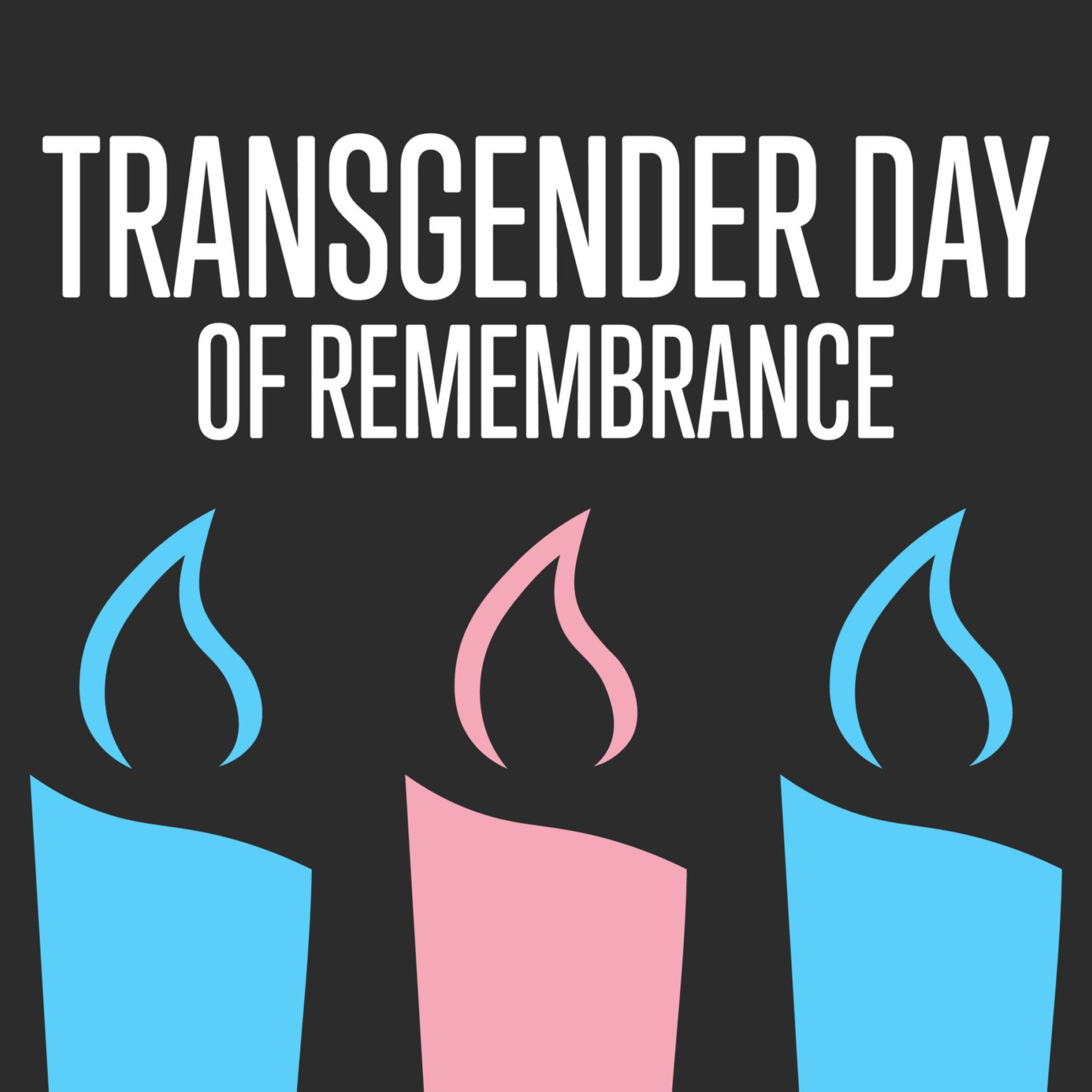
God, we thank you so much for today and for this opportunity for us to gather and to lift each other up as members of this community, each and every one of us, to lift up our trans and intersex siblings on this day to recognize that those who have been, as Tindo pointed out, concealed, who have been hidden, who have been shoved to the side, who have been ignored, or who we have pretended do not exist. It's good to have a day where we don't just acknowledge their existence, but we celebrate it.
Alongside that celebration, God is a remembrance that this world is not kind to those who don't fit our narratives of normativity.
And so we remember those whose lives have been violently taken because of hatred and bigotry. And we say that must stop because we really do need each other.
We ask that you would make in us, in this place, a space where all belong for who they really are. By your grace, in Jesus name, amen.
[00:29:41] Speaker A: Thank you for joining us for this Sunday teaching, no matter when or where you're tuning in.
To learn more about our community or to support the work we do, Visit
[email protected] We hope to see you again soon.