[00:00:00] Foreign.
[00:00:08] Welcome to the collective table where we celebrate the intersections of Jesus, justice and joy.
[00:00:15] This podcast is brought to you by Oceanside Sanctuary Church. Each week we bring our listeners a recording of our weekly Sunday teaching at Oceanside Sanctuary, which ties scripture into the larger conversations happening in our community, congregation and even the podcast. So we're glad your here and thanks for listening.
[00:00:38] Good morning.
[00:00:41] It's good to see you guys. For those of you who don't know, I'm Jason Coker. I'm one of the co lead ministers here at the Oceanside Sanctuary.
[00:00:47] Glad to have you. This morning I had a minor crisis because as I usually do, sometime between the beginning of worship and communion, I headed outside to grab a cup of coffee and some of you might have noticed that the coffee empty. And I had a minor panic attack until I remembered that I, you know, made myself an Americano at home this morning and then stopped at Starbucks on the way for another Americano.
[00:01:16] So I went and gave myself a little bump from that Starbucks cup.
[00:01:21] Do you have those things where you're like, I just need a little pick me up. Like a little thing, like a little bump, right? Like, I may be over caffeinated. I drink coffee all day long. My favorite line when restaurant people offer me water is there's water in the coffee. Coffee is mostly water.
[00:01:36] It's filtered water.
[00:01:39] I used to work with a guy. Janelle and I both worked at a big church in Ohio. We worked with a guy who could bench press £800 was his claim. He's a professional bodybuilder, which was great if you needed to like move something, you know, at the church. He was on staff at the church. He was one of the pastors there. Huge. He's like 6 foot 6, could bench press £800, could deadlift like £900 or something like that. I don't know. Anyway, he was competitive about it. The funny thing about it is if you asked him to move anything, like a ladder, a desk, a chair, a stack of papers, immediately after he'd be like, oh, I need a sandwich.
[00:02:13] You know, because like any exertion whatsoever triggered like this bodily response where like he needed protein.
[00:02:23] So it became like a joke, you know, I'd be like, hey, Janelle, watch this. And then because Janelle and I were on staff together at that church and I'd ask Paul to move something and then he'd be like, oh, I'm hungry.
[00:02:33] Afterwards, it was kind of funny. It's just funny to me. Apparently.
[00:02:41] Today's sermon is about power. That was My little joke about power.
[00:02:45] We just got done on a series visiting the post resurrection appearances of Jesus and asking like, what can we take from that?
[00:02:53] And you may have noticed this line from the last sermon. In Acts, chapter one, verse eight, Jesus is speaking to his disciples and he's telling them essentially what's coming next. He's about to ascend into heaven and he says, you'll receive power when the Holy Spirit comes on you.
[00:03:12] And I glossed right over that last week because I hate that line.
[00:03:17] I hate that line for lots of reasons, one of which I'll get in today, and that is that Janelle and I spent a lot of time in very Pentecostal spaces.
[00:03:29] And so I'm a little bit like allergic to conversations about power.
[00:03:35] But also in addition to that, I don't know if you've noticed, but like, power is a problem in our society.
[00:03:42] We're in the midst of a reshaping of our relationship with power in the United States and really globally.
[00:03:53] And so I'm very, very reluctant to have any kind of conversations about power. So we're going to have a whole sermon about it today.
[00:04:04] Many years ago, when our first, when Janelle and I first came here, within about the first two years we had, we began a relationship with an organization that we still are partnered with called the San Diego Organizing Project. And one of our good friends was a community organizer for them. And early on in that relationship, we were just talking, Joey is his name, Joey.
[00:04:27] And he said to me at one point, he said, you know, the problem with most churches is that they're afraid of power.
[00:04:35] And I was like, right, like we should be afraid of power, shouldn't we?
[00:04:43] And he was like, well, no, no, no. What? Churches, and especially communities that are marginalized and disempowered need to learn to take back their power.
[00:04:55] And I was like, oh, that's really interesting. And so that really was the beginning of our journey with community organizing and relearning what good power looked like.
[00:05:07] So I want to visit this passage with you. Numbers, chapter 11, verses 24 to 30.
[00:05:12] And this is going to set up our next teaching series, which I'm going to call the Spirit of Power Power.
[00:05:20] So for several weeks, we're going to explore what power could look like according to the Book of Acts. But before we jump into the Book of Acts and begin to visit passages, that will be very triggering for me and maybe for some of you, I want to Visit numbers, chapter 11, verses 24, 30. So I'll read it to you now and Then share with you what I'm taking from this today.
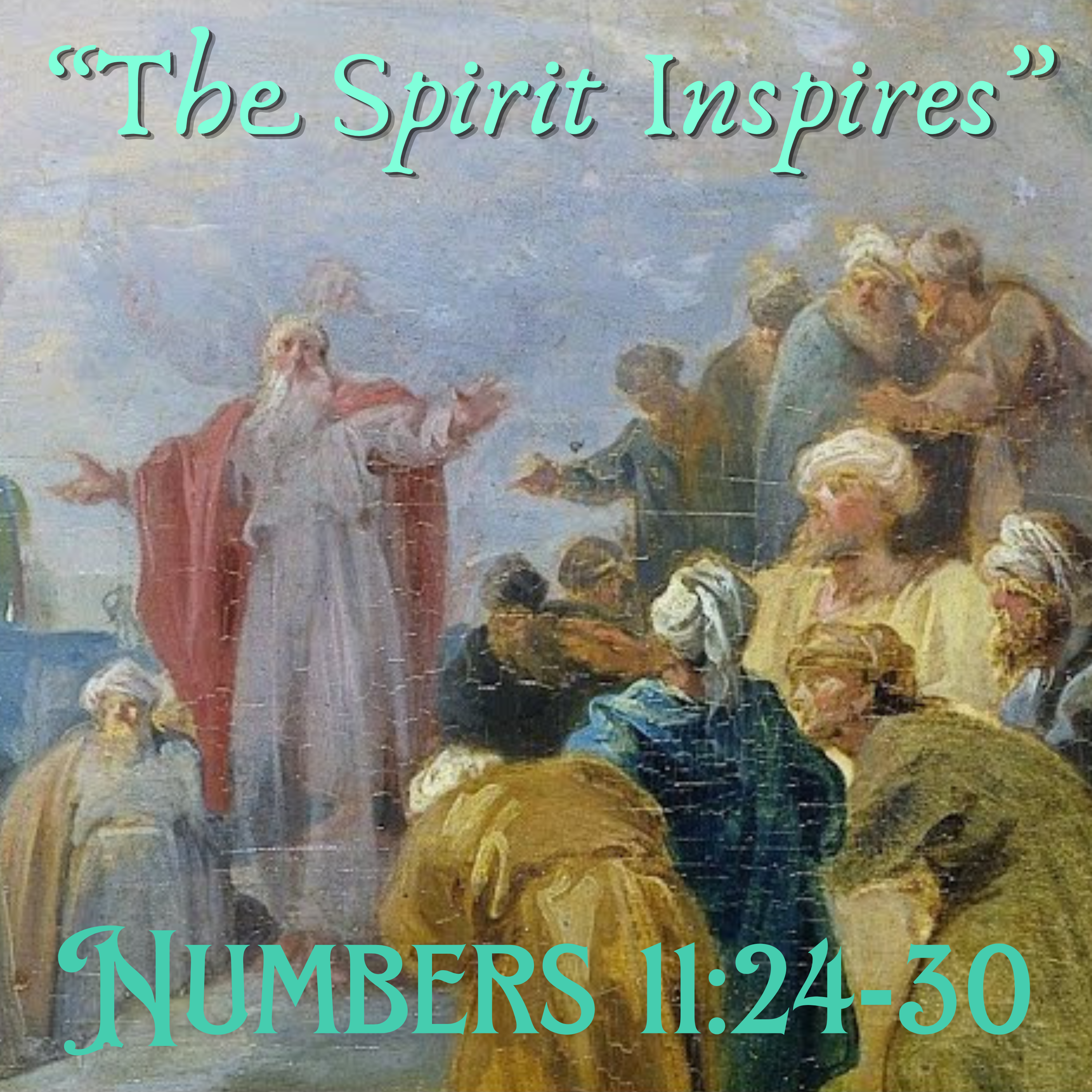
[00:05:46] Numbers 11, verse 24 says this. So Moses went out and told the people the words of the Lord. And he gathered 70 elders of the people and placed them all around the tent. Now, we're jumping into the middle of a story here. Just know that this is part of the narrative of the Israelites. When they're in the wilderness and they're struggling to get access to the resources that they need and the resources that they want, right? Wandering in the wilderness for 40 years is a hard thing to do, right? And so right in the middle of this story, Moses has an interaction with God. God gives him some instructions, and so he's about to.
[00:06:20] He's about to undertake those instructions. So Moses went out and told the people the words of the Lord. And he gathered 70 elders of the people, and he placed them all around the tent. And then the Lord came down in a cloud and spoke to him and took some of the spirit that was on him and put it on the 70 elders. And when the spirit rested on them, they prophesied.
[00:06:44] But they did not do it again.
[00:06:47] And two men remained in the camp. That is, they didn't go to the tent with the 70 elders.
[00:06:55] And their names were Medad and Eldad. And the spirit rested on them, and they were among those registered, meaning they were among the 70 elders. But they had not gone out to the tent. And so they prophesied in the camp.
[00:07:11] And a young man ran and told Moses, eldad and Medad are prophesying in the camp. And Joshua, son of Nun, the assistant of Moses, one of his chosen men, said, my Lord, Moses, stop them.
[00:07:23] But Moses said to him, are you jealous for my sake?
[00:07:29] Would that all the Lord's people were prophets and that the Lord would put his spirit on them.
[00:07:36] And Moses and the elders of Israel returned to the camp.
[00:07:42] I want to leave that with you just for a moment. Let's pray, and then I want to share the bigger story with you a bit. God, we thank you for today.
[00:07:50] Thank you again for this opportunity for us to gather.
[00:07:53] We thank you for how these ancient words continue to inspire and agitate and stretch us.
[00:08:03] We ask that would be true today, that we would see this story and hear these words with fresh ears and fresh eyes, and that you would speak to us, that we could learn to prophesy, whatever that means, in Jesus name. Amen.
[00:08:26] Oh, my gosh. I cannot begin to tell you how much I love numbers. Chapter 11. As I was digging into this chapter, I was like, where has numbers 11 been my whole life? Here. Here's what's going on in Numbers chapter 11. One of the reasons I love it so much is because it's connected to one of my other favorite passages, which is Exodus chapter 16.
[00:08:46] Exodus chapter 16 is the story of man in the desert, right? You know this story. The people are wandering around in the wilderness. They're hungry. God reigns manna from heaven. Manna in Hebrew literally means, what is it? Nobody knows what it is, right? But every day they get up and with the dew, bread essentially comes down from heaven. They eat it, they subsist on it. They can't hold onto it for too long, otherwise it will rot, right? There are some profound, like, lessons there for us, in my opinion. I don't have time to preach that story, but just know that that figures very importantly into numbers chapter 11. Because what's happening is many years later, they're wandering around and they're like, manna again.
[00:09:31] What's with the manna, right? Can we get a little something different to eat maybe? Possibly. I don't know.
[00:09:39] Numbers chapter 11, verse 4 says the rabble among them had a strong craving.
[00:09:45] You ever had a strong craving? Like, you know, after you moved a ladder and you were like, I need a sandwich.
[00:09:51] See, I tied that in.
[00:09:56] The rabble among them had a strong craving.
[00:10:00] And the Israelites also wept again and said, if only we had meat to eat.
[00:10:07] We remember the fish we used to eat in Egypt for nothing. The cucumbers, the melons, the leeks, the onions and the garlic.
[00:10:17] But now our strength is dried up and there is nothing but this manna.
[00:10:26] You could feel that, right?
[00:10:29] What's interesting about Numbers 11 is it begins in verse 4 with the rabble among them having a strong craving.
[00:10:35] And then it continues to really set up this sense that, like, they're like, complaining because they're ungrateful because, you know, and complainers, like, nobody likes complainers, right? And they should just be glad that they're wandering around in the wilderness and that they have anything to eat at all. But I think there's something much bigger going on in this passage than just like, ungrateful people complaining because the rabble among them were craving.
[00:11:07] So you have the Israelites who are just longing for some variety, longing for some meat, longing for some substance that does more than just fill their bellies. It actually gives them that bump, that like, kick that they need. They're. They're feeling like they're missing something.
[00:11:24] But in addition to that, the rabble among them were craving Moses, for his part, is pretty frustrated, too.
[00:11:36] He says a little bit later in verse 12, why have I not found favor in your sight? Speaking to God, right? He's talking to God. Why have I not found favor in your sight? That you lay the burden of all these people on me?
[00:11:52] Why do you hate me? He says to God, did I conceive these people?
[00:12:00] Did I give birth to them? Am I their mother? Must I suckle them at my breast? He says, like, I'm so tired of these people.
[00:12:15] What do I do with them? Where do I find meat for them to eat?
[00:12:18] God, by the way, in this passage, is so upset, so angry about all of the complaining, the Israelites and the rabble and Moses, that it says at one point in this passage that God gets so angry that he just burns as a fire over in the corner.
[00:12:40] I love, like, the depiction of God is, like, just so mad. He had to, like, put himself in the corner and burn so that, like, nobody would get hurt.
[00:12:50] And that sets up our story. What we have is the story of people wandering around in the wilderness. They have something to eat, but they're getting tired of it. They need a little bit more. They need something that, you know, sticks to their ribs a little bit more. God gets mad. God's a bit dangerous. Moses is tired of carrying responsibility for them and leading them. And then if we skip ahead to the end of chapter 11, something really interesting happens. God sends not just manna, but quail to feed them.
[00:13:23] So quail comes in with the blowing of the wind, and there's so much quail, they don't know what to do about it. In fact, at one point, God says, I'm going to send you meat to eat because you asked for it, because you complained, because you cried, because you wept. I'm going to send you meat, and you're going to have so much to eat, to meat, it's going to be coming out of your ears and your nostrils. You're going to be so sick of meat.
[00:13:45] And that's exactly what happens.
[00:13:49] They get what they desire.
[00:13:52] Now, between the time when they are complaining and desiring for meat and the time when they get the meat, the spirit of God comes.
[00:14:05] And that's the passage that we just read.
[00:14:08] So what I want to suggest to you is that this whole story is the story of power.
[00:14:17] That it is a story of how power works, how power works well and how it works poorly, how power can sometimes be dangerous and burn us if we get too close to it, and how power can sometimes be good and Sometimes be bad.
[00:14:37] And right in the middle of this chapter is this bridge passage, verses 24 to 30. So let's look at that again. I already mentioned that Moses is overwhelmed, carrying the burden of the people.
[00:14:52] And what I want us to understand is that Moses is not just burned out because he's overly busy. Moses is frustrated because the structure of authority cannot meet the needs of the people.
[00:15:08] Like, when God says, I'll send you meat to eat, Moses is like, are you kidding? I have 600,000 people.
[00:15:17] There aren't enough fish in the sea to feed this many people. Where are you going to get meat? And God says, with God, all things are possible. There is no limit to God's power is what God says.
[00:15:29] But the problem here is not just that Moses is tired. Moses is not just lazy. He's not just like, I'm tired of having authority. Moses literally cannot meet the needs of the people because the structure doesn't allow for it. And God's response is not, hey, Moses, I just need you to work a little bit harder.
[00:15:50] You're the one in charge. You're the leader. Put in a little bit more time.
[00:15:55] Maybe a little overtime would be good.
[00:15:58] He doesn't tell Moses to work harder. Instead, he finds a way for Moses to share his power.
[00:16:07] We see this in verse 24. What God tells Moses to do is to go out and gather the elders of the community, 70 of them.
[00:16:17] These are the people who have been given some authority. They've been given responsibility over large groups of people there. God says, go get Your elders, your 70 elders, and I will give them my spirit, the same spirit that I gave to you.
[00:16:35] And so in verse 24, Moses went out and he told the people what God said. And he gathered 70 elders in the temple, and he placed them all around the tent. And then the Lord came down in a cloud, cloud and spoke to him and took some of the spirit that was on him, being Moses, and put it on the 70 elders.
[00:16:54] And when the spirit rested on them, they prophesied.
[00:16:58] What we see happening here is that the thing, the spark, the magic, the authority, the ability to get something done is now shared from Moses to the 70 elders. This is nothing less than the distribution of power.
[00:17:24] This is usually not how power works. I don't know if you've noticed.
[00:17:28] The lesson here is that if you want to meet people's needs, if you want to feed people who are hungry, if you want people to have what they need to have, then you need to share power.
[00:17:47] I could go.
[00:17:57] This isn't usually how power works. Usually how power works is the people who get it are the people who want it, and the last thing that they want to do is give it away.
[00:18:08] Have you noticed that?
[00:18:10] So I mentioned before that Janelle and I spent better part of 15 years in churches and in a tradition that was highly like. At least the churches we were in were very, very Pentecostal. And the beauty of Pentecostal Christianity, for any of you who have never been a part of it, if you don't know the beauty of Pentecostal Christianity, some of you know, right? But the beauty of Pentecostal Christianity is that that, in essence, it is about sharing power.
[00:18:39] The entire premise of Pentecostalism is that the power of God, the spirit of God, is shared with anybody.
[00:18:46] And that's a beautiful idea.
[00:18:48] But in practice, that is often not how it works. Janelle and I were part of a Pentecostal church in Park City, Utah. Yes, there are Pentecostal churches in Park City, Utah. And when we were there, we were on, like, the prophet circuits, right? So, like every other Sunday or at least once a month, some new prophet blew into town. And usually they were dressed in very, like, flamboyant ways, and they spoke in very, like, flamboyant ways, and they tended to, like, wave their arms and make a lot of noise and put on a big show, and then they would leave town.
[00:19:23] I want you to understand that that is a way of protecting power, not distributing it, because it creates a kind of class structure where some people have the spirit in ways that other people do not. And if you want a taste of that spirit, you got to get it from the people who are putting on a show.
[00:19:45] That's very common in Pentecostal churches. Janelle and I are part of another Pentecostal church where we had a pastor, very, very charismatic, very Pentecostal. And his way of preserving power was to make sure to not take his bipolar medic.
[00:20:04] And listen, if you take medication for any kind of mental challenges whatsoever, God bless you. Join the club.
[00:20:17] There is nothing wrong with having bipolar.
[00:20:22] But what he discovered is that when he medicated himself, he had a harder time projecting power.
[00:20:32] And so by being unmedicated and on stage when he was in a high, put on that kind of performance that convinced the rest of the people in the church, a couple thousand of them, that he had a kind of special anointing.
[00:20:51] And the beauty of it is when he was on a lower, that serves the same narrative, because he would retreat, he would go away, and people would be like, well, you can't get close to John, we'll call him.
[00:21:11] So those extreme highs and lows were both performed in a way that ensured that nobody questioned his authority.
[00:21:25] We had one pastor who was fond of quoting those passages in Scripture where if you got too close to God, you died.
[00:21:33] So, like, he loved telling the story of, like, you know, sending priests into the holy of holies, you know, with a rope tied around their waist because they were likely to drop dead in the presence of God, and then they'd have to, like, drag that person back out again.
[00:21:46] He loved telling those stories, or he loved telling the story of, like, Ananias and Sapphira, who sold a piece of property, and because they lied about how much money they got from it, God struck them dead. And he would constantly say, you got to be careful with God's anointing.
[00:22:06] Which meant, like, people were like, I don't want God's anointing at all. You can have it.
[00:22:12] All kinds of interesting little, like, strategies for hoarding power, for holding on to power. But what I read in numbers, chapter 11, is that power is being shared here. God is saying to Moses, you're burned out. You need help.
[00:22:27] You need to help meet these people's needs. Then here's what we're going to do. We're going to give my spirit, my power to other people so that you aren't the only one.
[00:22:39] Jesus says in John, chapter three, verse eight to Nicodemus, listen, the wind blows wherever it pleases.
[00:22:48] We don't see it, we feel it.
[00:22:52] We don't know where it comes from. We don't know where it's going.
[00:22:55] And this is the problem with power, this is the problem with the spirit of God is that the trouble with trying to hoard it is that the spirit of God can't be controlled.
[00:23:06] And so just when we're trying to hold on to power, just when we're trying to hoard it, the spirit of God leaks out. And that's exactly what we see happening in this passage in verse 26. Jumping ahead, we see the story of Eldad and Medad, two men who apparently didn't get the memo to show up to the tent with the 70 elders.
[00:23:29] And so while the 70 elders are in the official tent, right, where power is officially being distributed.
[00:23:36] Dad and me, Dad, I don't know what they're doing, but they were in the camp still, and the spirit came on them, too.
[00:23:45] And so they're prophesying, they're uttering the power, the authority, the spirit of God, but they're doing it outside the boundaries of the official construct of power.
[00:24:00] This is, this is meant to teach us that the spirit of God can't be controlled, it can't be contained, it can't be held onto.
[00:24:10] You might decide which 70 people or 10 people or 2 people or 100 people are going to get power. But next thing you know, out in the camp, you know, where people are sleeping and they're dirty and they're like cooking their food, people are expressing power.
[00:24:29] You can't keep it.
[00:24:30] You can't hold onto it.
[00:24:34] The spirit of God, the wind of God blows wherever God pleases, whether we like it or not.
[00:24:42] And so power escapes the tents. And Joshua, like a lot of leaders, says, whoa, we got a problem.
[00:24:50] There are other people who are expressing power. They're expressing authority. They're prophesying. Moses put a stop to it. And Moses says something amazing. He says, I wish all the people would prophesy.
[00:25:04] This is very unleader like to say, I wish everybody would do this.
[00:25:14] I have a friend who's a rabbi in San Diego, and she likes to say that Moses is considered the greatest prophet in all of Judaism because he had the guts to say no to God.
[00:25:25] I love that line.
[00:25:27] Because we often think that religion, Christianity, Judaism are about learning how to be obedient.
[00:25:33] But when Moses is on Mount Sinai and God says, let's wipe these people out, and Moses says, let's not, that teaches us that sometimes it's important to be disobedient.
[00:25:47] But I think another reason Moses might be considered a great prophet is in addition to being willing to say no to God when necessary, he's also willing to share power.
[00:26:01] Like you get the impression from Moses complaining.
[00:26:04] And then later when people start to prophesy and Moses is like, thank God, you get the impression that he really didn't want this in the first place.
[00:26:16] And he didn't. Right? Like when God came to him in the wilderness and said, hey, I want you to, like, lead my people out of Egypt. He's like, me? No, not me. I can't do that. I'm not even a good speaker.
[00:26:28] Moses does everything he can to avoid having power.
[00:26:33] That's the next little bit that I take from this passage.
[00:26:38] It's one of the really profound lessons of numbers, chapter 11 is that there was a rabble among them who were craving.
[00:26:48] There are two kinds of people in this passage.
[00:26:51] People who crave power, people who want power, and people who'd rather not.
[00:27:00] Numbers 11 ends in a really terrifying way. The quail come, the wind Blows, right. This is a symbol of the Spirit. The wind blows from the ocean, brings in all of these quail. So much quail, they don't know what to do with it.
[00:27:14] Verse 33 says, but while the meat was still between their teeth. What an amazing phrase.
[00:27:21] While the meat was still between their teeth, before it was consumed, the anger of the Lord was kindled against the people. And the Lord struck the people with a very great plague, so that the place was called Kilbroth Hattavah, because they were there. They buried the people who had the crav.
[00:27:44] This is one of those passages where you read it and you're like, this doesn't sound like a very nice God, but I don't think that's the point.
[00:27:53] This is a story about the danger of craving power.
[00:28:02] Just like people who hoard manna in the wilderness and try to keep it, and it turns rotten.
[00:28:09] Power.
[00:28:10] When you want it, when you crave it, when you desire it, when you hoard, it tends to kill you.
[00:28:21] That's what this story is about.
[00:28:26] And isn't that true?
[00:28:31] If you want too much power, if you do everything you can to hold on to power, to build your power, eventually you will rot and it will kill you.
[00:28:48] Might be the people who come after you with pitchforks, or it might be your gluttony, your wealth that kills you.
[00:28:58] But hoarded power always kills.
[00:29:05] I love how Linda Thomas, who's a womanist theologian, speaks to this idea of prophesying, because this is a little bit that we haven't discussed here. We don't have time to get into it technically. But one of the things we can get tripped up on in a story like this is that when these people get power, it says they prophesy. And we have a very particular way of thinking about what prophesying is. We think that it's like telling the future.
[00:29:32] But what prophesying is in the Old Testament is really two things. It's speaking what is possible, or it's rebuking unjust power, which is just another way of speaking what's possible.
[00:29:55] Now, Old Testament prophets tend to be killed for speaking against unjust power.
[00:30:02] But I love the way womanist theologian Linda Thomas describes it. She says prophesying is a memory of the future.
[00:30:13] Like you're remembering what could be.
[00:30:18] And what's happening in this passage is the people are also remembering what could be. They're remembering a circumstance, a way of life, a way of being that is fully satisfied. Because they have meat, not just manna.
[00:30:36] They have something to sustain Them more powerfully.
[00:30:40] There are a lot of symbols for meat in numbers 11 or for power in numbers 11. One of them is meat, another one is spirit, Another one is a cloud, another one is God.
[00:30:51] These are all placeholders for power.
[00:30:56] And so prophesying, then when we express power, when we exercise God's power, we are speaking to what could be. We're remembering the future, and then we're bringing it about by that power.
[00:31:14] Remember, beginning of the chapter, no meat. End of the chapter, there's meat. What happens in between is the spirit of God is distributed to people.
[00:31:26] And so this is what I take away from this story. Number one, that power is good.
[00:31:36] As much as it pains me to say it, power is good when it's used to feed and care for people.
[00:31:49] That's when it's good.
[00:31:53] Power is good when it's used to feed and care for people.
[00:31:58] Also, power is good when it is democratized.
[00:32:04] Power is good when it's shared. Power is good when it's distributed. In fact, you could argue that this is what power is for.
[00:32:13] Power is expressly for empowering as many people as we possibly can to make sure that all our needs are met.
[00:32:29] And so we are a healthier church, you are a healthier family, We're a healthier city, we're a healthier county, we're a healthier state, We're a healthier nation, We're a healthier world.
[00:32:43] When power is distributed, when we all have the ability to speak into the outcomes of our lives, you might say power is good when everybody can remember the future, when everybody is able to. To do that.
[00:33:10] And what I take from this passage is maybe even a little bit more profound than that, that God is longing for God's power to be distributed.
[00:33:22] Spirit wants to be shared. The spirit leaks beyond the tent into the camp. The spirit blows wherever the spirit wants.
[00:33:32] And then lastly, power is bad when it's concentrated.
[00:33:39] Power sort of contains its own contradiction in that it wants to be shared, it wants to be distributed.
[00:33:46] But when people see it, when they taste it, they tend to crave it, and they tend to want to hoard all of it for themselves.
[00:33:58] And so our job is twofold. It's to make sure that we're sharing as much power as we possibly can with as many voices as we possibly can, with as many perspectives as we possibly can, so that we all have the opportunity to speak into our own good future together. And second, our job is to make sure that nobody hoards power, that no one person, no one group is hoarding all of that for themselves.
[00:34:35] And that is something we should be afraid of because that kind of power will burn us.
[00:34:43] It will kill.
[00:34:49] And so what I want to do today is, as we sing our last song together, ask that you would reflect on what. What power means for you in your relationship with God. And I know that's an odd question to ask because we don't often think about our faith, our spirituality, our religious practices being about power. But what if it was?
[00:35:16] What if talking about how we access the spirit of God and the power of God wasn't a conversation about how we, like, speak in tongues or. Or pray for people to be healed? Although those may be good things. But we ask ourselves how it is that our faith and our spirituality is ensuring that the power of God by the Spirit of God is being distributed to all people so that all people are fed and cared for.
[00:35:46] What if that is what we were working towards together?
[00:35:51] Amen.
[00:35:52] Would you pray with me? God, we thank you again for today. We thank you for this opportunity for us to gather and share with each other these songs and prayers, to read together this passage, To be shaped and challenged and stretched by these stories and God, hopefully to be empowered by your goodness, to remember what's possible in the future and to work together towards that so that all people might have what they need.
[00:36:37] Pray all this in Jesus name.
[00:36:41] Thank you for joining us for this Sunday teaching. No matter when or where you're tuning in, to learn more about our community or to support the work we do, Visit
[email protected] We hope to see you again soon.